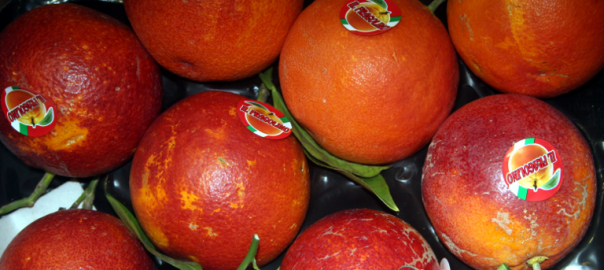
Blutorangen im Quick Check, KaDeWe, Sanlucar, Struwwelpeter, Il Fragolino, Moretti, Valensina Sanguinelli, IGP, Rosaria
Blutorangen im Quick Check
Ich liebe Blutorangen, aber wie es immer so ist, kauft man meist nur wenige und sobald man festgestellt hat, dass diese besonders lecker waren gibt es schon keine mehr davon – oder die neu gekauften schmecken plötzlich vollkommen anders.
Blutorangen schmecken deutlich intensiver als ihre „unblutigen“ Verwandten, sie enthalten je nach Sorte unterschiedliche Mengen an Vitamin B, C, E sowie Kalium und Kalzium und sind neben dem Attribut lecker daher auch äußerst gesund & fotogen.
Die Farbe des Fruchtfleisches bei Blutorangen wird durch Anthocyan hervorgerufen – die Menge an Anthocyan ist abhängig von Temperaturschwankungen über den Tag und hat auch Einfluss auf den Farbanteil der Schale (Exokarp, Flavedo). Besonders „ansehnliche“ Früchte finden sich in der Nähe des Vulkans Ätna, aber auch in den USA, Südafrika und dem gesamten Mittelmeerraum.
Die, je nach Sorte (Moro, Sanguine, Tarocco, u.a) mal stärkere oder weniger stark ausgebildete weiße Schicht zwischen Schale und dem Fruchtfleisch nennt sich Mesokarp oder auch Albedo. Hier liegt – wie auch bei herkömmlichen Orangen – beim Verzehr oftmals der größte “Störfaktor“, denn die meisten Leute möchten so wenig davon mitessen wie möglich.
Daher muss nach dem Schälen sehr oft ein aufwendiges Putzen erfolgen – wenn man dies selber machen muss, ist der Genuss oftmals schon getrübt. Zudem kommt es oft vor das beim zu intensivem Auspressen von Saftorangen, das Albedo den Saft bitter werden lässt. Was zudem stört ist das bereits beim Schälen, aber spätestens beim Putzen Saft aus dem Fruchtfleisch austritt, der die ganze Angelegenheit dann oftmals recht klebrig werden lässt.
Ob die Blutorangen Kerne hatten, war mir in diesem CheckIt nicht so wichtig – wenn man bedenkt das sich naturgemäß Obst über seine Samen, respektive Kerne vermehrt, kann man Kernlosigkeit – auch wenn es mehr Freude beim Essen macht – nicht wirklich als Pluspunkt werten. Wären allerdings über den Maßen viele Kerne in einer Frucht gewesen, hätte ich dies zumindest angemerkt. In Summe waren es bei drei verkosteten Früchten lediglich sechs Kerne.
Es gibt mehrere Sorten der sogenannten Blutorange – meist werden bei uns die Moro (tiefrot) & Tarocco (leicht rot durchzogen) angeboten. Eine gute Option sich nicht mit den Sorten beschäftigen zu müssen, ist es beispielsweise sich an den Anbietern zu orientieren.
Diese Blutorangen haben dann meistens eine Produktbezeichnung und man ist so etwas zielsicherer bei dem was während des Einkaufs in die Hände bekommt. Eine Garantie gibt es aber nie.
Für dieses kleine CheckIt habe ich beim Berliner KaDeWe drei verschiedene Blutorangen-Sorten eingekauft. Warum im KaDeWe? Zum einen, weil es Freude macht dort Kulinarisches zu shoppen, zum anderen, weil nur sehr, sehr wenige Geschäfte standardmäßig mehr als die Moro im Portfolio haben.
Nach meinem Besuch der FRUIT LOGISTICA 2017 habe den Beitrag noch um fünf weitere Blutorangen erweitern können.
Ganz wichtig: In meinem Fokus standen Geschmack, Handling & Aussehen.
Weiterführendes Wissen zu Sorten, Anbaugebieten und Eigenschaften der beschriebenen Früchte findet Ihr beispielsweise bei Wikipedia oder auf den jeweiligen Produzenten Webseiten.
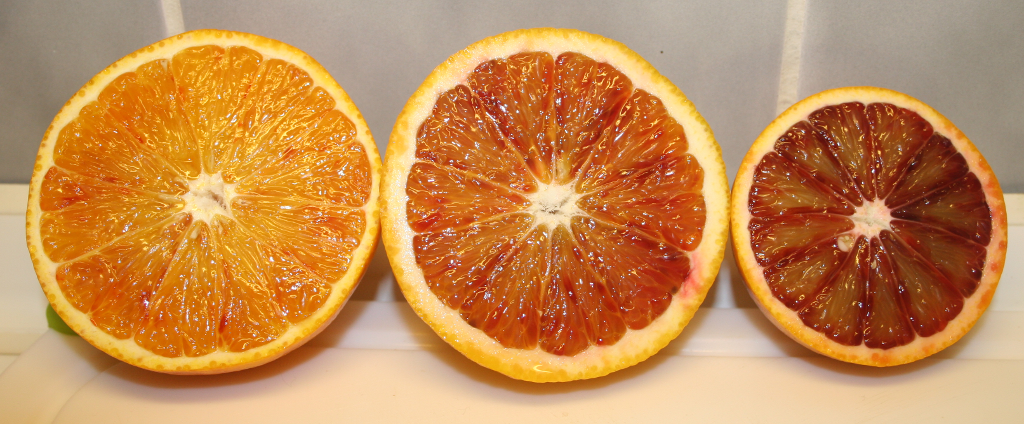
Anbieter KaDeWe
Der Produzent war leider nicht benannt, die Sorte Moro, Herkunft Italien/Sizilien
Plus
Die Moro war recht süß, hatte aber trotz allem ausreichend Säure um nicht langweilig zu schmecken. Im Biss war diese Orange ausreichend fest und das Fruchtfleisch von kräftiger roter Farbe.
Minus
Die Moro ließ sich verhältnismäßig schlecht pellen und musste im Anschluss aufwändig geputzt werden.
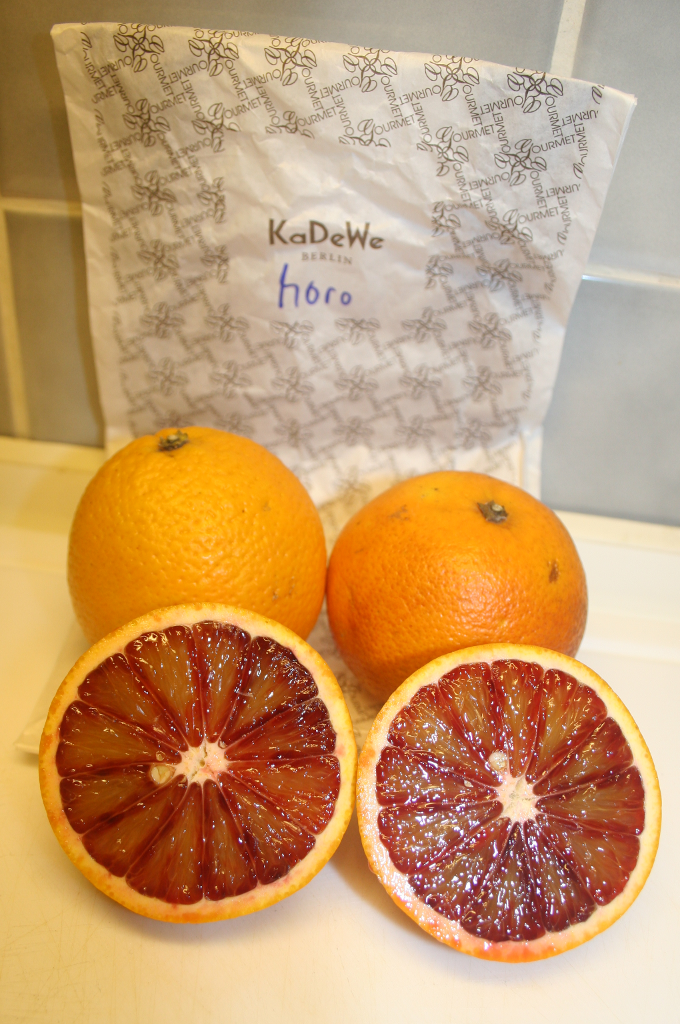
Auf einer Skala von 0-5, erhält die Moro von mir 3-4/5 Punkte.
Anbieter Sanlucar
Sanlucar “Rote Sonne“, Sorte nicht benannt – vermutlich aber eine Tarocco, Herkunft Italien/Sizilien
Plus
Die Sanlucar Blutorangen ließen sich extrem gut pellen und es blieb auch sehr wenig Albedo an den Früchten haften, womit kein Putzen mehr nötig war und die Frucht sogleich genossen werden konnte. Diese Blutorange war sehr saftig und hatte ein ausgewogenes Süße / Säure Verhältnis.
Minus
Die Sanlucar weist nur ganz geringe Spuren roten Pigmente auf und lässt sich daher als Blutorange manchmal nur schwer identifizieren.
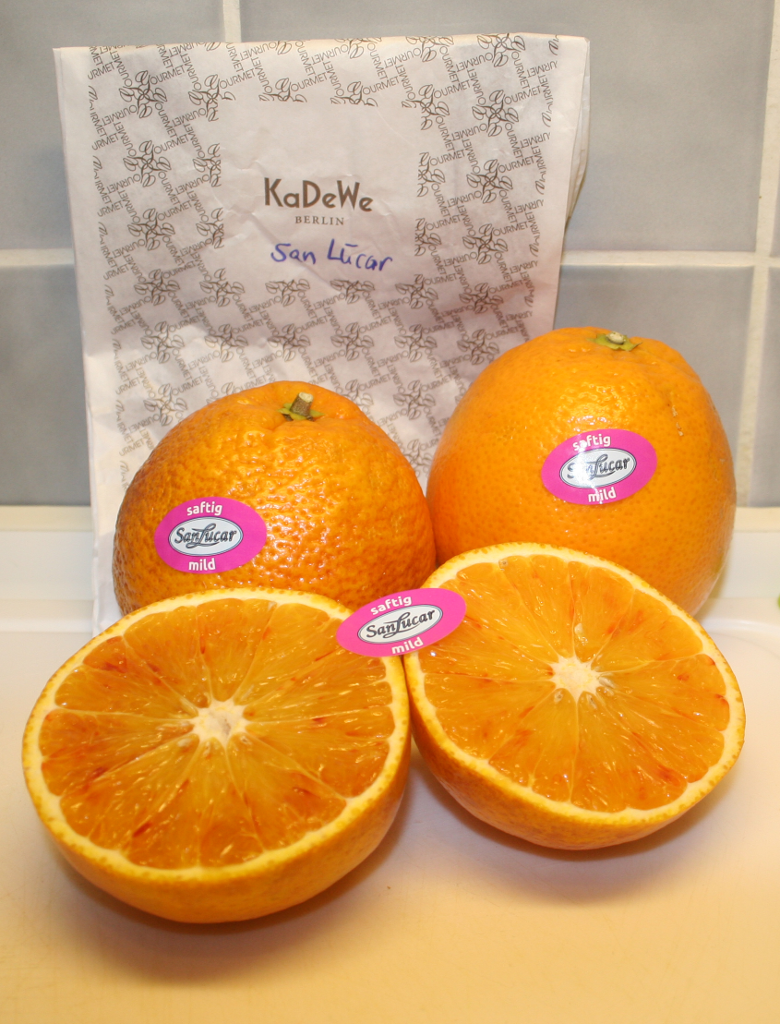
Auf einer Skala von 0-5, erhält die Sanlucar von mir ganze 5/5 Punkte.
Anbieter Struwwelpeter
Struwwelpeter, Sorte nicht benannt, Herkunft vermeintlich Italien/Sizilien
Plus
Die Struwwelpeter eignen sich auf Grund ihres Looks sicher gut für die Food-Fotografie.
Minus
Die Struwwelpeter ließ sich im Vergleich verhältnismäßig schlecht pellen und musste im Anschluss zusätzlich aufwändig geputzt werden. Sie war nur mittelmäßig saftig und das Fruchtfleisch deutlich weniger rot als beispielsweise bei der Moro. Vor allem aber hatte die Struwwelpeter sehr viel Säure und erinnerte geschmacklich stark an eine Zitrone.

Auf einer Skala von 0-5, erhält die Struwwelpeter von mir nur 2-3/5 Punkte.
[Update 2017-02-20]
Im Rahmen der FRUIT LOGISTICA 2017 habe ich fünf weitere tolle Blutorangen gefunden und im Folgenden für Euch in den CheckIt vom Januar aufgenommen
Anbieter Il Fragolino (Tarocco Lempso, Arancia Rossa)
Die Il Fragolino eignen sich auf Grund ihres tollen & natürlichen Looks extrem gut für die Food-Fotografie.
Plus
Diese Blutorange macht Ihrer „Zunft“ alle Ehre – sie sieht super aus, kommt mit Blattwerk daher, duftet sehr intensiv und hat einen bestechenden Geschmack. Sie hat gerade genug Süße gepaart mit typisch kräftigen „Vulkan Aroma“. Zudem löst sich beim Pellen die Frucht leicht aus und hat kaum Albedo am Fruchtfleisch.
Minus
Keines
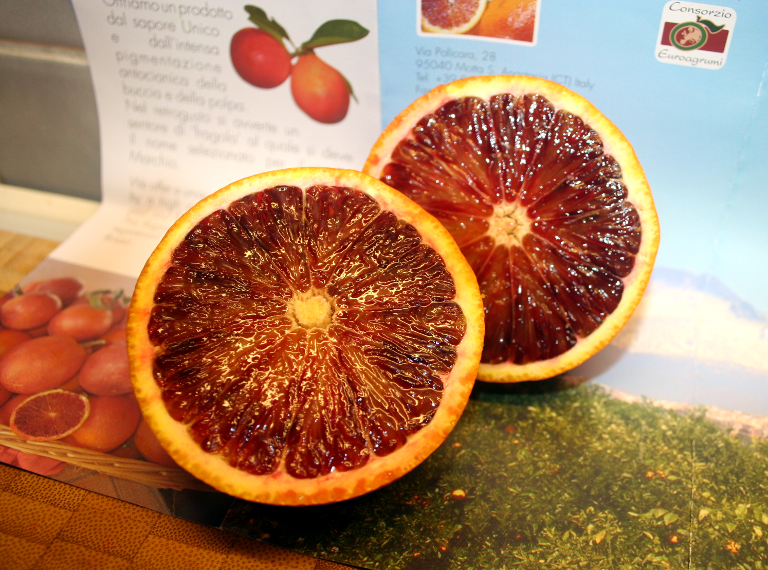
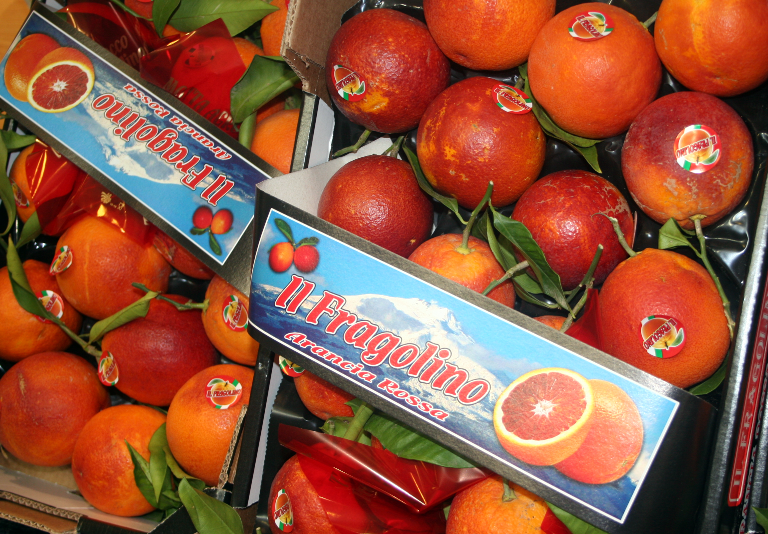

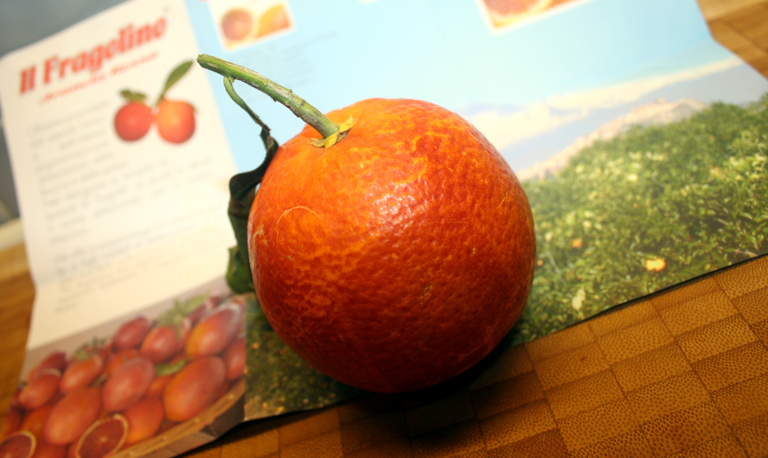
Auf einer Skala von 0-5, erhält die Il Fragolino von mir ganze 5/5 Punkte.
Anbieter Moretti
Die Moretti, dem Aussehen nach eine Tarocco, eignet sich bedingt für die Food-Fotografie.
Die Moretti, dem Aussehen nach eine Tarocco, eignet sich bedingt für die Food-Fotografie.
Plus
Das Innere dieser Blutorange hat einen guten Look – leicht rot durchzogen macht sie zumindest Innen schon etwas her. Sie weist etwas mehr Säure auf als einige andere Sorten, aber das Verhältnis ist subjektiv gesehen noch OK. Die Moretti ist zudem sehr saftig und lässt sich gut pellen.
Minus
keines

Auf einer Skala von 0-5, erhält die Moretti von mir 4/5 Punkte.
Anbieter Valensina Sanguinelli (aus Spanien)
Die Valensina Sanguinelli , eine Orange zum Saften.
Plus
Die Früchte haben einen super Blutorangen Look der sich im Inneren allerdings nicht derart „wiederholt“. Diese Blutorange hat einen ausgewogenen Säureanteil und eigener sich in diesem Kaliber hervorragend als Saftorange.
Minus
Das Innenleben ist optisch mäßig interessant, dass Albedo leider sehr kräftig und die Frucht aufwändig zu Pellen.
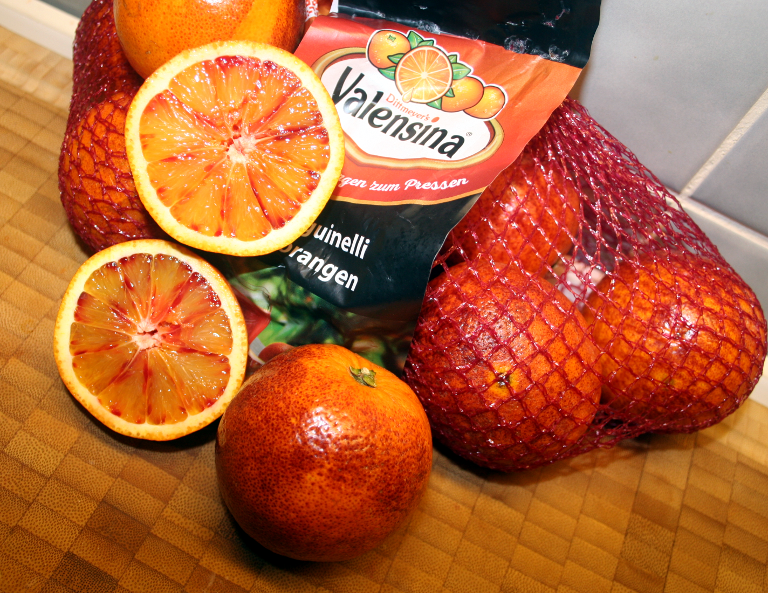
Auf einer Skala von 0-5, erhält die Valensina Sanguinelli von mir 3-4/5 Punkte.
Anbieter IGP (Sizilien)
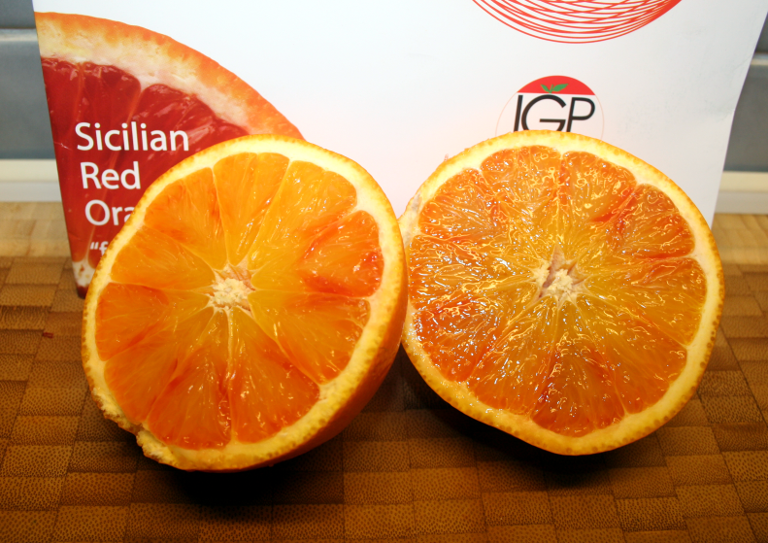
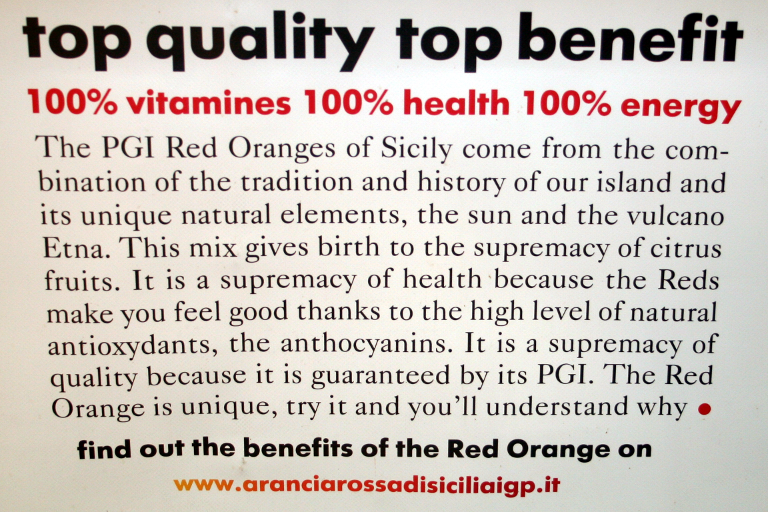
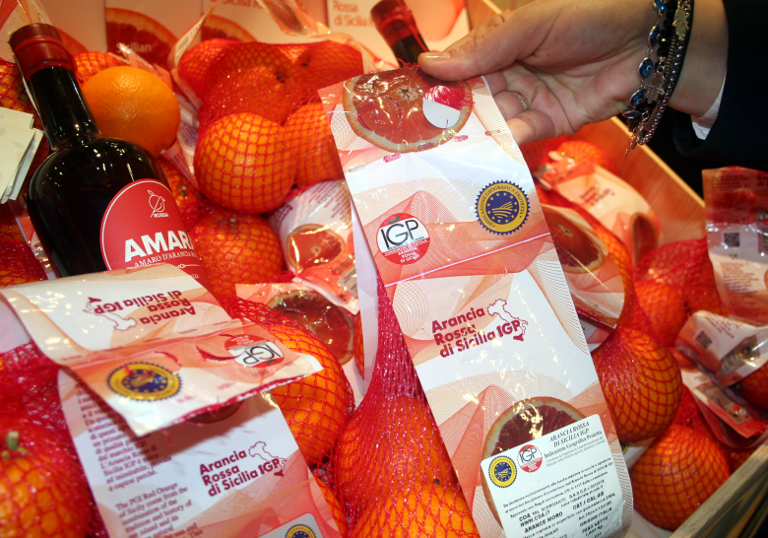
Unter den Begriff Arancia Rossa di Sicilia fallen die Sorten Moro, Sanguinello und Tarocco. Die IGP hat es sich zum Ziel gesetzt eine geschützte geografische Angabe zu etablieren – ebenso wie z.B. beim Balsamico. Bei den direkt auf dem IGP Stand angebotenen Blutorangen handelte es sich überwiegend um die Sorte Tarocco.
Plus
Die IGP Blutorange ließ sich sehr leicht pellen, war auffällig süß.
Minus
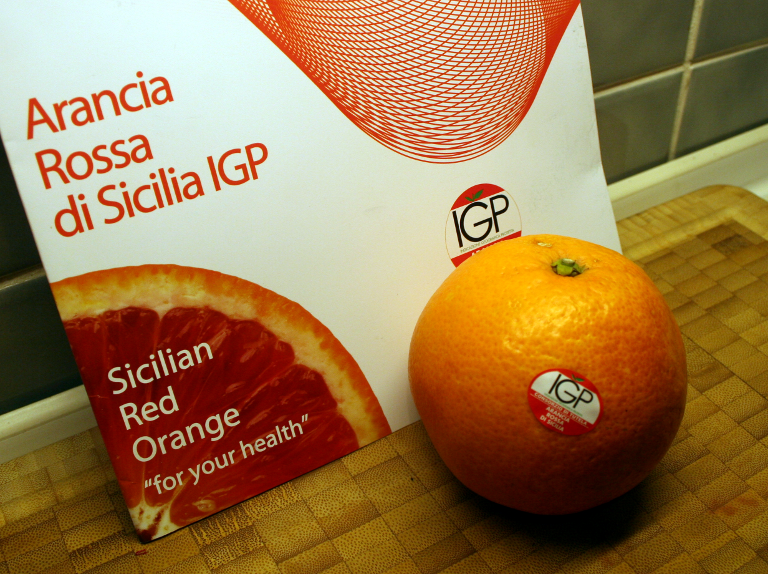
Neben der Süße fehlte leider der gewisse Anteil an Säure und somit das erhoffte geschmackliche „Feuer“. Zudem war die IGP nicht so fotogen und wirkte von außen eher wie eine ganz normale Orange – von Innen dann wie die anderen Taroccos auch.




Auf einer Skala von 0-5, erhält die verkostete IGP von mir 3-4/5 Punkte.
Anbieter Rosaria
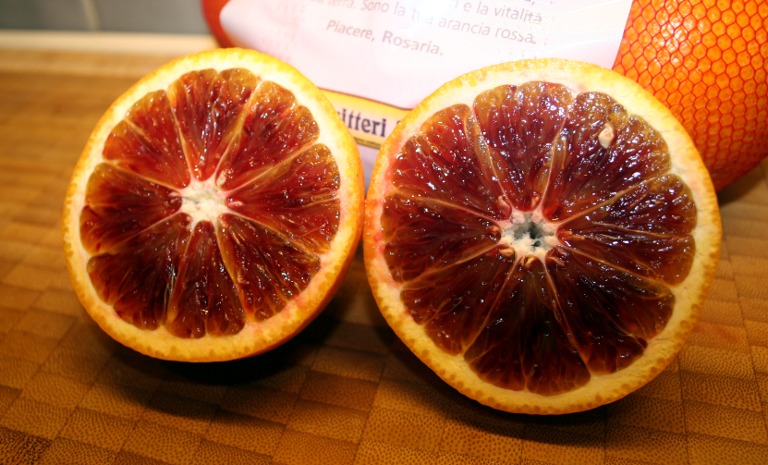
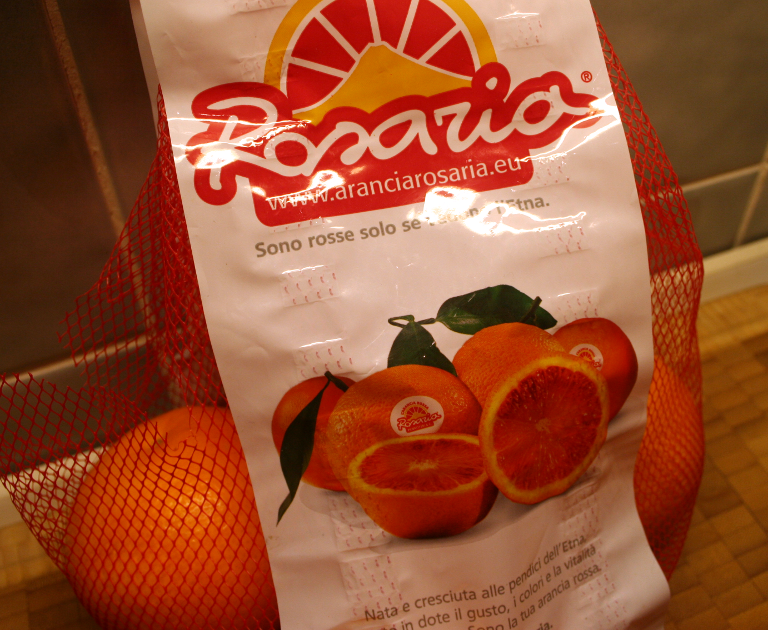
Die Rosaria stammt ebenfalls aus der Region um den Ätna und eignet sich im verkosteten Kaliber meines Erachtens eher für Saft, als zum direkten Verzehr. Allerdings baut der Produzent darüber hinaus alle bekannten sizilianischen Blutorangen-Sorten und auch einige Kreuzungen an.
Plus
Die Rosaria ließ sich einfach pellen, war recht süß und saftig. Das Innere sah sehr nach Moro aus – ob dem so ist oder hier eine Kreuzung mitgegeben wurde war nicht klar.
Minus
Anders als beim Inneren kann man der Rosaria ganz klar ein langweiliges Äußeres bescheinigen. Die Frucht hatte deutlich zu wenige Säure / Feuer.
Auf einer Skala von 0-5, erhält die Rosaria von mir 3/5 Punkte.
Fazit [2017-01-29]
Aus meiner Sicht ist der Gewinner dieses kleinen CheckIt ganz klar die Blutorange “Rote Sonne“ von Sanlucar. Diese Orange hat neben der herausragenden geschmacklichen Aspekte vor allem auch durch ihr gutes „Handling“ überzeugen können. Man konnte sie ohne viel Aufwand und klebrige Hände genießen und hatte trotz allem eine auffällig frische und saftige Frucht.
Fazit Update [2017-02-20]
Nach der Verkostung weiterer fünf Sorten muss ich mich korrigieren. Mein absoluter Top Favorit ist die Il Fragolino. Nicht nur das die Mitarbeiter diese Produzenten am authentischsten schienen – die Früchte waren ebenso ein Augenschmaus wie sie geschmacklich eine ganze Kategorie über allen anderen anzusiedeln waren. Hier schmeckte man das Feuer des Ätna formlich heraus – Respekt für so viel Liebe zur Frucht und einem solch guten Ergebnis „der handwerklichen Kunst“.Blood oranges in the Quick Check, KaDeWe, Sanlucar, Struwwelpeter, Il Fragolino, Moretti, Valensina Sanguinelli, IGP, Rosaria
Blood oranges in the Quick Check
I love blood oranges, but as it is always the case, you usually only buy a few and as soon as you have noticed that they were particularly tasty, there are no more of those to get – or the newly bought ones suddenly taste completely different.
Blood oranges taste significantly more intense than their „bloodless“ relatives, they contain different amounts of vitamin B, C, E as well as potassium and calcium depending on the variety and are therefore extremely healthy & photogenic.
The colour of the fruit flesh in blood oranges is caused by anthocyanin – the amount of anthocyanin depends on temperature fluctuations during the day and also influences the colour content of the skin (exocarp, flavedo). Particularly „respectable“ fruits can be found near the volcano Etna, but also in the USA, South Africa and the entire Mediterranean region.
Depending on the variety (Moro, Sanguine, Tarocco, etc.), the sometimes stronger or less strongly formed white layer between the skin and the flesh of the fruit is called mesocarp or albedo. Here – as with conventional oranges – is often the biggest „disturbance“ during consumption, because most people want to eat as little of it as possible.
Therefore, after peeling, a complex cleaning is often necessary – if you have to do it yourself, the pleasure is often already clouded. In addition, it often happens that when juice oranges are pressed too intensively, the albedo makes the juice bitter. What is also annoying is that the juice already comes out of the flesh during peeling, but at the latest during cleaning, which often makes the whole thing quite sticky.
Whether the blood oranges had seeds was not so important to me in this CheckIt – if you consider that naturally fruit multiplies through its seeds, you cannot really consider seed lessness – even if it is more fun to eat – a plus point. If, however, there had been more seeds than enough in a fruit, I would at least have mentioned that. In total, with three tasted fruits there were only six seeds.
There are several sorts of the so-called blood orange – mostly the Moro (deep red) & Tarocco (slightly red) are offered. A good option not to have to deal with the varieties is, for example, to orient oneself to the suppliers.
These blood oranges then usually have a product name and one is more purposeful in such a thing with that which gets into the hands during the purchase. But there is never a guarantee.
For this small CheckIt I bought three different blood orange varieties from the Berlin KaDeWe. Why at the KaDeWe? On the one hand, because it is a pleasure to shop for culinary delights, on the other hand, because only very, very few shops have more than just Moro in their portfolio as standard.
After my visit to FRUIT LOGISTICA 2017, I was able to add five more blood oranges to the article.
Very important: My focus was on taste, handling & appearance.
Further information on varieties, growing areas and characteristics of the described fruits can be found for example at Wikipedia or on the respective producer websites.
Supplier KaDeWe
The producer was unfortunately not named, the variety is Moro, origin Italy/Sicily
Plus
The Moro was quite sweet, but still had enough acidity not to taste boring. In the bite this orange was sufficiently firm and the flesh was of a strong red colour.
Minus
The Moro was relatively difficult to peel and had to be cleaned afterwards.
On a scale of 0-5, Moro gets 3-4/5 points from me.
Supplier Sanlucar
Sanlucar „Red Sun“, variety not named – probably a Tarocco, origin Italy/Sicily
Plus
The Sanlucar blood oranges were extremely easy to peel and very little albedo adhered to the fruit, so no cleaning was necessary and the fruit could be enjoyed immediately. This blood orange was very juicy and had a balanced sweetness / acidity ratio.
Minus
The Sanlucar has only very small traces of red pigments and is therefore sometimes difficult to identify as blood orange.
On a scale of 0-5, Sanlucar gets 5/5 points from me.
Supplier Struwwelpeter
Struwwelpeter, variety not named, origin supposedly Italy/Sicily
Plus
The Struwwelpeter are suitable because of their look certainly well for food photography.
Minus
The Struwwelpeter was relatively difficult to peel in comparison and had to be cleaned afterwards. It was only moderately juicy and the flesh much less red than, for example, the Moro. Above all, however, the Struwwelpeter had a lot of acidity and reminded taste strongly of a lemon.
On a scale of 0-5, Struwwelpeter gets only 2-3/5 points from me.
[Update 2017-02-20]
During the FRUIT LOGISTICA 2017 I found five more great blood oranges and included them for you in the following CheckIt of January
Supplier Il Fragolino (Tarocco Lempso, Arancia Rossa)
The Il Fragolino are due to their great & natural look extremely well suited for food photography.
Plus
This blood orange is a credit to your „guild“ – it looks great, comes with foliage, smells very intense and has a captivating taste. It has just enough sweetness paired with typical strong „volcano aroma“. In addition, the fruit is easily released when peeled and has hardly any albedo on the flesh.
Minus
None
On a scale of 0-5, Il Fragolino gets 5/5 points from me.
Supplier Moretti
The Moretti, a Tarocco in appearance, is conditionally suitable for food photography.
Plus
The inside of this blood orange has a good look – a light red streak makes it at least inside a little bit look. It has a bit more acidity than some other varieties, but the ratio is subjectively still OK. The Moretti is also very juicy and easy to peel.
Minus
none
On a scale of 0-5, I give the Moretti 4/5 points.
Vendor Valensina Sanguinelli (from Spain)
The Valensina Sanguinelli, an orange to juice.
Plus
The fruits have a super blood orange look which is not so „repeated“ inside. This blood orange has a well-balanced acidity and is an excellent juice orange in this caliber.
Minus
The interior is visually moderately interesting, that Albedo unfortunately very strong and the fruit elaborate to peels.
On a scale of 0-5, Valensina Sanguinelli gets 3-4/5 points from me.
Supplier IGP (Sicily)
The term Arancia Rossa di Sicilia covers the Moro, Sanguinello and Tarocco varieties. The IGP has set itself the goal of establishing a protected geographical indication – as is the case, for example, with balsamic vinegar. The blood oranges offered directly at the IGP stall were mainly Tarocco.
Plus
The IGP blood orange was very easy to peel, was remarkably sweet.
Minus
Besides the sweetness there was unfortunately a certain lack of acidity and thus the hoped-for taste „fire“. Moreover, the IGP was not so photogenic and looked from the outside more like a normal orange – from the inside then like the other Taroccos too.
On a scale of 0-5, the tasted IGP gets 3-4/5 points from me.
Vendor Rosaria
Rosaria also comes from the Etna region and, in my opinion, is more suitable for juice than for direct consumption in tasted calibre. However, the producer also cultivates all known Sicilian blood oranges and some crossings.
Plus
The Rosaria was easy to peel, quite sweet and juicy. The inside looked a lot like Moro – it was not clear if this was so or if here a crossing was the case.
Minus
Unlike the interior, the Rosaria is clearly boring in appearance. The fruit had clearly too little acidity / fire.
On a scale of 0-5, Rosaria gets 3/5 points from me.
Conclusion [2017-01-29]
From my point of view the winner of this small CheckIt is clearly the blood orange „Red Sun“ from Sanlucar. This orange was able to convince not only by its outstanding taste but also by its good „handling“. You could enjoy it without much effort and sticky hands and still had a noticeably fresh and juicy fruit.
Conclusion Update [2017-02-20]
After tasting another five varieties, I have to correct myself. My absolute top favourite is the Il Fragolino. Not only that the employees of these producers seemed to be the most authentic – the fruits were a feast for the eyes as well as they tasted a whole category above all others. Here you could taste the fire of Etna – respect for so much love for the fruit and such a good result of „craftsmanship“.