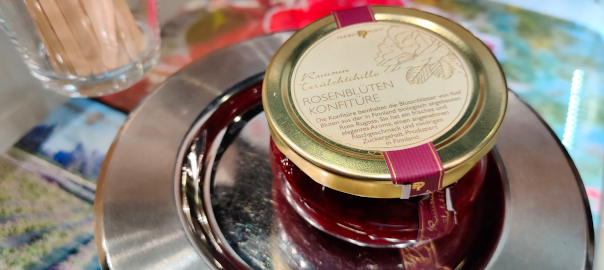
Matti und Tuuli Kotaja vom im Jahre 1983 gegründeten finnischen Familienunternehmen Finnish Plant FP-Kotaja Oy sind echte Enthusiasten – mit Ihrer hochwertigen Rosenblüten Konfitüre haben sie ein einmaliges Feinkostprodukt am Markt. Hierbei ist besonders sympathisch und beeindruckend das Matti`s Familie bereits seit dem 16. Jahrhundert durchgängig in der Landwirtschaft tätig ist – er hat seine Profession somit schon immer in den Genen gehabt.
Die Rosenfarm ist im Südwesten Finnlands zu finden – genauer gesagt in Vampula, Huittinen – wobei das Gebäude des heutigen Rosenhofes 1907 von Matti`s Großvater erbaut wurde. Die Kotaja Farm wird als solche seit 1917 bewirtschaftet und hat im Jahre 2017 ihr hundertjähriges Bestehen gefeiert.
Die professionelle Rosenzucht startete die Familie Kotaja Anfang 2007 mit der Installation einer Versuchsplantage – natürlich wurden hier auch in den Jahren zuvor schon Rosen angebaut, allerdings noch nicht mit dem Ziel der Kommerzialisierung – schon gar nicht einer eigenen Konfitüren-Produktion.

Im Jahr 2012 ist es dann aber soweit gewesen – mit der Rosa Rugosa, die aus dem Ostasiatischen Raum stammt, war eine Rose gefunden, die ideal für die Herstellung einer Rosenblüten Konfitüre war. Zu den Eigenschaften dieser Rosenart gesellt sich die Tatsache, dass im Grunde alles was in der milden finnischen Sonne gedeiht deutlich zarter und verhaltener vom Geschmack und den Aromen ist, als wäre es beispielsweise im Süden Europas angebaut worden. Auf Basis des großen Erfolges der neuen Konfitüre expandierte die Farm in den Jahren 2013 & 2014 nochmals deutlich, um der angefragten Produktionsmenge Rechnung tragen zu können.
Gerade dieses zarte und nicht aufdringliche Aroma der Rosen von der Farm der Familie Kotaja macht den Unterschied. Oft werden Rosenaromen in Speisen als zu aufdringlich empfunden – dies ist hier nicht der Fall. Die Rosenblüten Konfitüre hat einen leichten und erfrischenden Rosengeschmack und eignet sich zur Verwendung bei Vielerlei Speisen und Getränken.
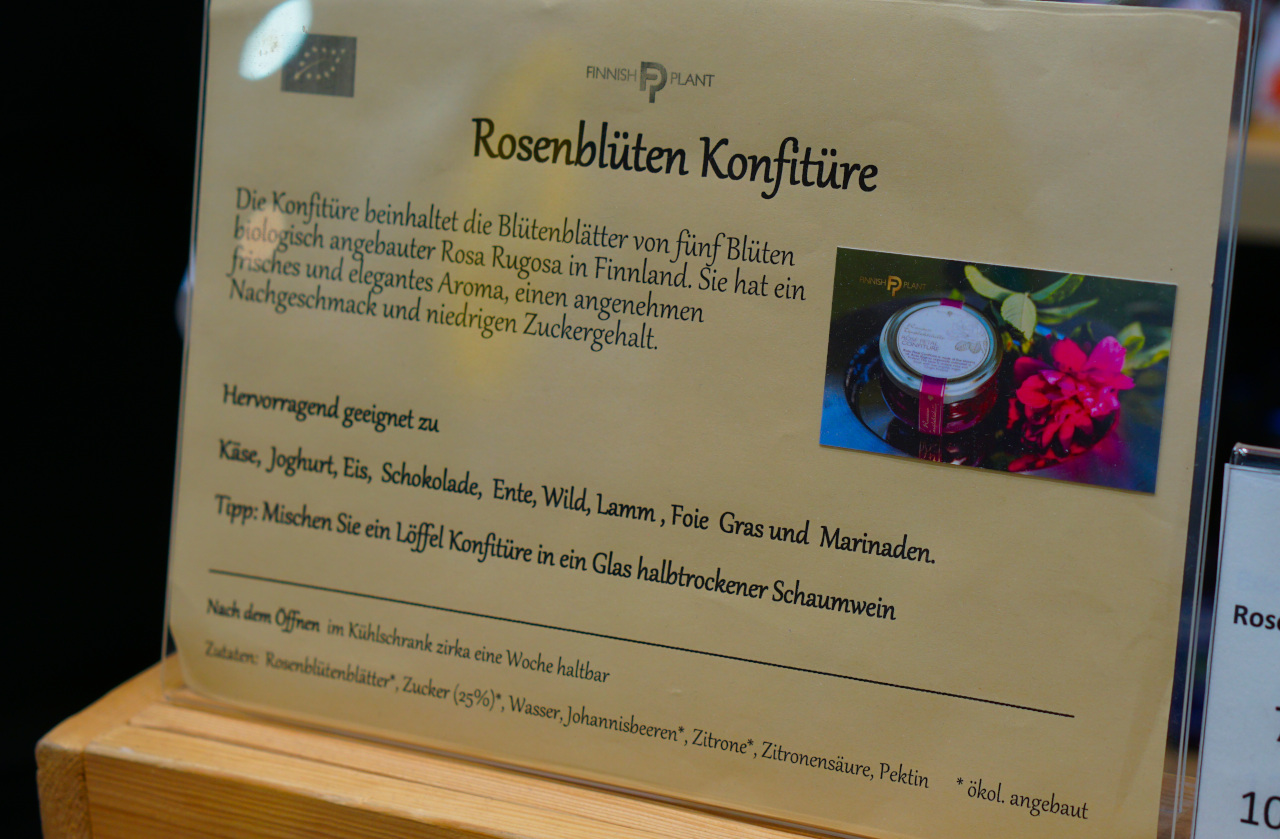
Der Zuckeranteil liegt bei rund fünfundzwanzig Prozent und die Konfitüre ist somit keinesfalls so süß wie gewöhnliche Konfitüren. Bei der Anpflanzung & Herstellung kommen glücklicherweise keine künstlichen Dünger, Pflanzenschutzmittel oder Konservierungsstoffe zum Einsatz. Ein positiver gesundheitlicher Aspekt ist der hohe Anteil an Flavonoiden in der Konfitüre – zu den Flavonoiden hatte ich ja im Beitrag zum Schwarzen Knoblauch bereits deren positive Wirkung aufgezeigt.
In der Hauptsache trägt der Zucker zur Haltbarkeit bei – wobei die Konfitüre zusätzlich mit etwas Zitronensaft sowie Johannisbeere verfeinert wird. Darüber hinaus wird etwas Wasser hinzugegeben und als Geliermittel dient das pflanzliche Pektin. Die Konsistenz der Konfitüre tendiert ab Raumtemperatur zu flüssig, was jedoch ganz im Sinne der Anwendung ist. Gerade um eine gute Vermischung beispielsweise bei der Verwendung in Getränken wie Prosecco, Tee`s oder Säften zu erreichen, ist dies eine gewünschte Eigenschaft.
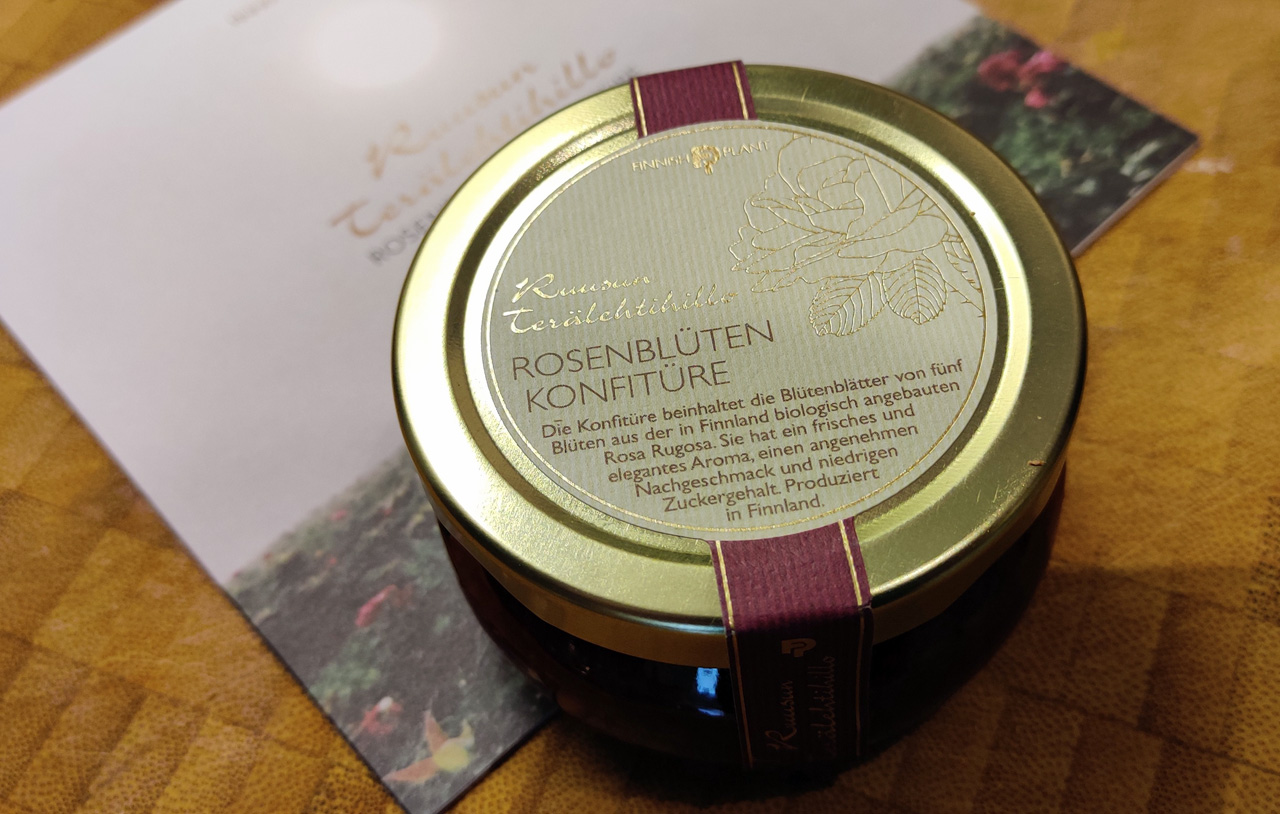
Matti und Tuuli haben mir gesagt, dass ihre Rosenblüten Konfitüre sich hervorragend für Desserts, Milchprodukte wie Käse und Joghurt, aber auch für Dressings eignet. Darüber hinaus aber auch für Fleisch, wie Wild, Lamm, Pute oder Huhn, sprich für deutlich mehr als ich anfangs vermutet hatte.
Selbst habe ich die Konfitüre bisher nur auf frischem Weißbrot, mit Schokolade, auf Creme Brûlée oder mit Rosé Champagner probiert – aber zu all diesen Sachen passte sie perfekt.
Es gibt bereits einige europäische Chefköche in Frankreich oder auch Deutschland – beispielsweise den finnischen Sternekoch Sauli Kemppainen – die ihre Liebe zur Rosenblüten Konfitüre der Familie Kotaja bereits entdeckt haben. Aktuell kocht Sauli im Berliner Restaurant SAVU – hier treffen interessanterweise sowohl nordische, als auch spanische und italienische Elemente aufeinander.
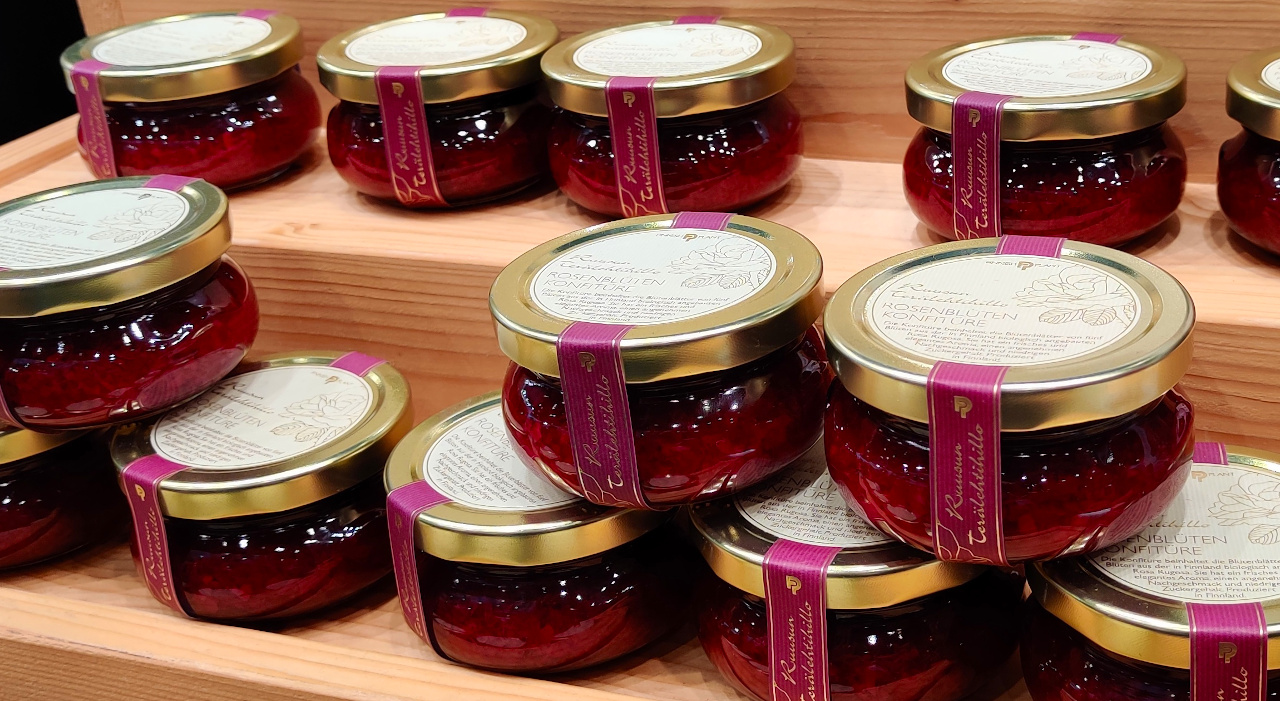
Solltet Ihr die Rosenblüten Konfitüre probieren wollen, müsst Ihr also nicht extra nach Finnland fahren. Mittlerweile gibt es diese aber auch schon im 120 Gramm Glas bei Galeria Kaufhof oder Online bei LittleFinland.
Auf YouTube zeigt uns Matti in einem kleinen Imagefilm zur Rosenblüten Konfitüre nicht nur eindrucksvolle Bilder der Rosenanpflanzungen und die atemberaubende Landschaft & Lage des Rosenhofes, sondern auch sein Talent am Piano. Der Clip passt mit seiner entspannten Atmosphäre und den klaren Bildern zum Produkt und die Drohen-Aufnahmen sind wirklich schön geworden.
Zu guter Letzt zum Webauftritt von Finnish Plant, die Seite ist mehrsprachig und sehr liebevoll gemacht – allerdings wird trotz des angebotenen Kontaktformulars momentan nicht sicher, also nicht in „HTTPS“ ausgeliefert – dies sollte zeitnah geändert werden. Matti und Tuuli haben mich bereits wissen lassen, dass die Erneuerung der Seite bereits in vollem Gange ist und ich bin mir sicher das, das Ergebnis mindestens so ansprechend wie Ihr Imagefilm sein wird.Matti and Tuuli Kotaja from the Finnish family business Finnish Plant FP-Kotaja Oy, founded in 1983, are real enthusiasts – with their high-quality rose petal confiture they have a unique delicacy on the market. It is particularly likeable and impressive that Matti’s family has been active in agriculture since the 16th century – he has always had his profession in his genes.
The rose farm is located in the southwest of Finland – more precisely in Vampula, Huittinen – whereby the building of today’s rose farm was built in 1907 by Matti’s grandfather. Kotaja Farm has been managed as such since 1917 and celebrated its centenary in 2017.
The Kotaja family started the professional rose cultivation at the beginning of 2007 with the installation of an experimental plantation – of course roses had been cultivated here in the years before, but not yet with the aim of commercialization – certainly not with an own confiture production.
In 2012, however, the time had come – with the Rosa Rugosa, which originates from East Asia, a rose had been found that was ideal for the production of a rose petal confiture. In addition to the characteristics of this type of rose, everything that thrives in the mild Finnish sun is much more delicate and restrained in taste and aroma than if it had been grown in southern Europe, for example. Based on the great success of the new jam, the farm expanded significantly in 2013 & 2014 in order to meet the requested production volume.
It is precisely this delicate and unobtrusive aroma of the roses from the Kotaja family farm that makes the difference. Rose aromas are often perceived as too obtrusive in dishes – this is not the case here. The rose petal confiture has a light and refreshing rose flavour and is suitable for use in a variety of foods and drinks.
The sugar content is around twenty-five percent and the confiture is therefore by no means as sweet as ordinary confitures. Fortunately, no artificial fertilizers, pesticides or preservatives are used during planting & production. A positive health aspect is the high content of flavonoids in the jam – I had already shown the positive effects of flavonoids in my article on black garlic.
Sugar is the main contributor to the shelf life of the confiture – whereby the confiture is additionally refined with some lemon juice and currant. In addition, some water is added and the organic pectin serves as gelling agent. The consistency of the confiture tends to be liquid-like at room temperature, which is in line with the application. Specially to achieve a good mixing for example when used in drinks like with Prosecco, teas or juices, this is a desired property.
Matti and Tuuli have told me that their rose petal confiture is excellent for desserts, dairy products such as cheese and yoghurt, but also for dressings. In addition, it can also be used for meat, such as game, lamb, turkey or chicken, in other words, much more than I initially thought.
I myself have so far only tried the confiture on fresh white bread, with chocolate, on crème brûlée or with rosé champagne – but it went perfectly with all these things.
There are already a number of European chefs in France or Germany – for example, the Finnish star chef Sauli Kemppainen – who have already discovered their love for the Kotaja family’s rose petal confiture. Currently Sauli cooks at the Berlin restaurant SAVU – interestingly enough, Nordic, Spanish and Italian elements meet here.
So, if you want to try Kotaja`s rose petal confiture, you don’t have to travel to Finland. Meanwhile you can also get it in a 120 gram jar at Galeria Kaufhof or online at LittleFinland.
On YouTube Matti shows us in a small image film about rose petal confiture not only impressive pictures of the rose plantations and the breathtaking landscape and location of the Rose farm, but also his talent at the piano. With its relaxed atmosphere and clear images, the clip fits the product and the drone shots have become really beautiful.
Last but not least to the web presence of Finnish Plant, the site is multilingual and very lovingly made – but despite the offered contact form is currently not secure, so not in „HTTPS“ delivered – this should be changed soon. Matti and Tuuli have already let me know that the renewal of the site is already in full swing and I am sure that the result will be at least as appealing as their image film.