
Der Presseansprechpartner der Initiative Tierwohl – Dr. Patrick Klein – war so freundlich mir einen Einblick in dieses wichtige und für mich neue Thema zu geben, danke dafür.
Tierwohl sollte uns alle angehen, denn ein jeder Fleisch-Konsument sollte Wert darauflegen, dass die Nutztiere die er später als Kotelett, Geflügelgulasch oder auch Salami auf seinem Teller wiederfindet mit Respekt behandelt wurden. Nur eine artgerechte und gesunde Aufzucht kann uns einen hochwertigen und schmackhaften Braten auf den Teller zaubern.
Die Initiative Tierwohl hat sich bis dato aus einem Fonds-Model von Gebern aus dem Lebensmitteleinzelhandel finanziert – dies wird sich laut Pressetermin zukünftig ändern (Mehr zur Finanzierung findet sich sicher bald auf dem Webauftritt der Initiative).
Eines der Ziele der Initiative ist es, das jeder Endverbraucher im Supermarkt durch das Tierwohl-Label auf der Verpackung sicher sein kann, dass die Nutztiere unter tiergerechten Standards gehalten und aufgezogen wurden. Um dies zu ermöglichen erhalten alle teilnehmenden Nutztierproduzenten & Mäster pro Kilo Fleisch aus Tierwohl gerechter Aufzucht Mittel, die es erleichtern sollen alle Vorgaben und Kriterien zu erfüllen.

Hierdurch werden deutliche Aufschläge auf den Endverbraucherpreis vermieden und Kunden können sich somit beim Einkauf leichter für Tierwohl gerechtes Fleisch entscheiden, da es kaum teurer ist. Dies unterstützt wiederum die gesamte Kette des unter Beachtung des Tierwohls erzeugten und vertriebenen Nutztierfleisches und perspektivisch wächst hierdurch dann auch dessen Anteil in den Regalen unserer Supermärkte.
Der von der Initiative erarbeitete Kriterienkatalog gilt aktuell für Schweine & Geflügel und schreibt allen teilnehmenden Produktionsbetrieben vor, in welchen Standards die Nutztiere zu halten sind. Dies betrifft beispielsweise den Platz, den ein jedes Tier während der Aufzucht zur Verfügung hat, den Umstand das die Tiere natürliches Tageslicht erhalten müssen oder aber auch welches Klima in den Ställen herrschen muss. Mehr Details zu den Kriterien finden sich im Webauftritt der Initiative Tierwohl unter Kriterienbeschreibungen.
Die teilnehmenden Betriebe werden jährlich zweimal hinsichtlich der Einhaltung der Tierwohl-Kriterien überprüft – einmal mit und einmal ohne Ansage. Wurde gegen die Kriterien verstoßen müssen auch vorab erhaltene Gelder an die Initiative zurückerstattet werden. Soweit berichtet sind derartige Fälle jedoch eher die Ausnahme, denn das Model setzt auf Einsicht aus Verantwortung und belohnt schließlich Tierwohl gerechte Aufzucht & Haltung durch zusätzlich zur Verfügung gestellte Mittel – somit eine Win/Win/Win Situation für Nutztierproduzenten, Handel und Endverbraucher.
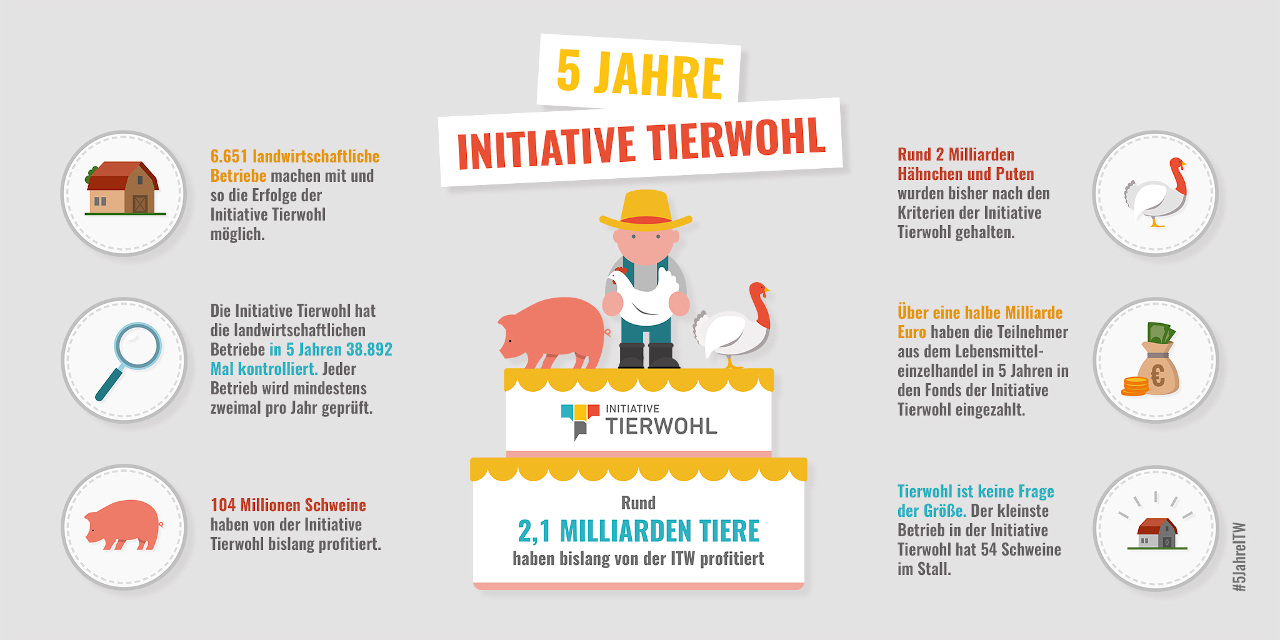
Aus Sicht der BIO Produzenten geht sicher noch deutlich mehr, aber das kann nur funktionieren, wenn Endverbraucher auch bereit und in der Lage sind deutlich mehr für Fleisch und Geflügel zu zahlen. Wenn durch die Initiative Tierwohl sukzessive erreicht werden kann, dass zukünftig der kleinste gemeinsame Nenner der Fleisch- und Geflügelwirtschaft Tierwohl gerechte Aufzucht ist, sollten die Regale in unseren Supermärkten bald auch kein Fleisch mehr in den Theken haben, was unter zweifelhaften Aufzuchtbedingungen erzeugt wurde. Also auch wenn noch mehr ginge, ist dies bereits ein positiver Schritt in die richtige Richtung. Dies führt vor allem auch zu mehr Eigenverantwortung und neuen Einsichten bei allen Beteiligten und erzielt auf Grund der Vorgehensweise auch eine hohe Durchdringung in allen Bereichen – von der Produktion über den Handel bis hin in die verarbeitenden Betriebe.