
A New Trade Fair – A New World of Flavours
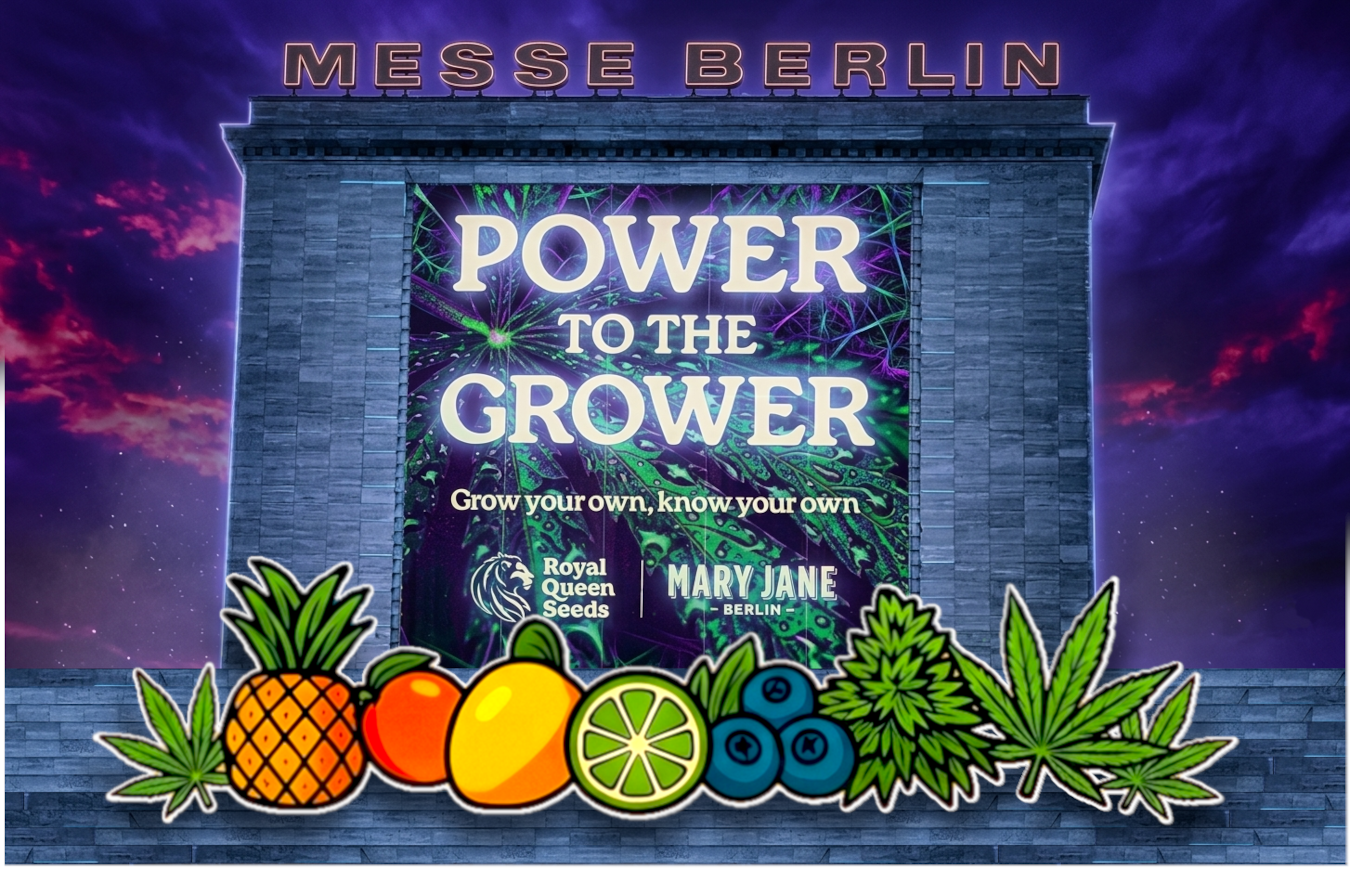
The 2025 trade fair season at Messe Berlin initially began for me with familiar formats. Events such as FRUIT LOGISTICA, the International Green Week, and the WEINmesse Berlin have long become fixed constants within my culinary trade-fair calendar.They undoubtedly remain exciting industry gatherings — yet genuine sensory surprises naturally become rarer over time. Much of what is presented today feels more like an evolution of established products or concepts rather than entirely new discoveries.
A rather coincidental impulse during a stay in Asia eventually directed my attention toward a subject that surrounds us every day but is rarely perceived consciously: terpenes.
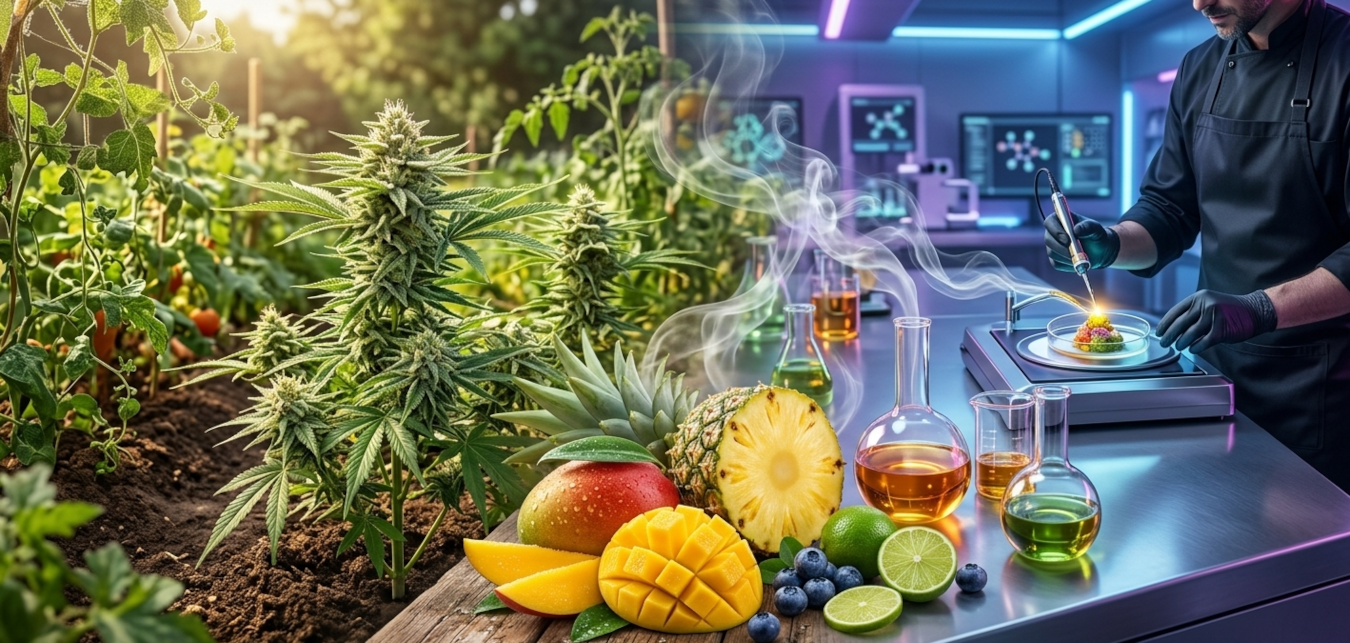
A video from the United States introduced a group of cannabis producers and terpene-hunters exploring the sensory potential of cannabis — not from the perspective of its effects, but as an aromatic ingredient.
One accompanying dinner in particular stood out: dishes were deliberately enhanced using isolated terpene profiles, entirely without psychoactive impact, yet delivering remarkable flavour precision.
Terpenes – The Architects of Flavour
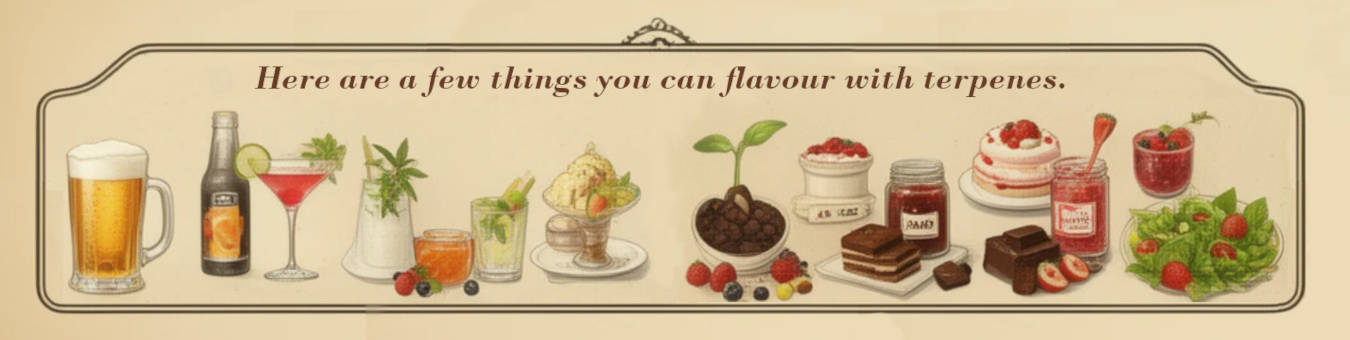
Terpenes are the “operating system” of the plant-based world of flavours and are found in nearly every fruit, vegetable, or herb we consume on a daily basis.
Terpenes are particularly fascinating in the kitchen because they create not only flavour but also a “mouthfeel” and an atmospheric effect—without having any texture of their own.
🧬 What they are: Terpenes are natural, volatile hydrocarbon compounds. In nature, they serve as a plant’s protective shield against pests or as attractants for pollinators.
🌿 Where they come from: They are found in the resins and oils of almost all plants. Whether it’s the aroma of fresh lemons (limonene), the scent of pines (pinene), or the gentle note of lavender (linalool) – these are all terpenes in their purest form.
🚫 Not intoxicants: Crucially, terpenes are not cannabinoids. They contain no THC or CBD and have no psychoactive effects. They are globally legal and certified safe for consumption.
✨ Effects on enjoyment: Beyond aroma, terpenes interact directly with our senses. They can be invigorating (like lemon), relaxing (like lavender), or even support anti-inflammatory and antioxidant properties in food.
🍳 Use in Kitchen & Bar: Because they are extremely potent, tiny amounts are enough to give food and drinks a completely new, complex depth.
Terpenes are thus much more than just fragrances; they are the chemical building blocks that determine whether a dish tastes flat or multidimensional.
In the culinary world, we often use them intuitively (e.g., lemon zest on fish). However, when used in isolation or specifically concentrated, they enable a layering of flavours that is often unattainable with fresh herbs alone.
In the world of chemistry, a molecule is a molecule. Limonene from a lemon, for example, is chemically identical to limonene from a “Super Lemon Haze” cannabis plant.
The key point is that by using botanically derived terpenes, chefs and “mixologists” can replicate the legendary flavour profiles of famous cannabis strains (such as the earthy sweetness of Girl Scout Cookies or the fuel-like aroma of Sour Diesel) replicate without violating the Controlled Substances Act. Essentially, you isolate the “essence” of the flavour from the effects of THC/CBD.
💡 Conclusion
Terpenes are the legal “superpowers” of the plant world. They allow the full spectrum of botanical aromas to be brought into fine dining and mixology without relying on active substances like THC or CBD.
Sources
- Burdock, G. A. (2010). Fenaroli’s Handbook of Flavor Ingredients.
- Russo, E. B. (2011). Taming THC: potential cannabis synergy and phytocannabinoid-terpenoid effect. British Journal of Pharmacology.
- National Center for Biotechnology Information (NCBI) – PubChem Compound Summary: Terpenes.
- EFSA (European Food Safety Authority) – Scientific Opinion on Flavouring Substances.
This moment became the starting point for deeper research: how can terpenes be used in culinary applications, and what role might they play in gastronomy, beverage innovation, and future food concepts?
However, the expertise of various company’s on the market now extends far beyond cultivation alone. Dutch Passion has increasingly embraced the culinary dimension of cannabis as a lifestyle topic.
Pioneering Spirit & Global Expansion: The Evolution of Dutch Passion
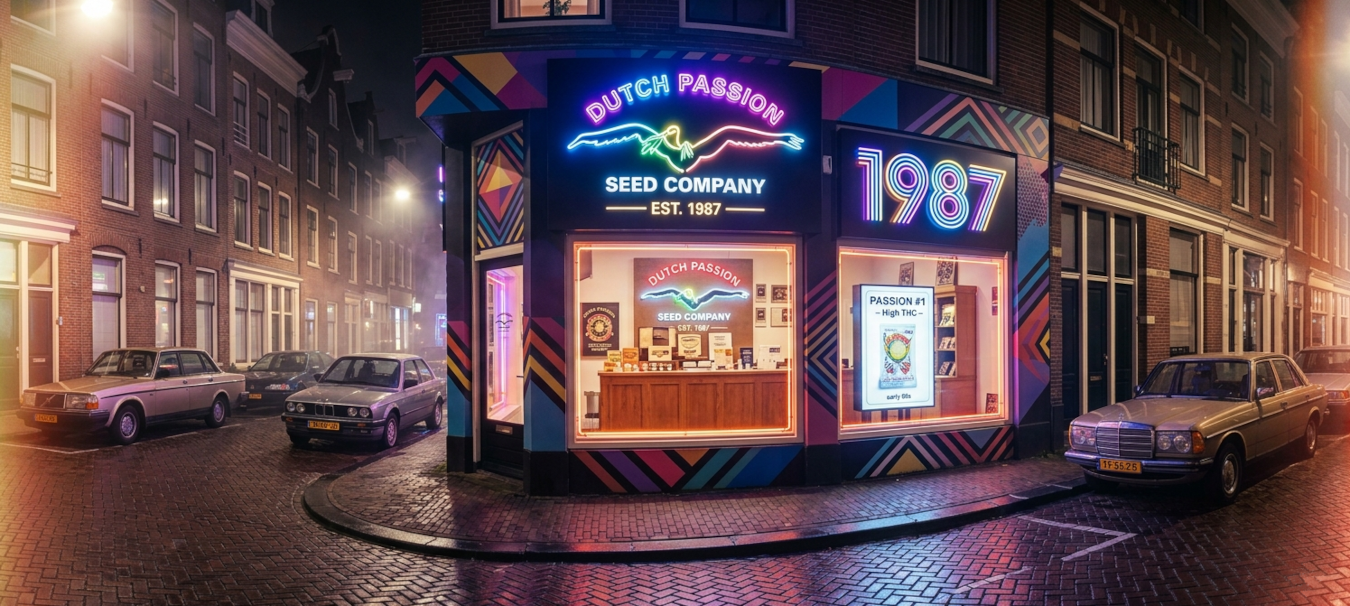
The history of modern cannabis breeding is inseparably linked to one name: Dutch Passion. What began in the 1970s as a passionate hobby of biology student Henk van Dalen at the University of Amsterdam evolved into one of the most influential global players in the industry. Van Dalen collected genetics worldwide — from Thailand to Nigeria — thereby laying the foundation for a new era of cannabis breeding (Dutch Passion, n.d.).

After early in-house varieties such as “Passion #1” attracted attention in the early 1980s with remarkably high THC levels, the Dutch Passion Seed Company was officially founded in 1987 (Dutch Passion Catalogue, 2023). A decisive turning point followed in 1990: as the world’s first seed bank, the company developed commercially viable feminised cannabis seeds. This “Feminisation Revolution” permanently changed the market by making cultivation more efficient and accessible (Dutch Passion, n.d.).
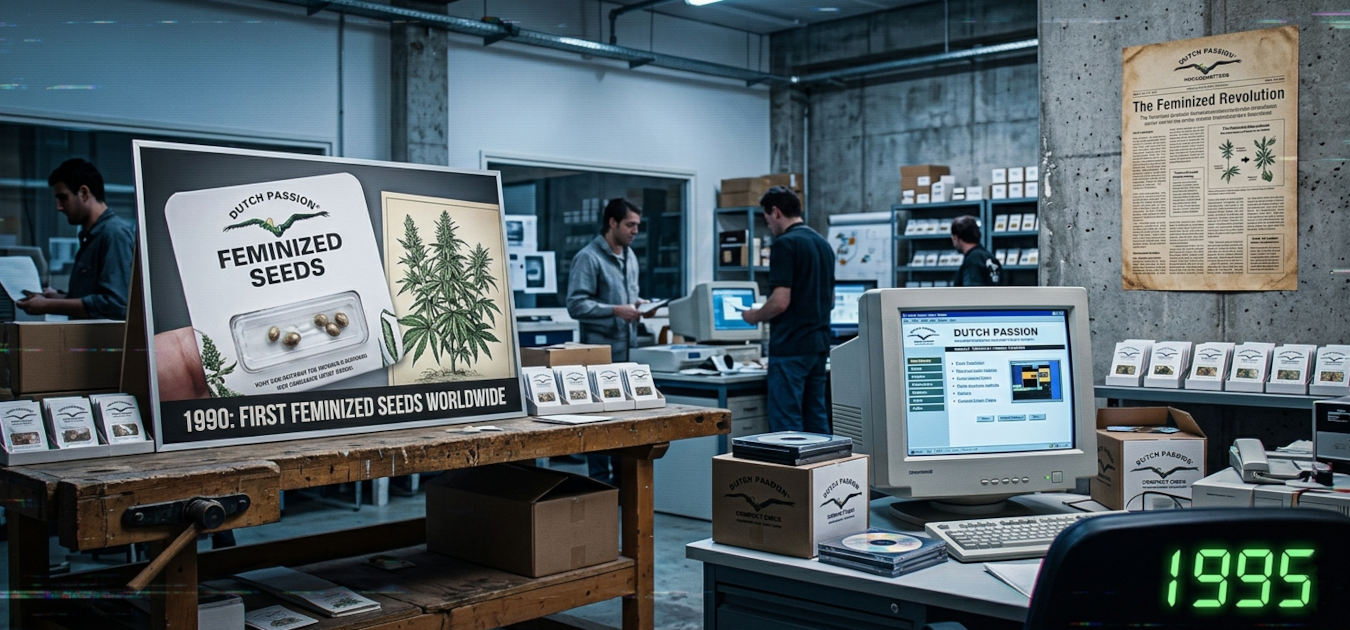
Today, the company operates on a broad commercial basis and acts as an international wholesale supplier for thousands of retailers worldwide (Dutch Passion Catalogue, 2023). With an estimated web revenue of up to €25 million generated through its primary domains alone, Dutch Passion demonstrates significant economic relevance (Similarweb, 2026).Alongside its headquarters in Amsterdam, the company significantly expanded into Thailand in 2023 to actively participate in the country’s emerging legal market development (Dutch Passion, n.d.).

With more than 100 awards and a continued focus on emerging cannabinoids, the traditional company remains both an economic and cultural pioneer within the industry.
References
- Dutch Passion (n.d.): About Us – The History of Dutch Passion
- Dutch Passion (2023): Cannabis Seeds Catalogue 2023
- Dutch Passion Blog (2021): 420 Multi-Course Cannabis Recipes
- Similarweb (2026): Dutch Passion Analysis and Market Share Overview
Dutch Passion regularly publishes guides on “High Cuisine,” ranging from multi-course cannabis menus to specialised baking recipes (Dutch Passion Blog, 2021).
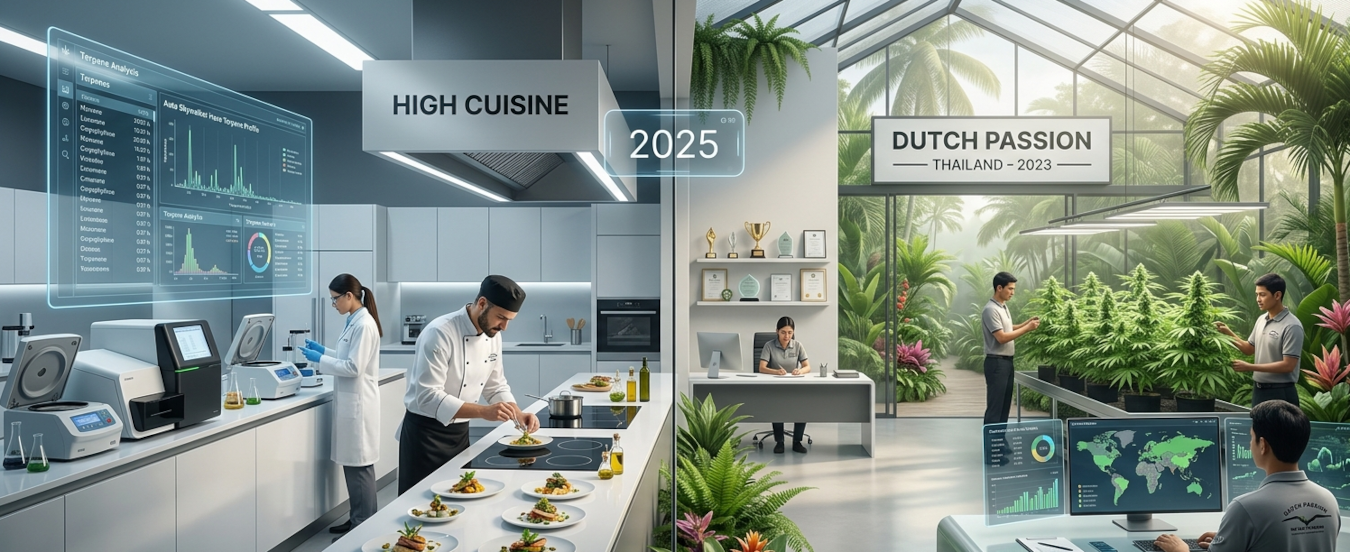
Terpenes play a central role here — aromatic compounds that make strains such as “Auto Skywalker Haze” not only potent but also sensorially complex. Earthy notes, fruity citrus aromas, and spicy pine nuances demonstrate how genetics today are selected not only for potency but also for their gastronomic potential in edibles and infusions (Dutch Passion Catalogue, 2023).

With exactly this focus, my path ultimately led me to Mary Jane Berlin.
At the beginning, I would like to offer a brief insight into my personal journey through the trade fair.
Although I have frequently reported on events held at the Berlin exhibition grounds, this particular event differed noticeably from other formats. Organisationally, Mary Jane Berlin is not a Messe Berlin in-house exhibition but an external event hosted on the venue.
Even before the official opening, full-day professional visitor programs were already taking place — a clear indication of how strongly the event has professionalised over recent years. From an organisational standpoint, the overall setup reflected a high level of maturity: website, ticketing system, and an adapted trade fair app enabled structured navigation throughout the event.

Internationality was present everywhere. Visitors and exhibitors from Spain, the Netherlands, and Austria were especially well represented. Basic English skills proved helpful, although spontaneous communication beyond linguistic perfection worked just as naturally.
During my visit, the dynamics of visitor movement stood out in particular. The event felt less like a traditional trade fair and more like a hybrid of industry platform, community gathering, and festival atmosphere.
Across three exhibition days, approximately 65,000 visitors attended alongside more than 500 exhibitors. The resulting noise level posed a genuine challenge for my interview recordings — a factor that later complicated transcription considerably.
The overall atmosphere, however, remained consistently relaxed and open. Especially noticeable was the low-barrier access to products, conversations, and live demonstrations. Many offerings felt inviting rather than aggressively sales-driven — an approach that has become increasingly rare at established consumer fairs.

The outdoor area was a bit of a “Woodstock moment”—it was really impressively set up and turned the “fairgrounds courtyard” into a real summer garden this time around. The prices across the entire Mary Jane campus seemed fairer to me than at other local events.
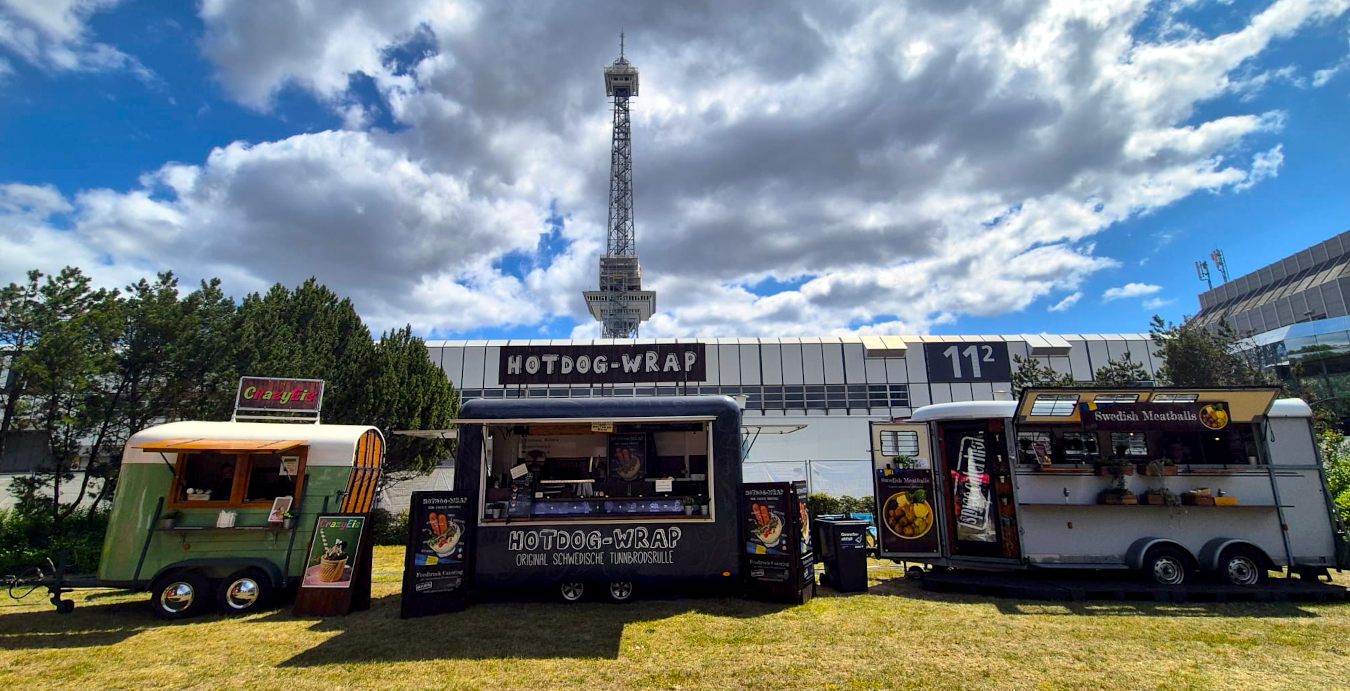
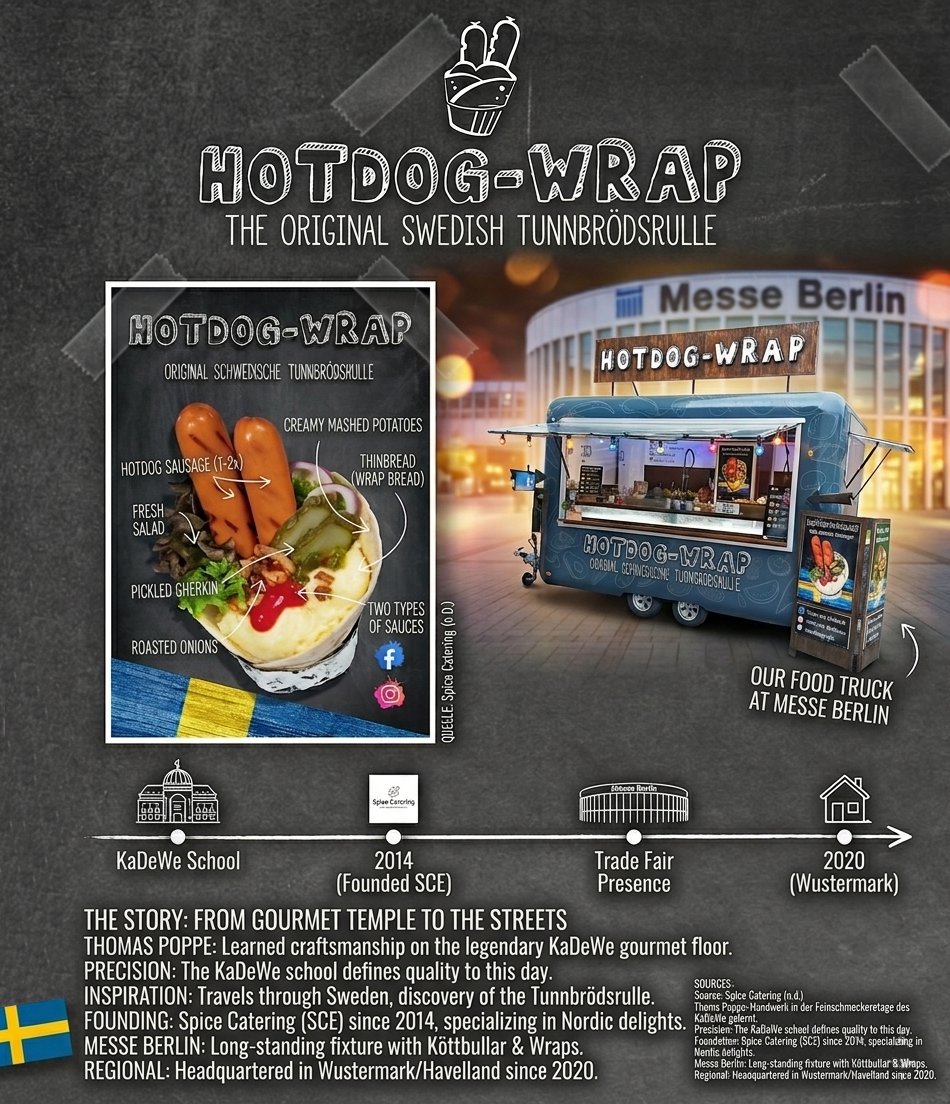
As always, “the old Swede” was there too—Thomas Poppe’s HOT-DOG Wrap is truly delicious and has become a real institution at Messe Berlin!
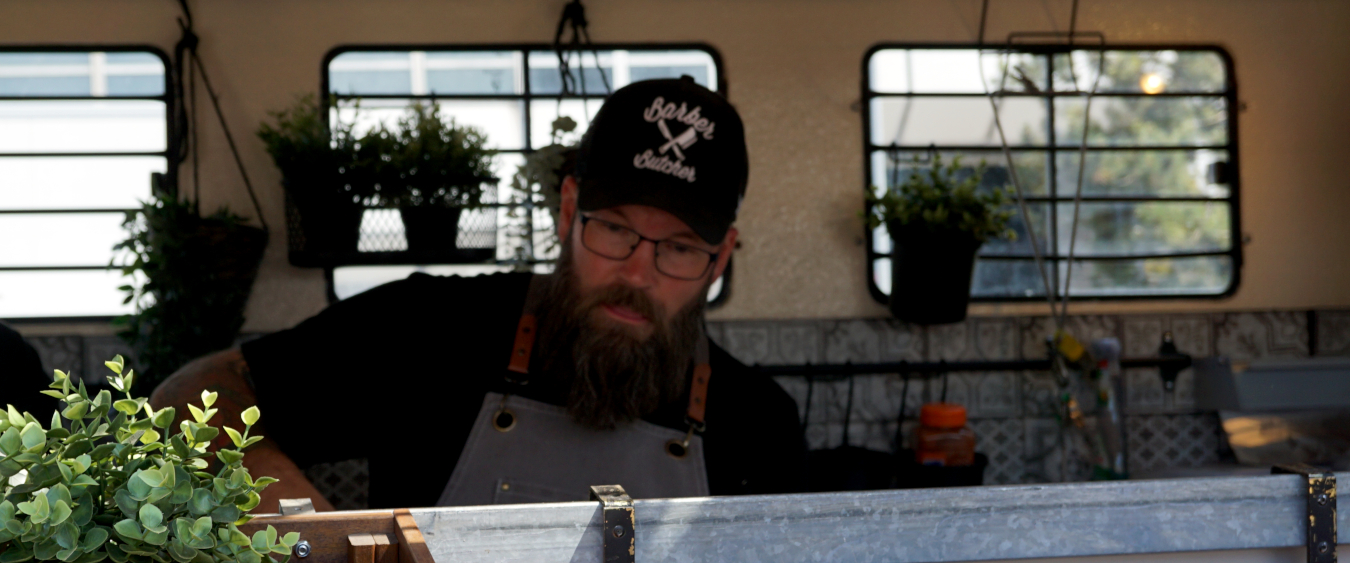
From Haute Cuisine to the Streets: The Culinary Journey of Thomas Poppe
If you are wandering through the halls of Messe Berlin, there is one aroma you simply cannot miss: savory Swedish wraps that taste nothing like your typical trade fair fare. Behind this concept stands a man who learned his craft in the “Champions League” of gastronomy: Thomas Poppe.
A School of Excellence
Before Poppe shook up the Berlin street-food scene with his company Spice Catering (S.C.E. Spice Catering & Eventmanagement GmbH), he refined his skills where precision is everything. He served as a chef in the legendary gourmet department of KaDeWe (Kaufhaus des Westens) in Berlin—one of the world’s most prestigious department stores (MAZ, 2020). This education in culinary discipline still defines his standards for quality today, even if he now prefers serving Swedish specialties over lobster.
The Swedish Discovery
Since founding his catering business in 2014, Poppe has made a name for himself as a specialist in Nordic delights. He drew his inspiration directly from the source: while traveling through Sweden, he fell in love with the Tunnbrödsrulle—the classic Swedish hot dog wrap (Spice Catering, n.d.). For many years, he has been a staple at Messe Berlin, providing hungry professionals with a mix of Köttbullar, Smörgåstårta (sandwich cake), and his famous wraps (Tagesspiegel, 2017).
Expansion and a New Home
In 2020, Poppe moved his headquarters to Wustermark (Havelland), just outside Berlin. From there, he manages his major Berlin trade fair operations while also enriching the regional food truck culture (MAZ, 2020). His success proves that when craftsmanship from KaDeWe meets honest street food passion, it creates something that connects people—whether in a trade fair hall or the Brandenburg countryside.
Sources
- Märkische Allgemeine Zeitung (2020): A KaDeWe chef brings the food truck to the village, in German
- Spice Catering (n.d.): Company History and Concepts, in German
- Unser Havelland (2023): At the Auenhof, in German
- North Data (2026): Company Profile: S.C.E. Spice Catering & Event Management, GmbH
At Mary Jane, alongside the scene’s enthusiasm, you could of course also sense the commercial side of the “new business”—not always entirely appealing, but perhaps it was a bit like that at the real Woodstock as well—though here, the “first and true” (aside from Brösels’ driving performance) WERNER race comes to mind as a comparison.
Why Terpenes Are Suddenly Relevant
What became especially clear at Mary Jane was a noticeable shift in focus: away from purely product-driven presentation toward aroma, sensory science, and botanical understanding. Terpenes were no longer treated as secondary compounds but as independent flavour tools.

I had carefully planned my visit to the trade show and set clear guidelines for myself. My main interest lay in understanding how terpene profiles could be applied to flavour foods and beverages — both in haute cuisine and industrial production environments.
In addition to conducting numerous interviews, I also made sure to take the time to talk to people at other booths.

BioBizz f.e. presented itself as an internationally established manufacturer of organic growing substrates. Conversations on site highlighted how soil microbiology can indirectly influence later aromatic development.
The Alchemists of the Earth – Biobizz
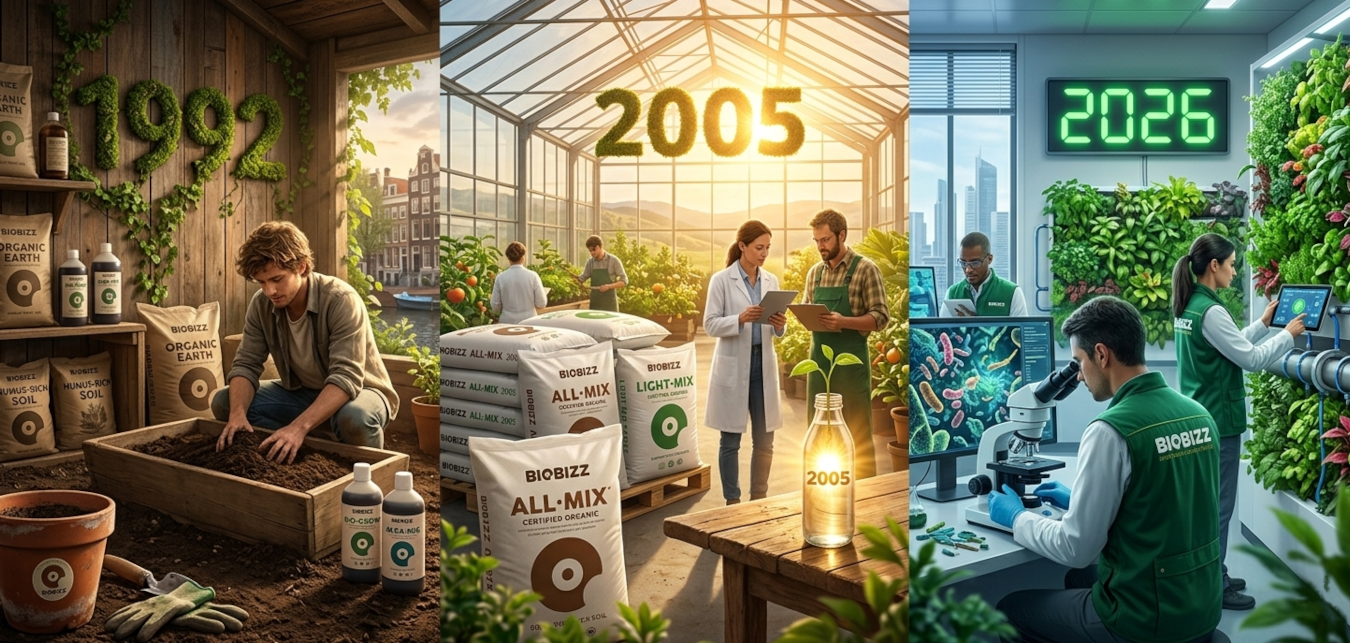
If the genetics from Sensi Seeds or Paradise Seeds are to reach their full aromatic potential, the journey usually begins with the soil. This is where Biobizz World Wide Organics has spearheaded a revolution since 1992 (Biobizz, n.d.). While competitors long relied on chemical salts, the pioneers at Biobizz believed in the power of nature and developed fertilizers that nourish the soil life rather than the plant itself (Biobizz Product Catalogue, 2024).
This “Earth First” approach has made Biobizz the global market leader in organic plant care. The company has proven that organic cultivation is not only more sustainable but also leads to superior terpene production and an unadulterated flavor experience (Biobizz Blog, 2021). Today, the name Biobizz stands for a promise: 100% organic quality that preserves the plant’s integrity from seed to harvest. It is this deep connection to soil microbiology that makes Biobizz an indispensable partner for gourmet gardeners worldwide.
Sources
- Biobizz (o.D.): Our Mission – Growing organically since 1992.
- Biobizz (2024): Product Catalog 2024 – The Organic Choice.
- Biobizz Blog (2021): Why organic farming improves flavour.
Sensi Seeds demonstrated how essential genetic stability is for reproducible terpene profiles — effectively forming the foundation of natural aroma extraction.
The Genetic Library of Humanity – Sensi Seeds

To understand the history of modern cannabis, one must visit the canals of Amsterdam. It was here in 1985 that Ben Dronkers founded Sensi Seeds, a company that today is far more than just a seed bank – it is the “genomic memory” of an entire industry. What began with adventurous travels to the Hindu Kush evolved under Dronkers’ leadership into the world’s largest seed library (Sensi Seeds, n.d.). Sensi Seeds performed not only botanical but also cultural pioneering work: with the opening of the world’s first hemp museum in the same founding year, Dronkers created a center of education that continues to attract millions of visitors to this day (Hemp Museum, n.d.).
With the release of the “Jack Herer” strain in 1994, the company set a standard that remains unmatched in both recreational culture and medicine (Sensi Seeds Catalogue, 2024). In an era of rapid technological innovation, Sensi Seeds remains a bedrock of the industry, preserving the plant’s historical heritage while simultaneously bridging the gap to the future through modern research lines. It is this unique combination of tradition and scientific excellence that makes Sensi Seeds the undisputed authority in the global cannabis market.
Sources
- Sensi Seeds (n.d.): Our Story – Over 30 Years of Experience.
- Sensi Seeds (2024): Cannabis Seeds Catalogue – Heritage Edition.
- Hemp Museum (n.d.): The Hash Marihuana & Hemp Museum Amsterdam.
- Sensi Seeds Blog (2023): Innovation in Breeding – The Research Series.
At the CLONEX booth, discussions focused on vegetative propagation. Cloning remains the most reliable method for preserving specific terpene expressions over time, even though biological ageing processes cannot be avoided indefinitely.
The Seal of Life – CLONEX
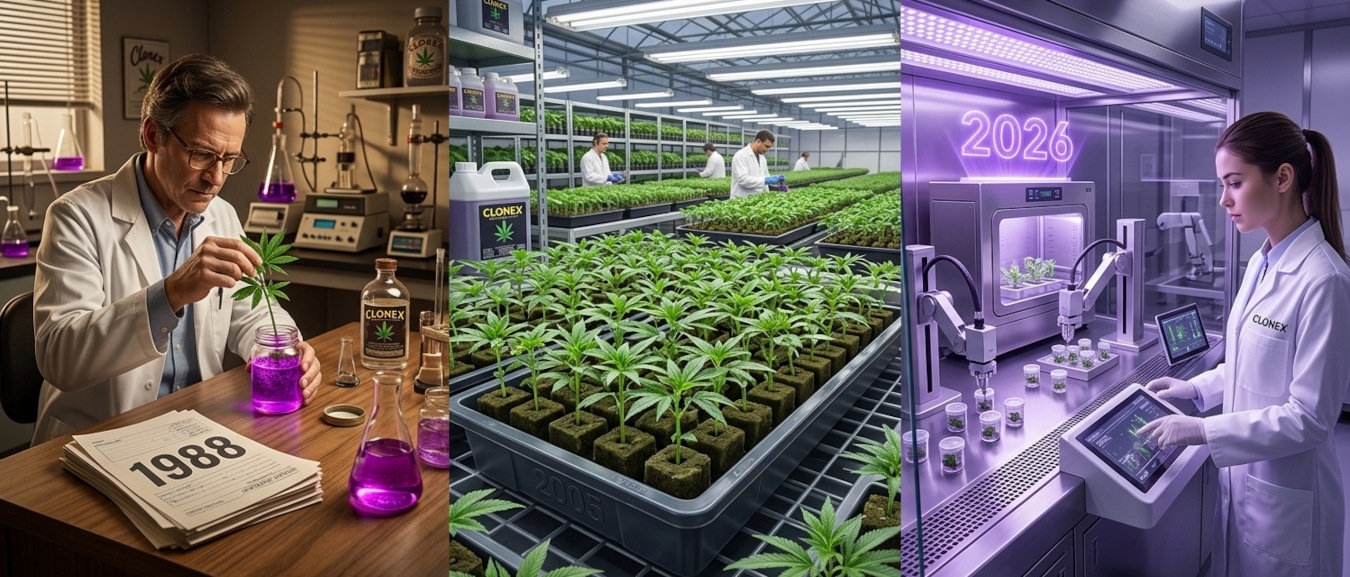
In the world of professional plant breeding, there are moments when a single product defines an entire technique. The introduction of CLONEX in 1988 was one such moment. Before the team at Growth Technology presented its iconic purple gel, the propagation of cuttings was often a gamble (Growth Technology, n.d.). With Clonex, rooting transformed from an art into an exact science (Growth Technology Catalogue, 2024).
What makes Clonex special is its ability to instantly seal the delicate cut of the plant while providing a depot of hormones and nutrients that stimulates root formation in record time. It is the “insurance policy” for every breeder wishing to preserve valuable elite clones (Growth Technology Blog, 2021).
Whether in the vast farms of California or the grow rooms of Amsterdam – Clonex remains the indispensable link that ensures the survival of the best genetics. Without this gel, the rapid scaling and standardization of modern cannabis strains would have been almost unthinkable.
Sources
- Growth Technology (o.D.): The History of Clonex – 30 Years of Success
- Growth Technology (2024): Commercial Propagation Catalogue
- Growth Technology Blog (2021): The Science of Stem Cuttings
The latest sources are available in English at https://www.growthtechnology.com/.
Of course, I also visited the HANF.com booth. There, I had the opportunity to talk with Alexander Cerveny, the CEO and son of founder Wenzel Cerveny, about the company’s history and, of course, terpenes (that’s where I had ordered my first samples).
This company’s down-to-earth success story is impressive—the combination of conviction, dedication, tenacity, and, above all, teamwork has already paid off with the establishment of numerous branches across the country. Today, consulting and sales are also handled by franchisees, and the company continues to grow steadily.
The Pioneer of the German Hemp Market – HANF.com
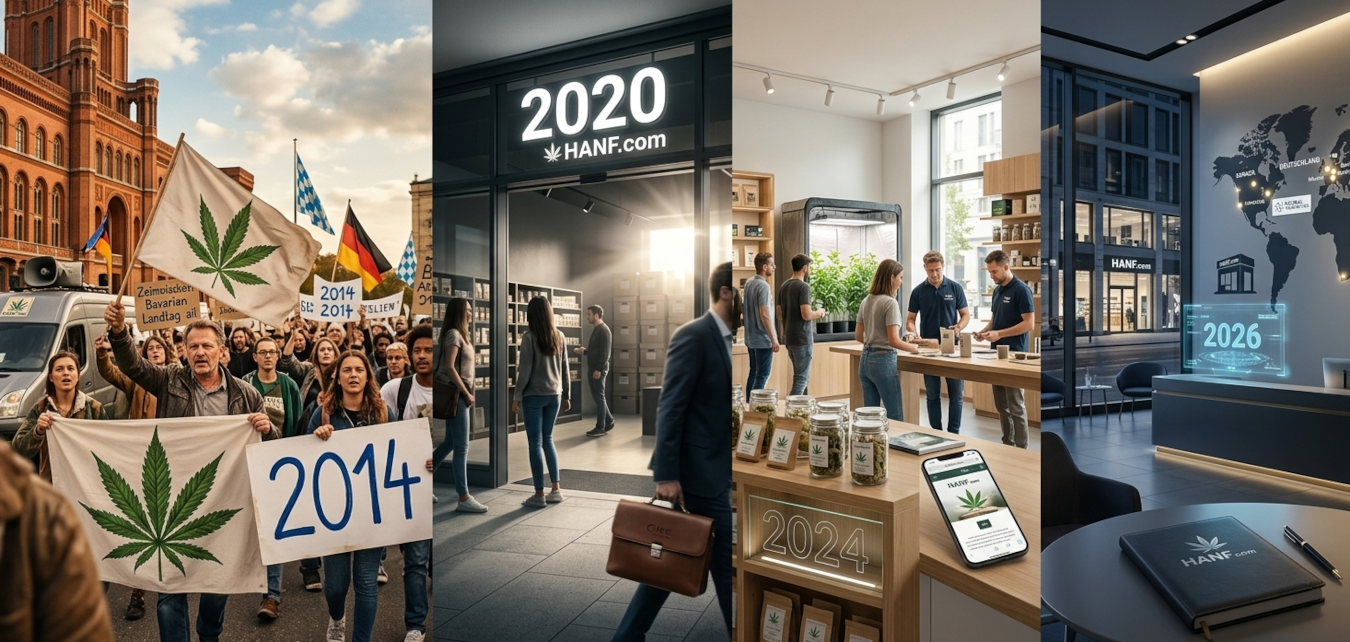
Anyone walking through German city centers today is increasingly likely to encounter the striking logo of HANF.com. Yet, behind Germany’s largest cannabis retail chain lies far more than just a savvy business enterprise. It is the life’s work of founder Wenzel Cerveny, who as early as 2014 – long before the “traffic light” coalition – took to the streets as a political activist for the legalization of cannabis (HANF.com, n.d.).
With the founding of the brand in 2016 and the subsequent establishment of CWE Holding Europe GmbH, Cerveny created a platform that now sets nationwide standards. The path was anything but easy: years of investigations and raids characterized the company’s history until full legal rehabilitation was achieved in 2025 (PresseBox, 2025). This tireless struggle for transparency and quality has made HANF.com a pillar of trust for consumers seeking legal propagation material and expert advice amidst the confusion of the new legal landscape (König Online, 2025).
Economically, the company is on an unprecedented upward trajectory. With a jump in revenue to over 7 million euros in 2024 and support from international partners like Neural Therapeutics, HANF.com has long since outgrown its infancy (Newsfile Corp., 2026). From the first small shop in Bavaria to a national chain with a franchise system: HANF.com symbolizes the transformation of cannabis from a taboo subject to a serious economic asset in the heart of society.
Sources
- com (n.d.): About Us & Our Mission
- PresseBox (2025): Neural Announces Closing of Acquisition
- König Online (2025): Hanf.com ends sale of cannabis cuttings
- Newsfile Corp. (2026): Neural Portfolio Company Hanf.com Reports Strong Results
I also found my conversation at the Paradise Seeds booth very interesting; they are also a true pioneer and a veteran in the industry. Among the many unique strains, there were a few that, based on their terpene profiles, seemed well-suited for culinary use.
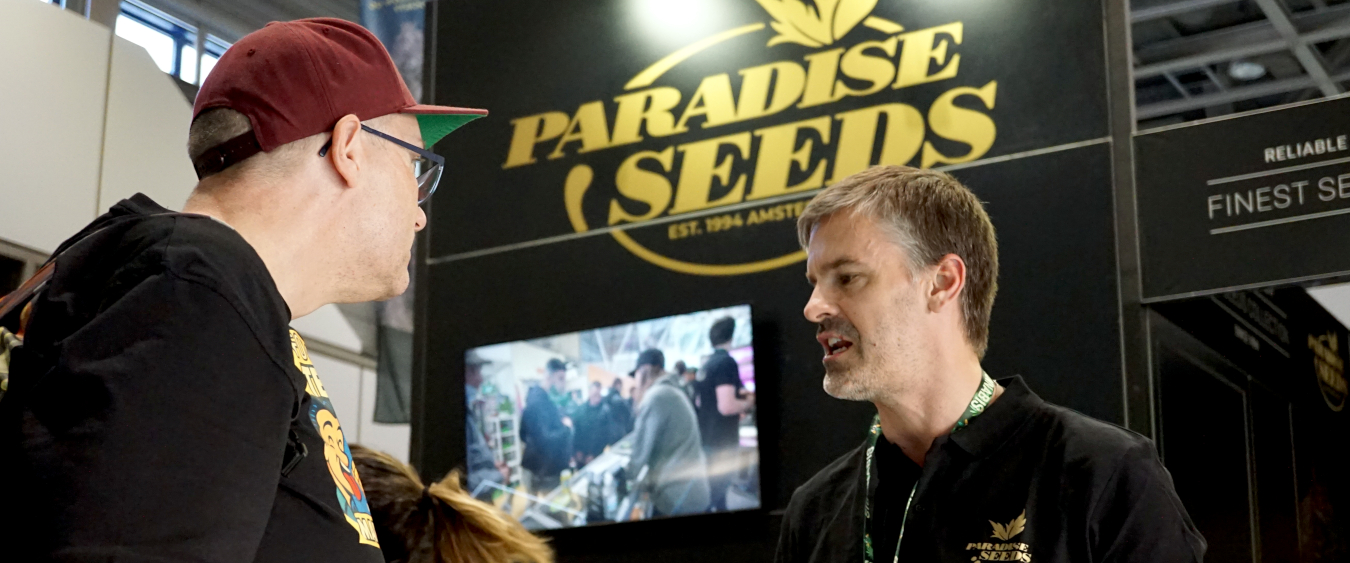
The Architects of Stability – Paradise Seeds
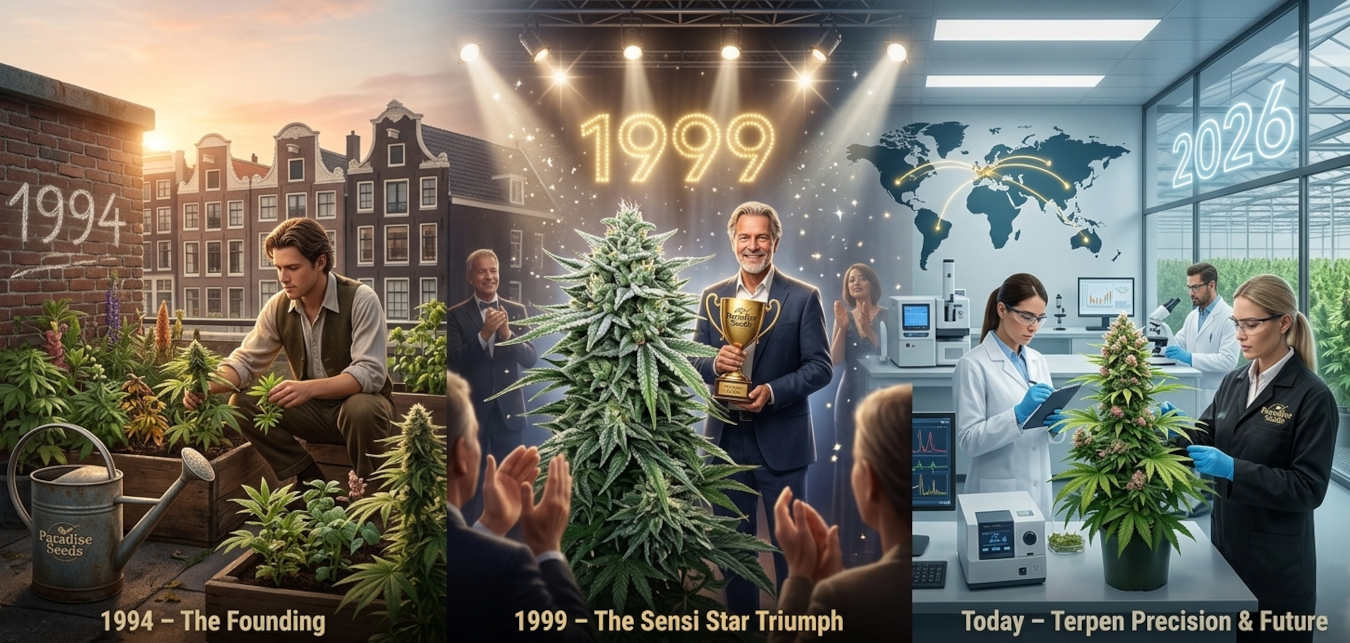
In the volatile world of cannabis breeding, Paradise Seeds has been a symbol of reliability and genetic perfection since its founding in 1994. What began as a private breeding project by founder Luc in the backyards of Amsterdam’s squatter scene quickly evolved into one of the most respected seed banks worldwide (Paradise Seeds, n.d.). The breakthrough came in the mid-90s with the “Sensi Star” strain, which is still referred to today as the “Rolls-Royce of Indicas” and has earned the company numerous international trophies (Paradise Seeds Catalogue, 2024).
Paradise Seeds distinguishes itself from many competitors through an almost scientific obsession with plant stability. While many trends come and go, Luc and his team focus on genetics that deliver exactly what was promised in every garden – whether indoors or outdoors (Paradise Seeds Blog, 2022). Today, the company combines this historical legacy with modern sensory demands, remaining an indispensable player for those who seek perfection rather than experiments in breeding.
Sources
- Paradise Seeds (n.d.): About us – The stroty of Paradise Seeds
- Paradise Seeds (2024): Cannabis Seeds Catalogue – 30 Years of Excellence
- Paradise Seeds Blog (2022): The Science of Stability in Breeding
Modern lighting technology represented another major topic. The Austrian company SanLight showcased how precisely tuned light spectra can directly affect plant development and aromatic expression.
The Light of the Alps – SanLight
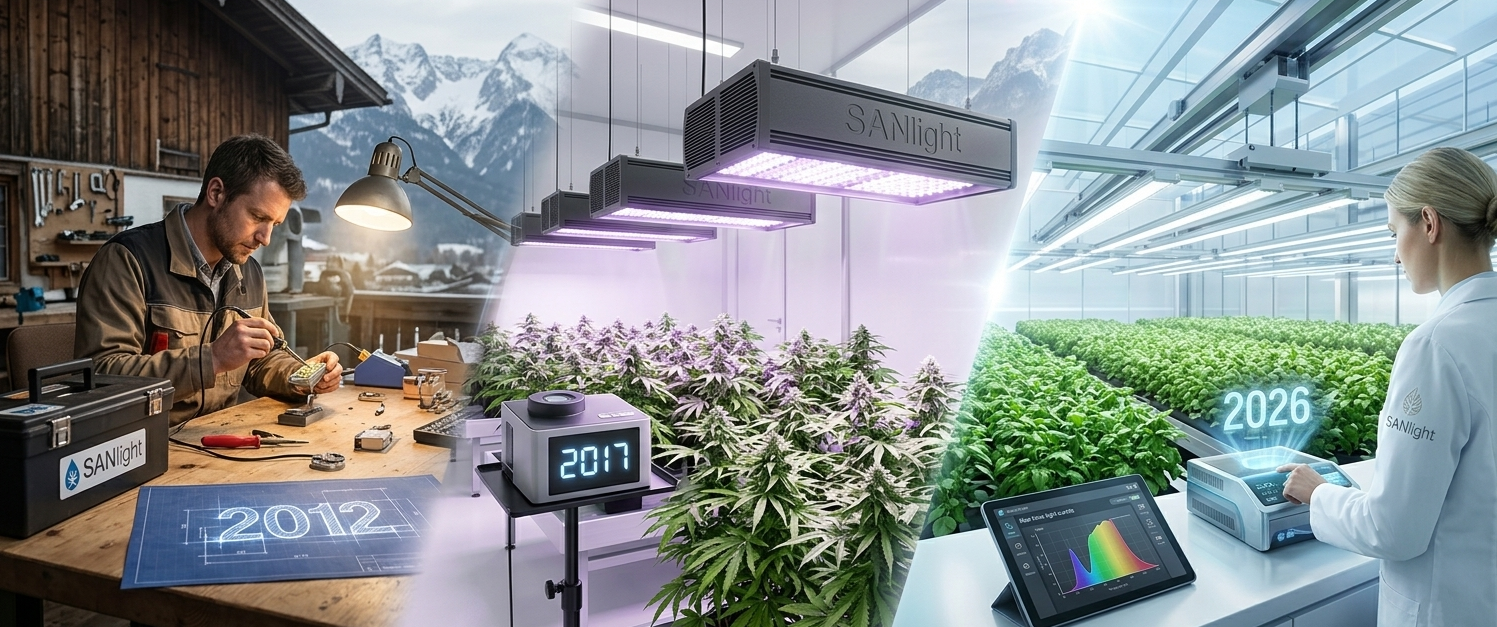
While Amsterdam provided the genetics, a young company from Vorarlberg brought physical precision to the cannabis sector. Since its founding in 2012, SANlight GmbH has fundamentally revolutionized the way plants are illuminated (SANlight, n.d.).
The Austrian engineers pursue an uncompromising approach to quality: “Made in Austria” means that every spectrum is tested in the in-house laboratory for its photobiological effectiveness (SANlight Catalogue, 2024). Today, SANlight is the premier choice for any grower wishing to maximize the full genetic potential of their plants under controlled conditions.
Sources
- SANlight (o.D.): About Us – Focus on Research & Development.
- SANlight (2024): Product Catalog & Technical Data Sheet: EVO Series.
- Karger Verlag / SANlight Blog (2020): Influence of Light Spectra on the Production of Cannabinoids.

Particularly insightful were conversations with the Humboldt Seed Company, where the wine concept of terroir was transferred to cannabis cultivation: climate, soil, and genetics collectively define the resulting flavour profile.
The Legacy of the Redwoods – Humboldt Seed Company

Humboldt County is to cannabis what Bordeaux is to wine – and at its heart stands the Humboldt Seed Company (HSC) as both a guardian and an innovator. Founded in 2001 by Nathaniel Pennington, the company has evolved from a local breeders’ collective into arguably the most influential genetic powerhouse in the world (Humboldt Seed Co., n.d.).
HSC’s success is built on an almost obsessive focus on selection. Through their annual “Phenotype Hunts,” where tens of thousands of plants are evaluated on local farms across the Emerald Triangle, the team succeeds in elevating genetics like the legendary “Blueberry Muffin” or “Humboldt OG” to a level of stability and terpene richness that is unparalleled in the industry (HSC, 2022). Throughout this, the company never loses sight of its ecological roots: to this day, the founders remain deeply involved in the conservation of their Californian homeland.
Yet, HSC does not rest on its laurels. With the recent introduction of triploid seeds – a technology that increases yields and makes plants more resilient – the company has proven its ability to bridge the gap between decades of cultivation tradition and cutting-edge agricultural science (Humboldt Seed Co. Blog, 2024). Anyone speaking of authentic Californian cannabis genetics today cannot overlook the Humboldt Seed Company and its tireless pursuit of botanical perfection.
References
- HSC (n.d.): Our Story & Philosophy
- HSC (2022): Phenohunting and Breeding with Nat Pennington
- HSC Blog (2024): The Future of Cannabis – Triploids Explained
Many interviews revolved around industrial scalability. A central question emerged repeatedly: how can a beverage taste identical in January and July?
Instead of general descriptions of scents, today’s focus is on clearly defined molecules such as myrcene, limonene, and linalool, and their specific sensory effects.
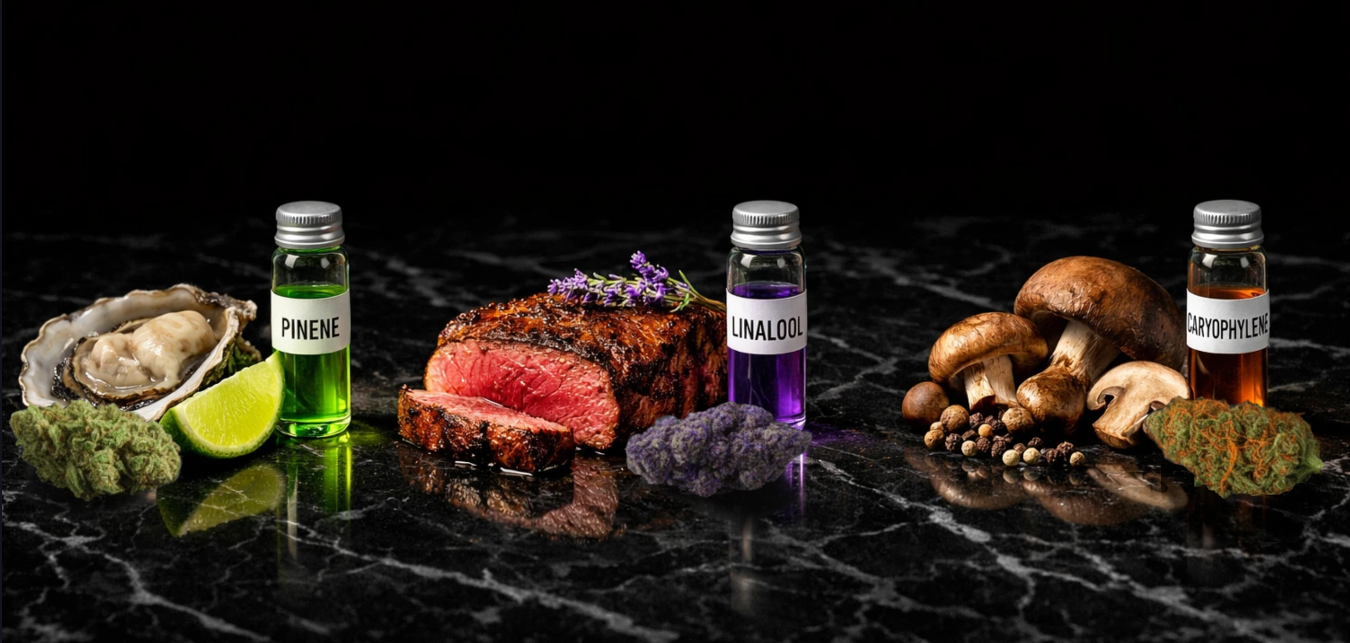
For example, one startup showcased distilled “terpene waters” that can be used in molecular gastronomy applications. The idea behind this is to add aromatic complexity without altering the visual appearance of a dish.
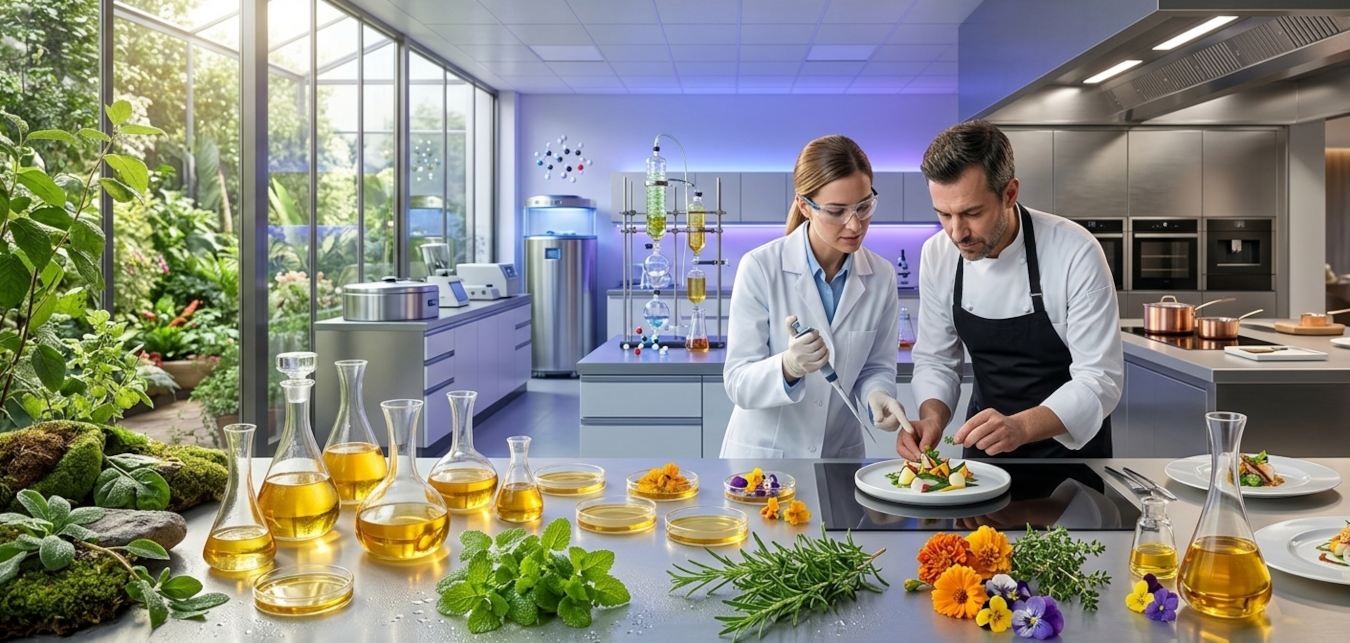
A shift was also evident from an economic perspective. High-quality branding, meticulously designed exhibition booths, and the presence of international investors underscored the industry’s growing evolution toward the established consumer goods sector.
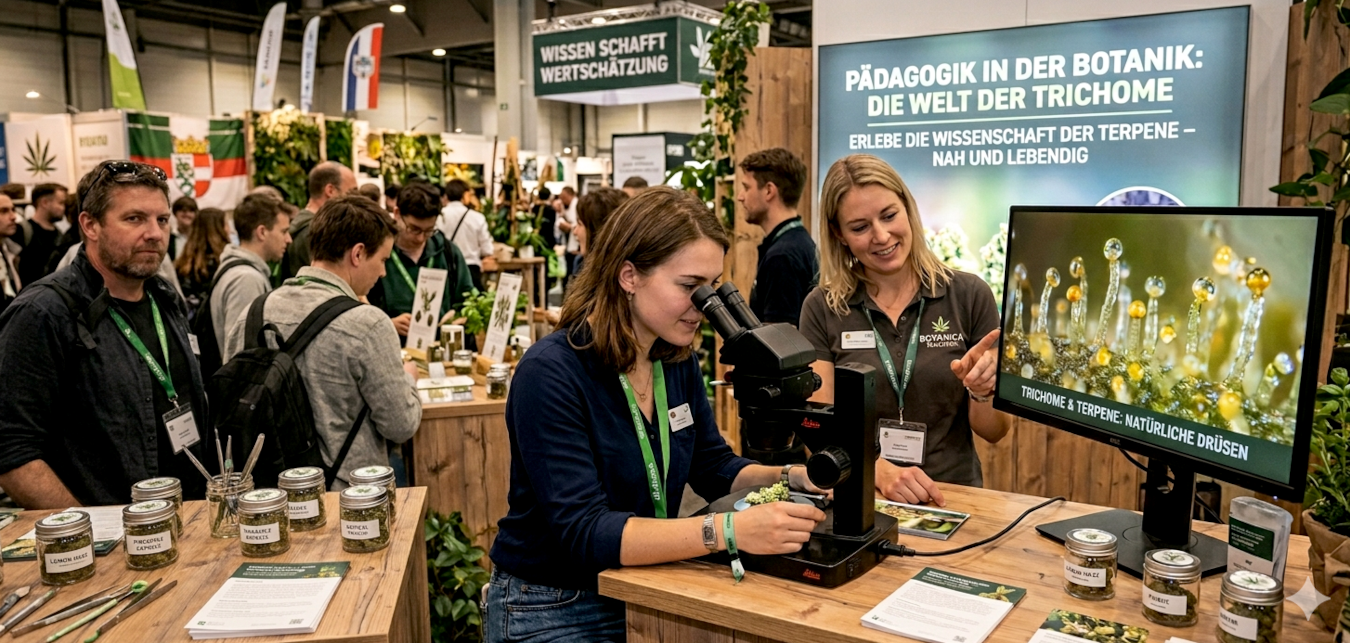
The educational approach of many exhibitors was particularly noteworthy. Microscopes allowed visitors to get a direct look at trichomes for the first time — the glandular structures where terpenes are produced. This created a remarkable connection between consumption, botany, and scientific understanding.
The answer often lies in standardized or reconstructed terpene profiles. Companies like CALI Terpenes analyze natural aroma compositions on a molecular level and rebuild them from botanical terpene sources to achieve consistent sensory outcomes.
The Aroma of Innovation: CALI Terpenes
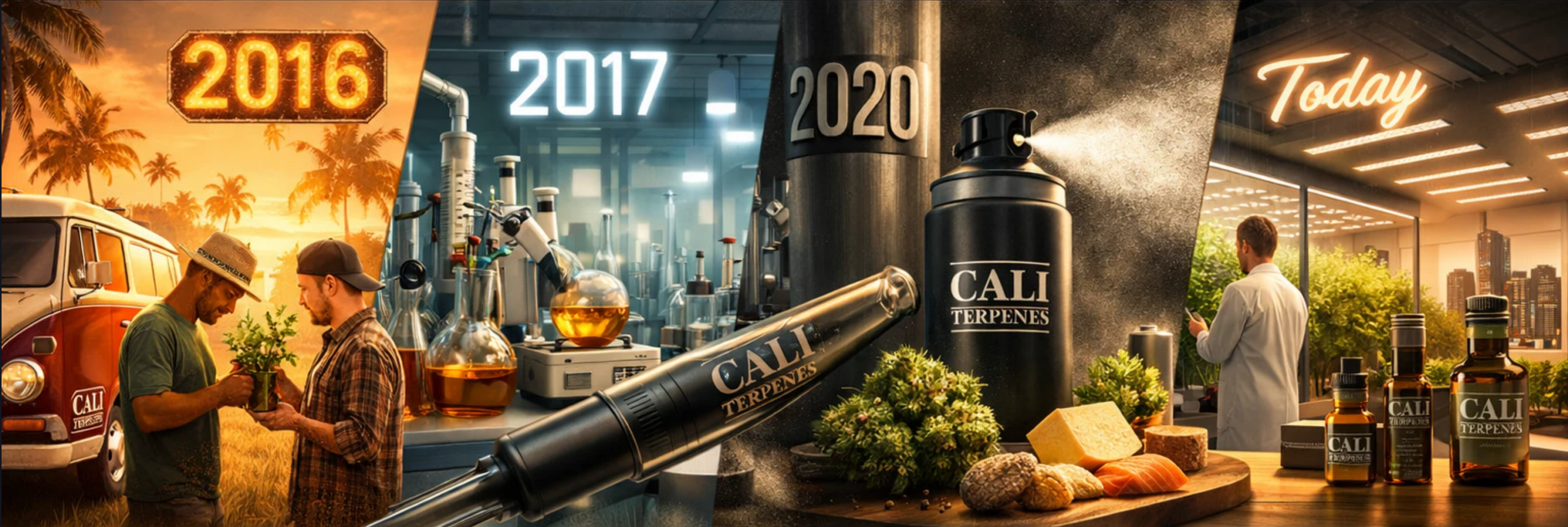
When people talk about the “Cali feel” in the cannabis sector today, they usually mean the unmistakable scent of elite genetics. The fact that this fragrance is now legally available worldwide in the form of small vials or sprays is largely thanks to Cali Terpenes S.L..
Paradoxically, the roots of the Barcelona-based company lie in sunny California in 2016. It was there that founders Toni and Ferran – who already enjoyed legendary status in the breeding scene through their work at Eva Seeds – recognized the enormous potential of isolated terpene profiles (Cali Terpenes, n.d.).
What began as a spontaneous idea during a trip quickly evolved into a pioneering technological project. Cali Terpenes specialized in molecularly replicating the complex aromas of famous strains like “Gorilla Glue” or “Amnesia” with exact precision, yet without any psychoactive compounds. This technological mastery made it possible to safely establish the typical cannabis aroma in industries such as food production, cosmetics, and the vaping market (Alchimia, 2017).
The team achieved a particular stroke of genius with the invention of Terps Spray, which revolutionized the aromatization of products and finally established the company as the global market leader in this segment. Today, Cali Terpenes no longer stands just for “scents,” but for a new era of functional flavors that make the so-called “entourage effect” scientifically accessible (Cali Terpenes Blog, 2026).
Combining botanical knowledge with state-of-the-art laboratory analysis, they have succeeded in translating the heritage of California’s cannabis culture into a legal, industrial format for the 21st century.
References
- Cali Terpenes (o.D.): Our story
- Alchimia (2017): Cali Terpenes – 100% natural cannabis terpenes
- Cali Terpenes Blog (2026): Terpene Guide & News
- Mr. Hanf: Cali Terpenes brand profile
Within fine dining, however, live resin is widely regarded as the benchmark for preserving delicate aromatic compounds. Shock freezing immediately after harvest helps retain volatile “high notes” that would otherwise be lost. In addition, the terpenes are released more effectively after freezing than without this step.
Specific culinary applications were discussed: vinaigrettes, dessert glazes, and aromatic oil infusions demonstrate just how effectively terpenes could be integrated into culinary concepts in the future.
From a technological standpoint, controlled growing systems play a central role. Spider Farmer, for example, showcased grow tents with virtually complete climate control. The goal of such systems is to create stable environmental conditions and avoid unnecessary physical intervention.
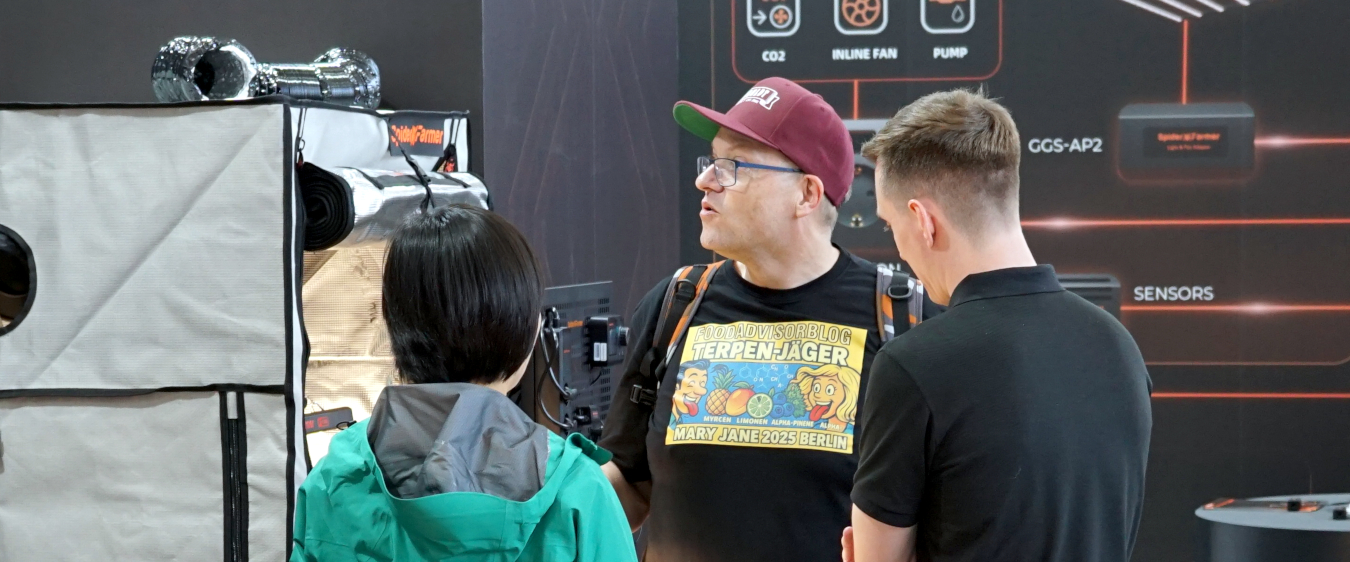
Temperature management proved to be a critical factor in this process. Volatile monoterpenes exhibit increased evaporation rates even at moderate temperatures, which is why professional terpene extraction relies heavily on precise climate control.
The Democratization of Light – Spider Farmer
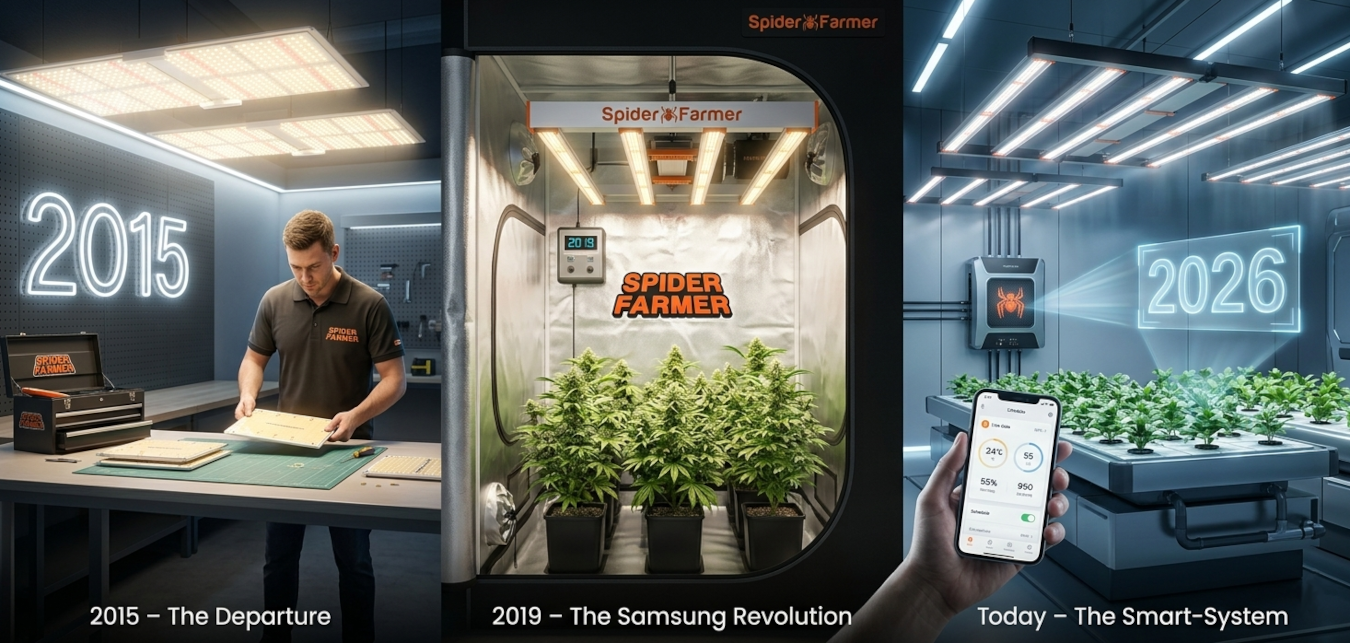
In the history of indoor gardening, there is a time before and after the rise of Spider Farmer. Since its official founding in 2015, the company has pursued one mission: to bridge the technological gap between large-scale commercial facilities and the private hobby garden (Spider Farmer, n.d.). Through the consistent use of high-end components, such as the market-leading Samsung diodes, Spider Farmer has proven that maximum efficiency does not have to be a luxury good (Spider Farmer Catalogue, 2024).
The introduction of the SF quantum boards, in particular, marked a turning point, allowing home growers worldwide to achieve professional-level results – while significantly reducing power consumption (Spider Farmer Blog, 2022). Today, Spider Farmer is no longer just a lighting manufacturer, but a system provider that combines digital control and hardware into a smart ecosystem. Anyone looking for the best price-performance ratio for their “four pillars of enjoyment” today cannot overlook the highly efficient radiance of Spider Farmer.
Sources
- Spider Farmer (n.d.): About Us – Our Vision and Technology.
- Spider Farmer (2024): Product Catalogue – Smart Growing Solutions (outdated).
- Spider Farmer Blog (2022): Why Samsung LM301B Chips Matter for Your Harvest.
In addition to Spider Farmer, AC Infinity and VIVOSUN serve the all-in-one system segment, each with its own focus on quality, price, and ease of use.
Controlled cultivation environments play an equally important role. Solutions which are enabling precise climate and environmental regulation, are essential factors for stable terpene development.
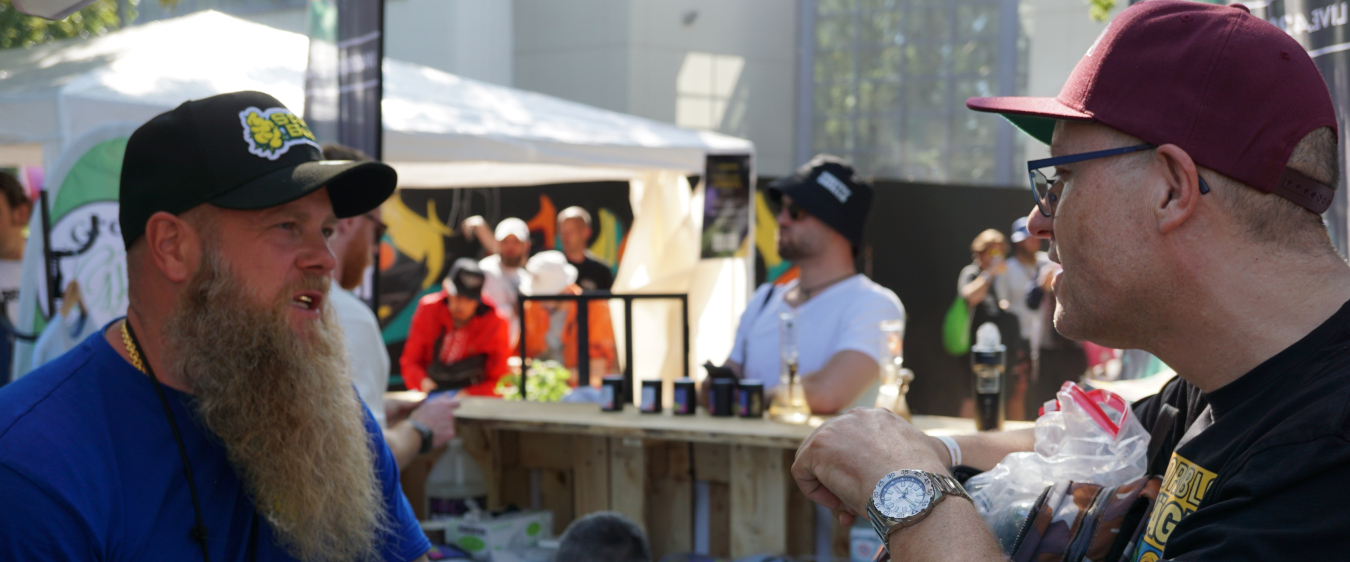
What ultimately stood out the most was the community aspect. Despite increasing commercialization, the exchange of knowledge remained surprisingly open.
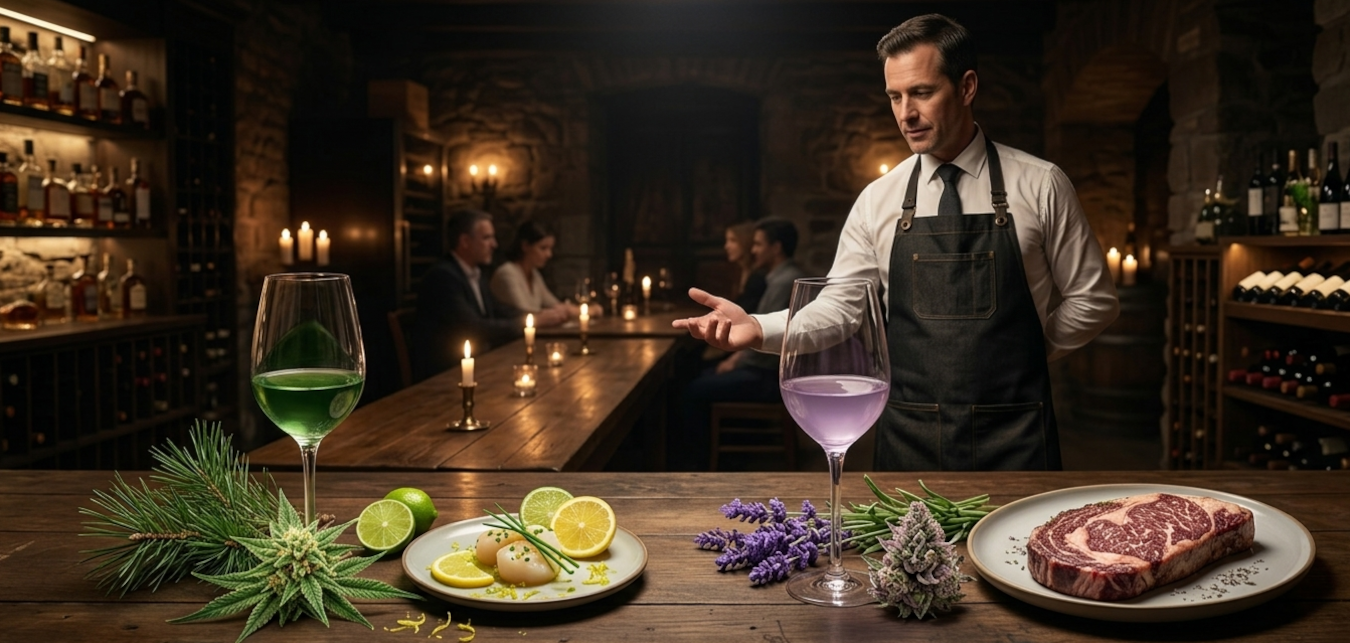
A workshop on “terpene pairing” was very reminiscent of traditional wine seminars: pinene harmonized with acidic notes, while linalool, as a floral component, could balance out rich dishes—you never stop learning
Conclusion
My visit to Mary Jane 2025 felt like a glimpse into a possible future of gastronomy. Aroma is increasingly evolving into its own innovation field positioned between botany, food technology, and culinary creativity.
The strong visitor turnout clearly demonstrates that the topic has entered the mainstream. Despite technical challenges during recording and documentation, the insights gained into new approaches to flavour design made the experience exceptionally valuable.
The connection between botany, food technology, and gastronomy is likely to grow even stronger in the coming years. Terpenes could play a key role in this—both in experimental haute cuisine and in industrial food development.
I look forward to seeing how this world of flavors continues to evolve and find its way onto our plates.
The Architecture of Pleasure: Four Pillars of a New Era
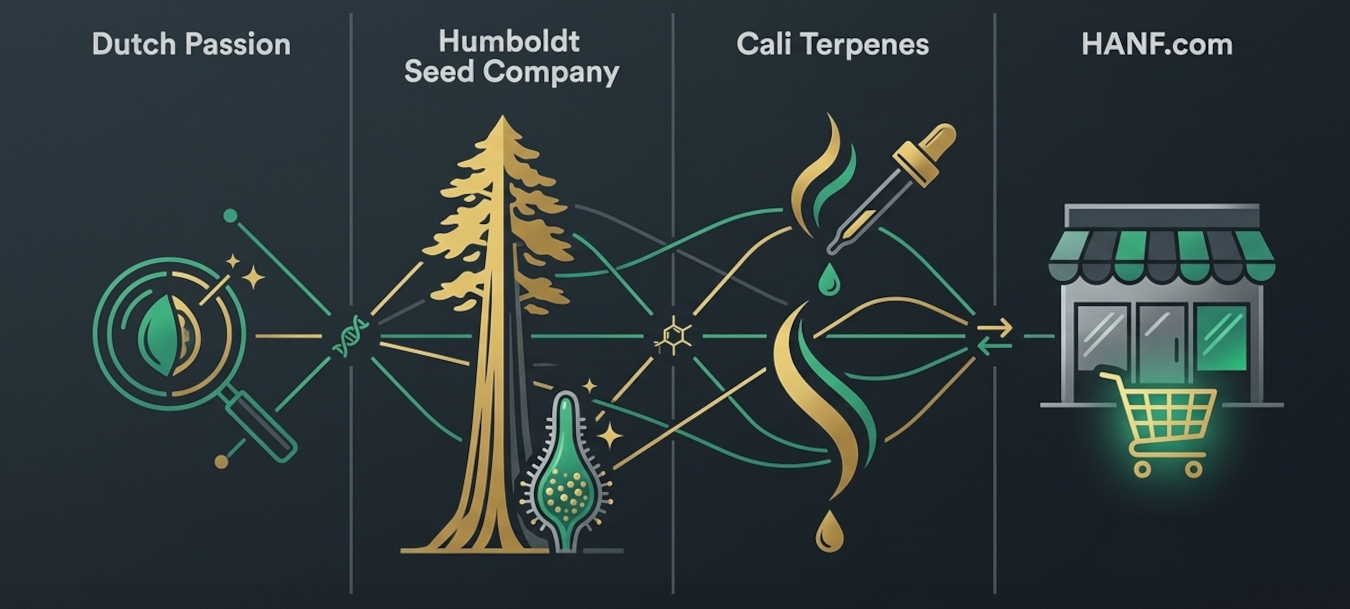
In an industry evolving at breakneck speed from a backyard image to a high-end lifestyle sector, four key players exemplify a synergy that goes far beyond the mere product. They can be described as the “Four Pillars of Enjoyment”: Origin, Terroir, Essence, and Experience. Alongside other interview partners, these are my counterparts to scrutinize these four pillars from a culinary perspective.

The first pillar, Origin, is represented by Dutch Passion. As the “forefathers” of the industry, they provided the genetic foundation with the invention of feminized seeds. Without their decades of work on stable classics, there would be no reliable basis for breeders and consumers worldwide today (Dutch Passion, n.d.).
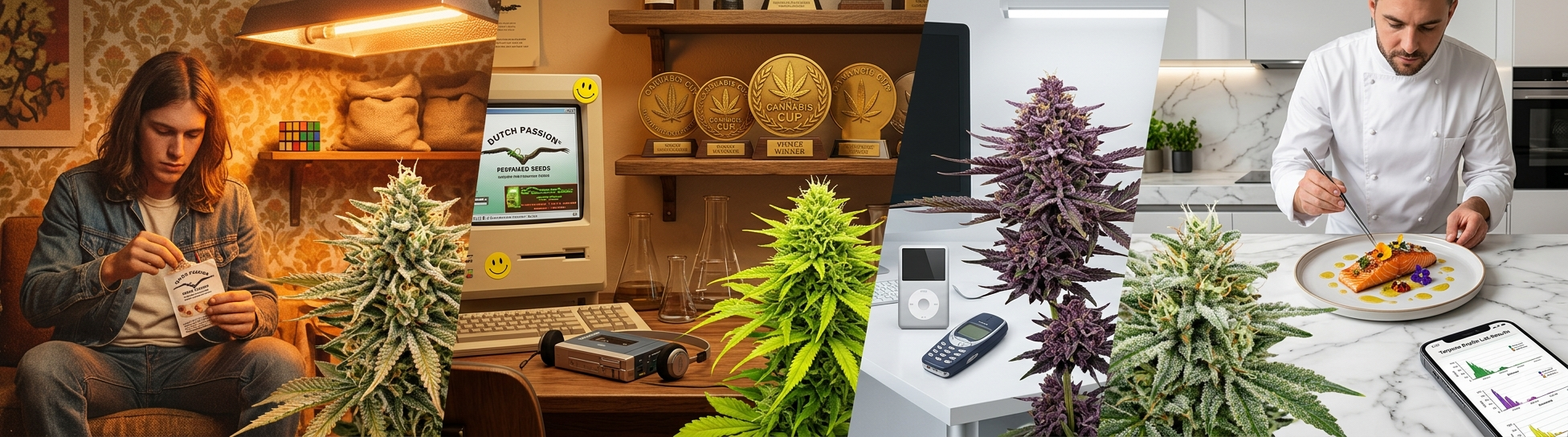
Building upon this is the second pillar: Terroir, embodied by the Humboldt Seed Company. Like a fine wine, cannabis thrives on its environment. The Californians have mastered the art of domesticating the wild power of the Emerald Triangle through scientific phenotype selection without losing the plant’s sensory soul. They provide the genetic complexity that connoisseurs seek today as “Cali quality” (Humboldt Seed Co., 2024).
The third pillar is the Essence, exemplarily represented by Cali Terpenes. In a culinary revolution, they have decoupled the aroma from the psychoactive effects. Through the molecular reconstruction of terpene profiles, they enable the sensory integration of cannabis into food, beverages, and cosmetics. They make the “aroma of innovation” accessible to gourmet cuisine and global industry (Cali Terpenes, n.d.).
The fourth and decisive pillar for the end consumer is the Experience, created by HANF.com (CWE Holding). As Germany’s largest specialized retail chain, the company provides the physical stage for these developments. This is where science meets lifestyle. HANF.com curates the results of genetics and aroma research, making them accessible to society in a modern, professional retail environment (HANF.com, n.d.; Newsfile Corp., 2026).
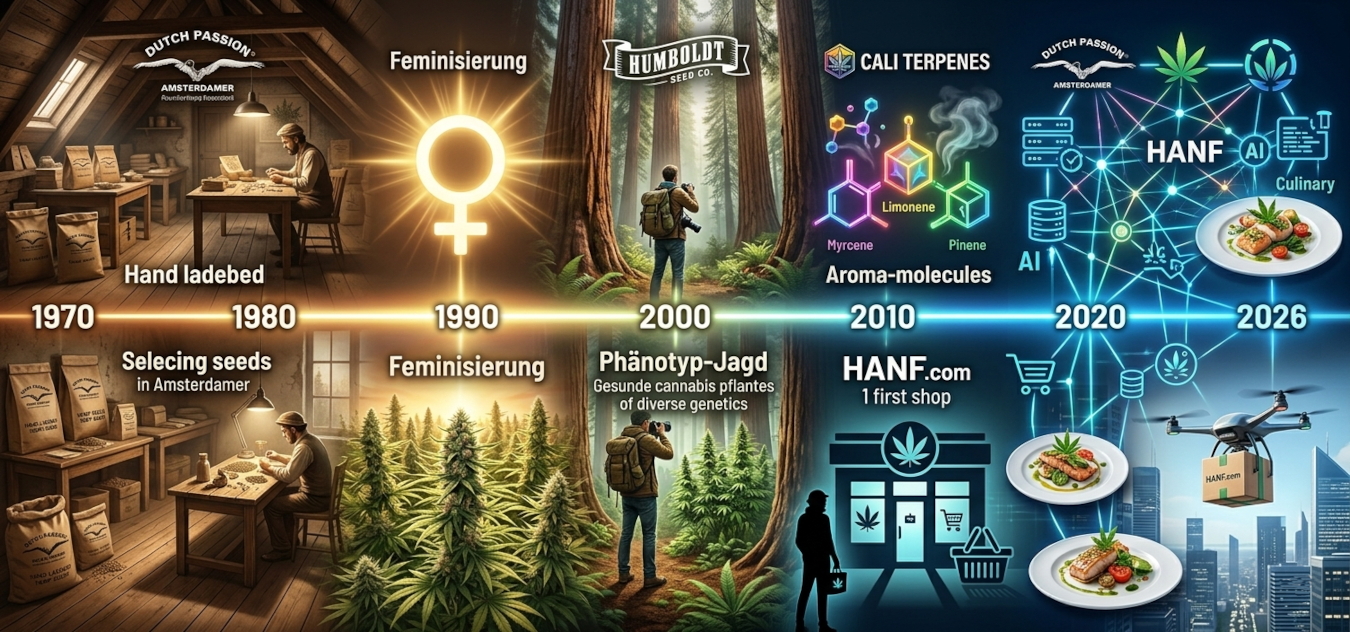
The interaction of these players demonstrates: The future of the sector lies not in THC content, but in sensory mastery. Whether through standardized terpene pairings in gastronomy or exclusive “shop-in-shop” concepts – the fusion of pharmaceutical precision (as demanded by experts like Alexander Daske) and culinary standards will define the market of tomorrow.
Sources
- Dutch Passion (n.d.): The History of Dutch Passion
- Humboldt Seed Company (2022): Phenohunting and Breeding with Nat Pennington
- Cali Terpenes (n.d.): Terpene Guide & Industry Standards
- com / CWE Holding (n.d.): About Us & Our Mission
- Newsfile Corp. (2026): Neural Portfolio Company Hanf.com Reports Strong Results
Get ready—Mary Jane Berlin 2026 is already in the starting blocks! 2026 is a special year—Mary Jane is turning 10, celebrate with the community in Berlin!

B2B trade visitor day 2026-06-11 / Expo & Festival 2026-06-12 to 2026-06-14
I will be publishing the interviews I conducted at Mary Jane 2025 with international and national industry representatives—including Dutch Passion, Humboldt Seeds (HSC, Nathaniel & Ben), CALI Terpenes, and HANF.com—on the topic of terpenes in a series starting in May 2026. This will give you plenty of time to gain the necessary background knowledge and get excited about the world of terpenes before Mary Jane 2026.
In addition, there will be articles on the technical aspects of working with terpenes, as well as a handful of terpene recipes for you to try out—stay tuned.
Until then, keep enjoying foodadvisor.eu.
Sources & References
- Mary Jane Berlin 2025 official press release (visitor and exhibitor statistics)
- FRUIT LOGISTICA 2025 final report
- On-site interviews with exhibitors and industry representatives
- Independent research and observations – foodadvisorblog.eu
The Epicenter of European Cannabis Culture – Mary Jane
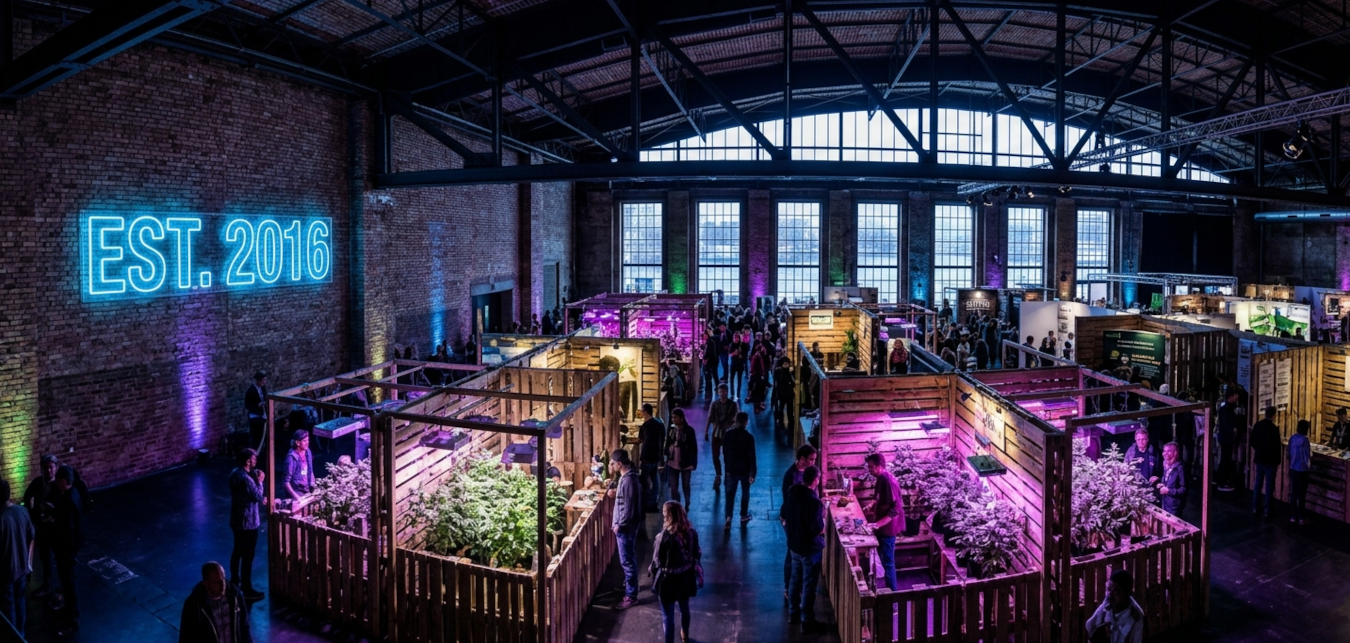
What began in 2016 in a Berlin postal station hall has evolved into the most important hub for the European cannabis industry: Mary Jane Berlin. As Germany’s largest trade fair, it is now far more than just an event – it is the barometer for social and economic change (Mary Jane, n.d.). Every year, thousands of visitors and hundreds of exhibitors from all over the world gather under the Funkturm to present the latest innovations in genetics, cultivation technology, and medicine.
The uniqueness of Mary Jane lies in its hybrid DNA: it combines a professional B2B platform with a vibrant festival atmosphere, including the renowned “Cannabis Congress,” where international experts debate the future of legalization and research (Mary Jane Blog, n.d.). With its move to Messe Berlin in 2024, the event solidified its status as a global flagship fair. Anyone wishing to feel the pulse of the German market today cannot afford to miss this weekend in Berlin.

Sources
- Mary Jane (n.d.): About Us
- Mary Jane (n.d.): Exhibitors & Floor Plan
- Mary Jane (n.d.): Blog, Congress & B2B
Copyright and Editorial Responsibility
AI-supported systems were used during the research for this article, including OpenAI ChatGPT, Google Gemini, and Anthropic Claude. AI was used exclusively as an aid. The selection, evaluation, editorial classification, structuring, and formulation, as well as the review of content and compliance with journalistic due diligence and copyright requirements, were and remain the responsibility of the publisher.
All articles and interviews remain the property of the author. Use or reproduction is permitted only with express permission. Opinions expressed are those of the author. Errors excepted.
Disclaimer: The information presented in this article is intended solely for educational and entertainment purposes. Culinary use of terpenes should always comply with applicable local laws.