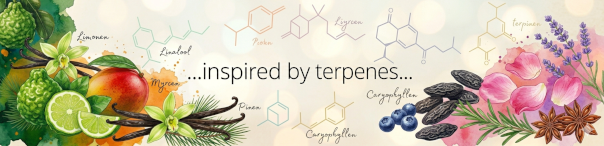
Contextualizing a Silent Sensory Shift
Flavors have always been a central steering tool in the food industry. Sweetness, acidity, bitterness, and umami structure products, markets, and consumption habits. What has changed in recent years, however, is less the chemistry and more the expectation: consumers are no longer just looking for taste, but for experience, differentiation, and context. This is precisely where terpenes are increasingly coming into focus.
Terpenes are not a new discovery. They have accompanied the human diet for millennia—in herbs, spices, citrus fruits, hops, or conifers. What is new, however, is the conscious exploration of their function: terpenes are no longer understood merely as an incidental flavor component, but as a purposefully deployable sensory tool.
This development does not coincide by chance with a time when several trends converge: the boom in non-alcoholic beverages, the search for functional moments of enjoyment without pharmacological effects, an increasing flavor fatigue with classic sweet profiles, and a heightened awareness of naturalness, transparency, and origin.
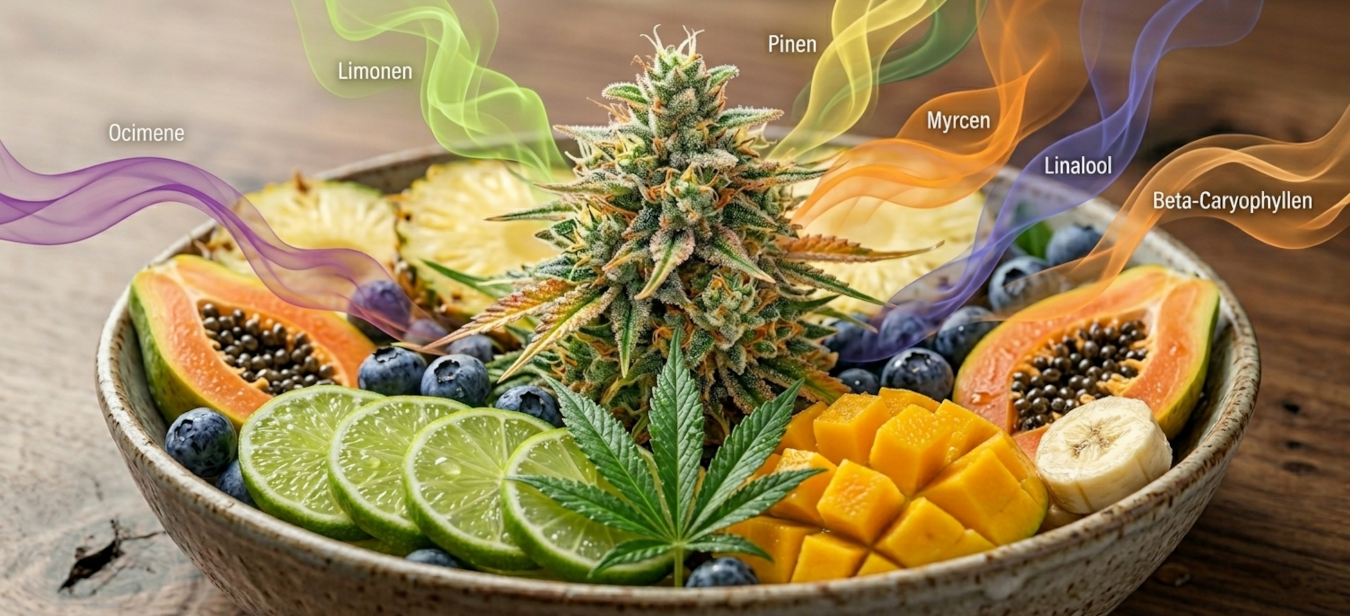
The cannabis plant, in particular, has accelerated this discussion. Not because of its psychoactive ingredients, but because of the exceptionally differentiated terpene profiles it produces. Today, cannabis functions less as a reference for intoxicants and much more as a sensory textbook: hardly any other plant demonstrates so clearly how strongly terpene combinations can shape perception, mood, and taste—completely independent of any intoxicating effects.
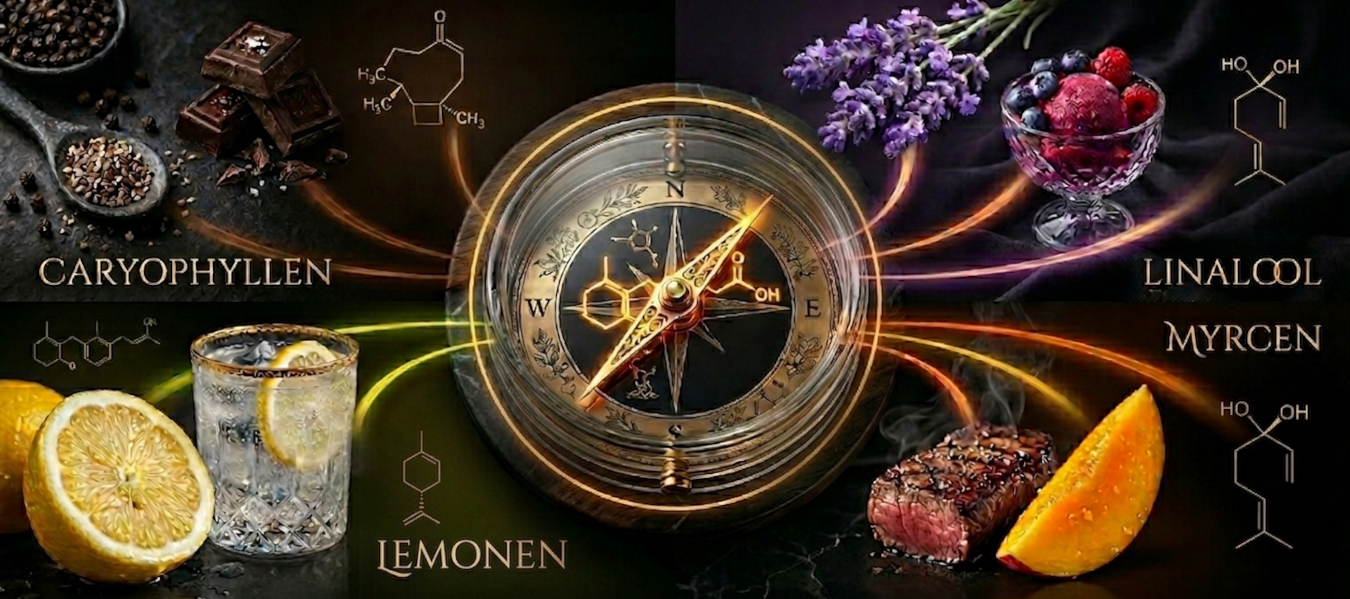
For the food and beverage industry, this represents a paradigm shift. While classic flavors often function in a one-dimensional way (“lemon tastes like lemon”), terpenes open up the possibility of deliberately modeling depth, length, freshness, or earthiness without overloading the flavor. Terpenes act subtly but are structurally defining. They do not necessarily change the taste—they change the perception.
In addition, there is a regulatory aspect: in many markets, the use of synthetic flavors is viewed more critically, while plant-based, clearly declarable ingredients are gaining acceptance. Terpenes operate precisely within this tension between natural substance, technology, and sensory precision.
This book therefore views terpenes not as a trend or a marketing vehicle, but as a toolbox for a more differentiated, responsible flavor culture. The question is not whether terpenes will prevail—but how consciously and competently they are utilized.
What Terpenes Are – and What They Are Not
Fundamentals Beyond Misunderstandings
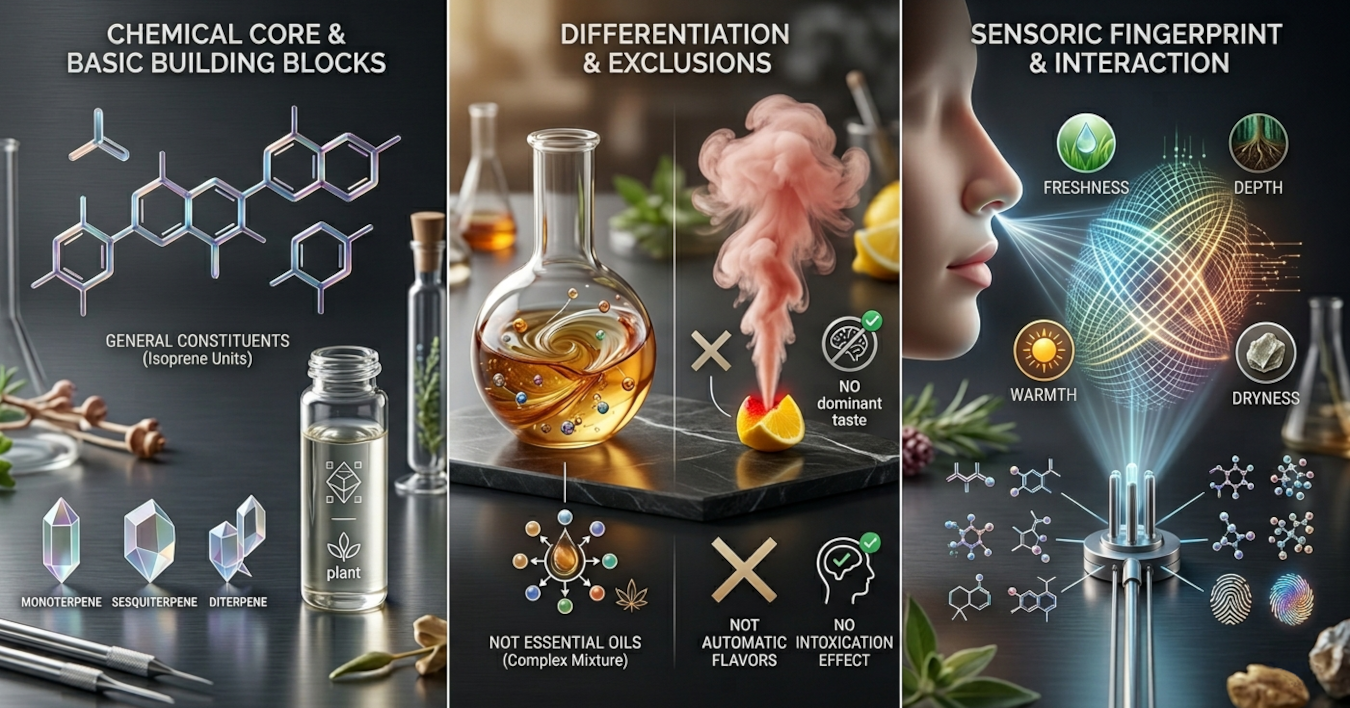
The term “terpene” is often used vaguely in public discourse. Sometimes terpenes are equated with essential oils, sometimes with flavors, sometimes with active ingredients. This blurring is understandable—but problematic. Because anyone who wants to use terpenes meaningfully must first clearly understand what they actually are chemically and sensorially.
Terpenes are a large class of natural hydrocarbons formed in plants. Chemically, they are based on isoprene units and form the basis for an enormous variety of fragrances and flavors. Depending on their structure, a distinction is made between monoterpenes, sesquiterpenes, and diterpenes, among others. For food applications, monoterpenes and sesquiterpenes play the primary role.
The distinction is important – Terpenes are not the same as essential oils.
Essential oils are complex mixtures containing alcohols, esters, aldehydes, and other compounds alongside terpenes. Terpenes can be a component of essential oils—but they do not have to be.
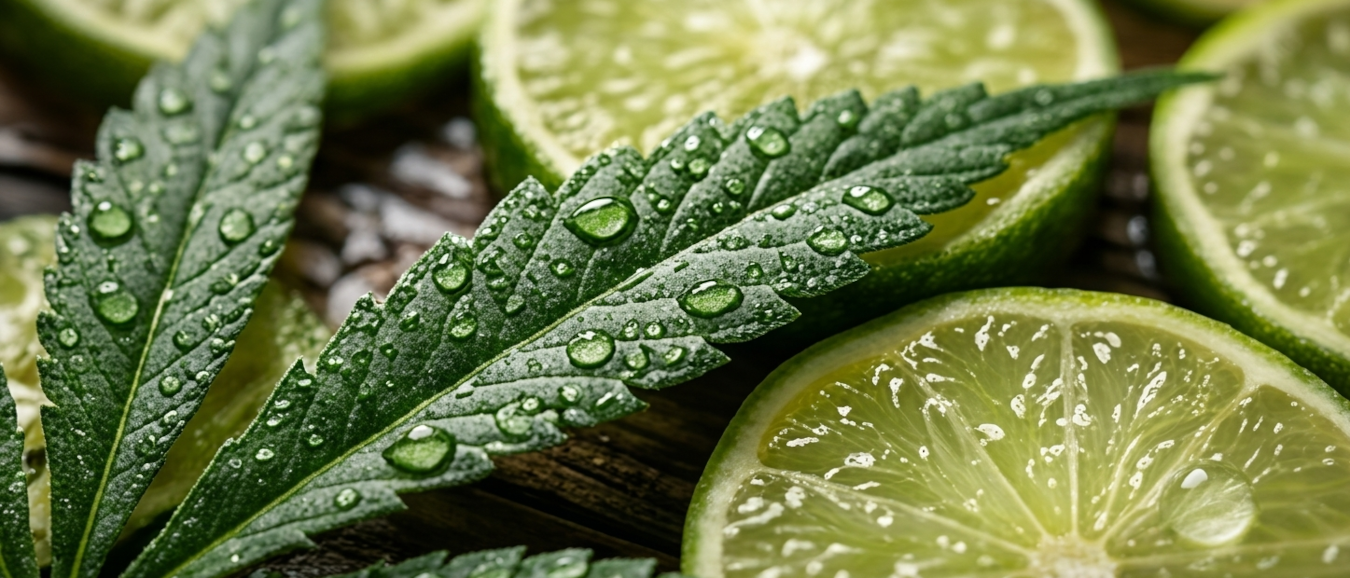
Nor are terpenes automatically “flavors” in the sense of food law. Although many terpenes are used or classified as flavoring substances, their sensory effect is often structuring rather than dominant. They influence freshness, length, dryness, or warmth without producing a clearly definable taste.
Another misunderstanding concerns the effect. Terpenes have no intoxicating effect. Although there are indications that certain terpenes are perceived as mood-modulating—such as invigorating or calming—these are sensory and olfactory effects, not pharmacological effects. This differentiation is central, especially in the context of cannabis.
In practice, this means: terpenes always work in interplay. A single terpene is rarely the star. Only in combination—as a profile or “fingerprint”—does a coherent sensory logic unfold. This is precisely why looking at individual terpenes in isolation is often of little use.
For product development, this understanding opens up new possibilities. Instead of building a product “according to flavor X,” work can be done specifically on perceptual dimensions: freshness without acidity, depth without bitterness, warmth without sweetness. Terpenes are not a shortcut here, but a precise instrument—provided they are understood.
Hint: In addition to classic monoterpenes and sesquiterpenes, the overviews and tables also include some terpene-related aromatic compounds. Phytol, for example, is not chemically a terpene in the strict sense, but rather a diterpenoid alcohol (a breakdown product of chlorophyll).
16 questions & answers regrading terpenes
-
- 1
How should the current terpene market be classified – movement or stagnation? The terpene market is currently clearly in a dynamic growth phase, albeit with varying maturity depending on the segment. While terpenes have been established in the perfume, flavor, and cosmetics industries for decades, their use in the food, beverage, and cannabis sectors is currently growing disproportionately. This is driven by three factors: increasing legalization, demand for “natural flavoring compounds”, and growing interest in functional flavors without psychoactive effects. Cannabis terpenes in particular are considered sensorially differentiated and brand-building. Source: Baser & Buchbauer (2010): Handbook of Essential Oils – Science, Technology, and Applications, CRC Press
- 1
-
- 2
What requirements are needed for terpenes to unfold their effect – is fat necessary? Terpenes are lipophilic, which means: they dissolve better in fats than in water. For optimal sensory perception (aroma, mouthfeel, persistence), a minimal fat content or a carrier system (oil, emulsion, alcohol, glycerin) is useful. The effect is mediated both sensorially-psychologically (via the limbic system) and partially directly pharmacologically (e.g., interaction of beta-caryophyllene with the CB2 receptor). Source: Gertsch et al. (2008): Beta-caryophyllene is a dietary cannabinoid, Proceedings of the National Academy of Sciences (PNAS)
- 2
-
- 3
Do cannabis terpenes differ from terpenes of other plants? Chemically: no. A limonene molecule from cannabis is identical to one from lemon peel. Sensorially: yes. Cannabis is characterized by complex, finely tuned terpene blends that rarely occur in this combination in other plants. The difference therefore lies not in the molecule, but in the ratio, interplay, and context. Source: Russo (2011): Taming THC: potential cannabis synergy and phytocannabinoid-terpenoid entourage effects, British Journal of Pharmacology
- 3
-
- 4
How about the shelf life of terpenes? Terpenes are volatile organic compounds and generally sensitive to light, oxygen, and heat. Under proper storage conditions (airtight, dark, cool), isolated terpenes can remain stable for 12–24 months, although unprotected monoterpenes oxidize noticeably after just a few months. In complex food products, the sensory shelf life is significantly reduced. Source: Turek & Stintzing (2013): Stability of Essential Oils: A Review, Journal of Agricultural and Food Chemistry
- 4
-
- 5
Is oxidation problematic for terpenes? Yes. Oxidation is one of the primary reasons for loss of aroma, off-notes, and irritants. Oxidized terpenes can have a sharp, pungent, or even skin-irritating effect. Antioxidants, inert gas flushing, and dark glass containers are industry standards. Source: Sköld et al. (2006): Oxidation of terpenes and allergenic potential, Contact Dermatitis
- 5
-
- 6
Why use terpenes from cannabis for food & drinks? Cannabis terpenes offer an exceptionally broad aroma spectrum, ranging from fruity and spicy to gas-like and resinous. For food innovation, they are interesting because they enable novel sensory profiles without having an intoxicating effect – provided they are THC-free. Source: Booth et al. (2017): Terpene diversity in Cannabis, Plant Science
- 6
-
- 7
Are there terpenes outside of essential oils? Yes. Terpenes also occur as free volatile compounds, in resins, wax layers, and fruit peels. Essential oils are merely an extractive collective form, not an exclusive space of existence. Source: Langenheim (1994): Higher plant terpenoids, Annual Review of Ecology and Systematics
- 7
-
- 8
Is there a standard for classifying terpenes? Yes. Terpenes are structurally classified into mono-, sesqui-, di-, triterpenes etc., based on their number of isoprene units. This system is chemically established and internationally recognized. Source: IUPAC: Nomenclature of Organic Chemistry, 2013
- 8
-
- 9
Is the use of terpenes in food historically documented? Yes. Terpene-containing plants such as herbs, spices, citrus fruits, or resins have been used for flavoring since antiquity. Modern verification is achieved through food chemistry and archaeobotany. Source: McGee (2004): On Food and Cooking – The Science and Lore of the Kitchen
- 9
-
- 10
How did cooking with cannabis & terpenes begin? Historically, utilization occurred primarily via seeds, leaves, and resins in ritual or traditional cuisines (e.g., India, China). The focus was on aroma and effect, not on the isolation of individual substances. Source: Clarke & Merlin (2016): Cannabis: Evolution and Ethnobotany, University of California Press
- 10
-
- 11
What techniques are used to extract terpenes from cannabis? Industry standards include:- Steam distillation
- CO₂ extraction (fractionated)
- Cold trap techniques
- Vacuum distillation
For food applications, solvent-free procedures are crucial. Source: Fathordoobady et al. (2019): Extraction of terpenes, Trends in Food Science & Technology
- 11
-
- 12
How stable are terpene fingerprints depending on cultivation? Terpene profiles are highly dependent on environmental conditions. Light, stress, temperature, nutrients, and harvest time significantly alter quantitative ratios – however, the basic character remains recognizable. Source: Bernstein et al. (2019): The effect of environmental conditions on cannabis secondary metabolites, Frontiers in Plant Science
- 12
-
- 13
Does the genetic terpene fingerprint remain intact despite cultivation variations? Yes – within certain limits. The genetics define the potential spectrum, while the environment modulates its expression. Extreme deviations can, however, significantly distort the profile. Source: Sawler et al. (2015): Genetic structure of Cannabis, PLOS ONE
- 13
-
- 14
How are individual terpenes separated by variety? Through fractional distillation, chromatographic methods (GC, HPLC), or molecular distillation. Strict purity requirements apply to food-grade products. Source: Sarker et al. (2012): Natural product isolation, Humana Press
- 14
-
- 15
Are there problematic terpene combinations? Yes. High concentrations of highly volatile monoterpenes (e.g., limonene + pinene) can have a sensorially aggressive effect. Balance and dosage are crucial – less is often more. Source: Belitz et al. (2009): Food Chemistry, Springer
- 15
- 16
Can ambitious growers extract terpenes themselves? Yes, with limitations. Methods such as cold traps, simple steam distillation, or dry-ice techniques are possible, but do not deliver food-grade purity without laboratory know-how. Source: Clarke (1998): Marijuana Botany, Ronin Publishing
Origin & Diversity
Terpenes in the Plant World – and Why Cannabis Plays a Special Role
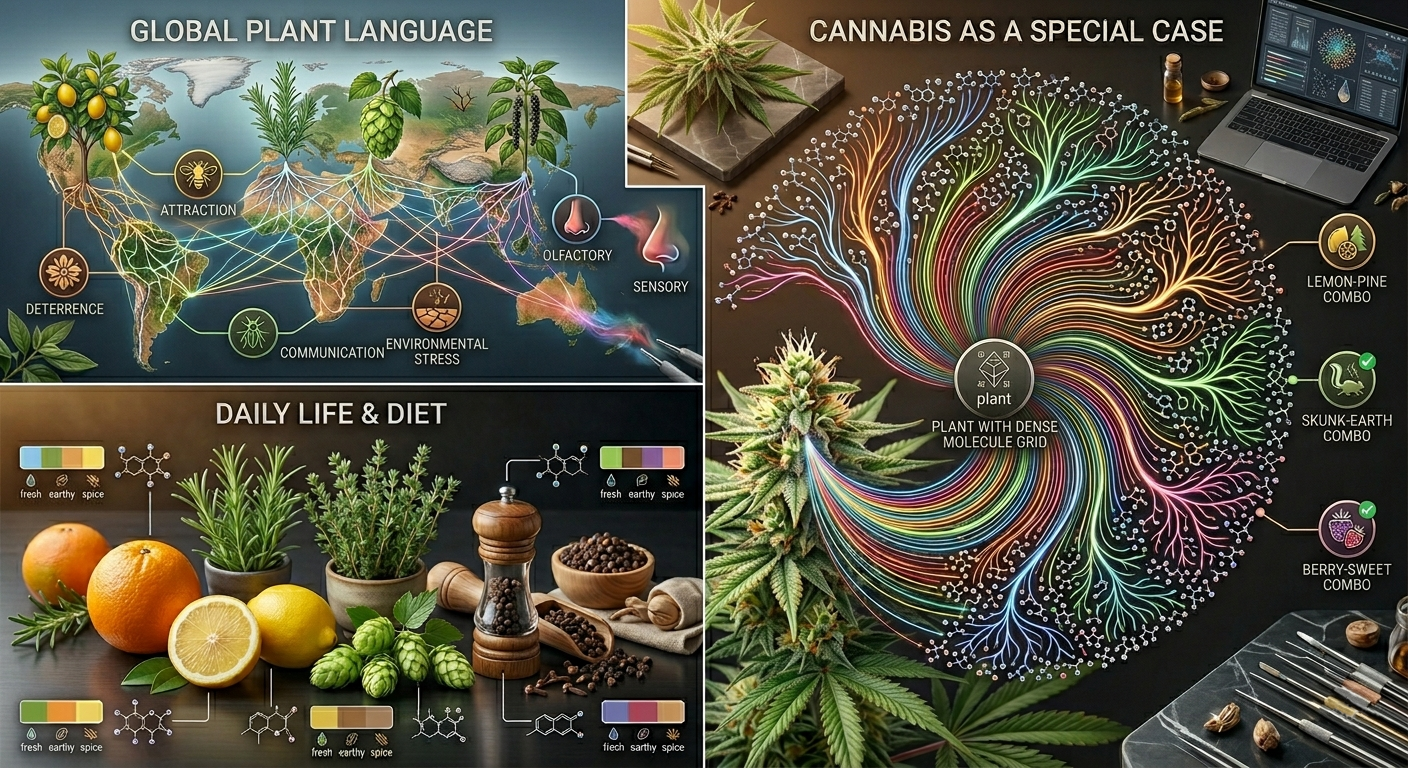
Terpenes are not an exclusive feature of individual plant species. Rather, they form one of the most fundamental communication and defense languages in botany. Plants use terpenes to attract pollinators, deter predators, or withstand environmental stress. For humans, this biological function manifests as scent, aroma, and sensory depth.
In our diet, we encounter terpenes every day: in citrus fruits (limonene, citral), in herbs like rosemary or thyme (pinene, thymol), in hops (humulene, myrcene), in spices like pepper or clove (caryophyllene). What unites these plants, however, is not just the presence of individual terpenes, but their complex combinations, which determine the overall sensory impression.
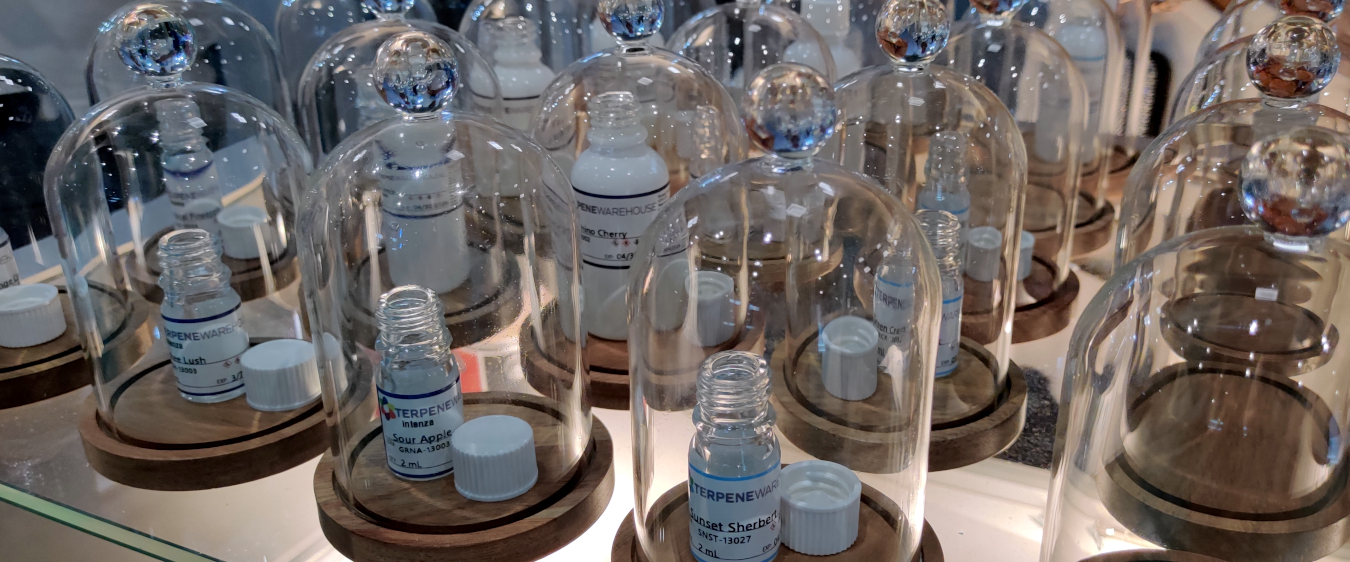
This is where cannabis plays a special role. Not because of its legally or socially debated ingredients, but because of the extraordinary density and differentiation of its terpene profiles. Hardly any other plant exhibits a comparable range of terpene combinations that are simultaneously stable enough to remain recognizable and variable enough to be sensorially distinct.
Cannabis thus functions as a kind of reference plant for terpene research. Different genetics show clearly defined profiles that can be precisely described sensorially: from citrus-fresh to floral and sweetish, to earthy, spicy, or resinous. For the food industry, this is relevant less because of the plant itself and more because of the principle: terpenes are not isolated effects, but profile carriers.
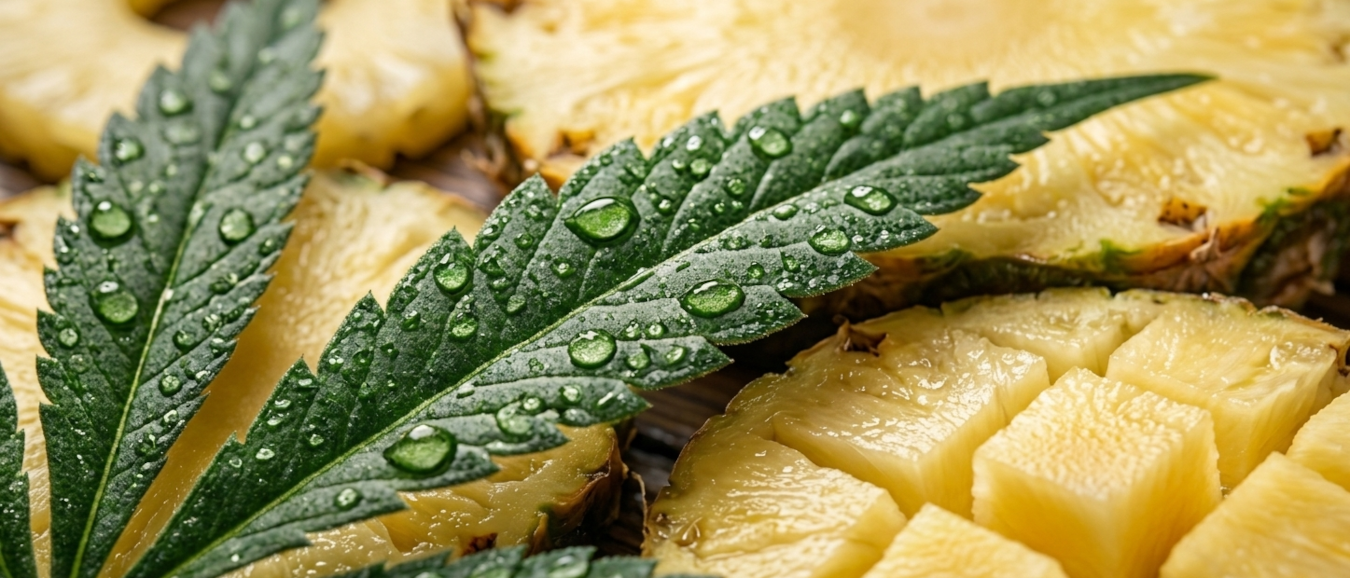
In comparison, many classic food flavors seem one-dimensional. A lemon flavor often primarily reproduces acidity and freshness, whereas natural lemon peels possess a significantly greater depth due to the interplay of limonene, citral, pinene, and other terpenes. Cannabis illustrates this logic with particular clarity—and makes it analyzable.
At the same time, caution is advised: terpenes from cannabis do not fundamentally differ chemically from terpenes from other plants. Limonene remains limonene, regardless of its origin. The difference lies in the profile, not the molecule. This is precisely why the discussion about “cannabis terpenes” is less a question of the substance and more about the sensory reference.
For product developers, this means: the origin of a terpene is sensorially relevant, but not mystical. What matters are purity, composition, freshness, and context. Cannabis shows what is possible—not what is absolutely necessary.
Extraction & Stability
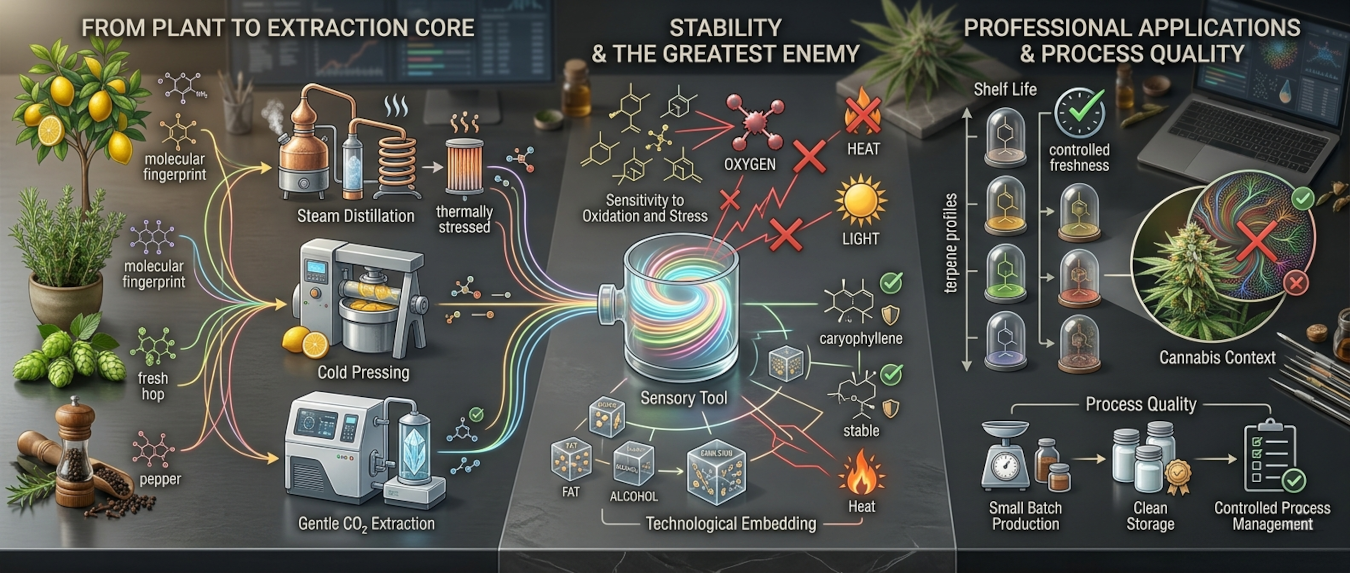
From the Plant to the Sensory Tool
The sensory quality of a terpene is not determined solely by its chemical identity, but significantly by the method of extraction, processing, and storage. In practice, this is one of the most common reasons for disappointment: terpenes that would theoretically be excellently suited lose their clarity or stability due to improper processing.
Fundamentally, several extraction and recovery methods can be distinguished. Steam distillation, cold pressing (especially for citrus fruits), and modern processes such as CO₂ extraction dominate the food and flavor industry. Each method has specific effects on the resulting terpene profile.
Steam distillation is time-tested but thermally stressful. Volatile terpenes can be lost or oxidized. Cold pressing preserves freshness but is highly dependent on raw material quality. CO₂ extraction is considered particularly gentle because it operates at low temperatures and allows for selective profiles—but it is cost-intensive.

Regardless of the method, oxidation remains the greatest enemy of terpenes. Oxygen, light, and heat lead to chemical changes that are sensorially perceived as “flat,” “soapy,” or “musty.” Monoterpenes like limonene or pinene are particularly sensitive, while sesquiterpenes tend to be more stable.
For food applications, this means: terpenes must not only be dosed correctly, but also technologically embedded. Fat, alcohol, or emulsions can have a stabilizing effect. At the same time, they increase solubility and perceptibility. Heat, on the other hand, is critical—especially in baking or cooking processes.
Another aspect is shelf life. Terpenes are not static substances. Even under optimal conditions, profiles change over time. Professional applications therefore do not calculate with “eternal stability,” but with controlled freshness. Small batches, clean storage, and clear process management are more important than maximum shelf-life promises.
Especially in the context of cannabis terpenes, it becomes clear how sensitive these substances are. Many of the highly praised profiles lose their character if they are improperly isolated or stored. For food products, therefore: it is not the exotic nature of the source that decides, but the quality of the process chain.
Sensory Science & Perception
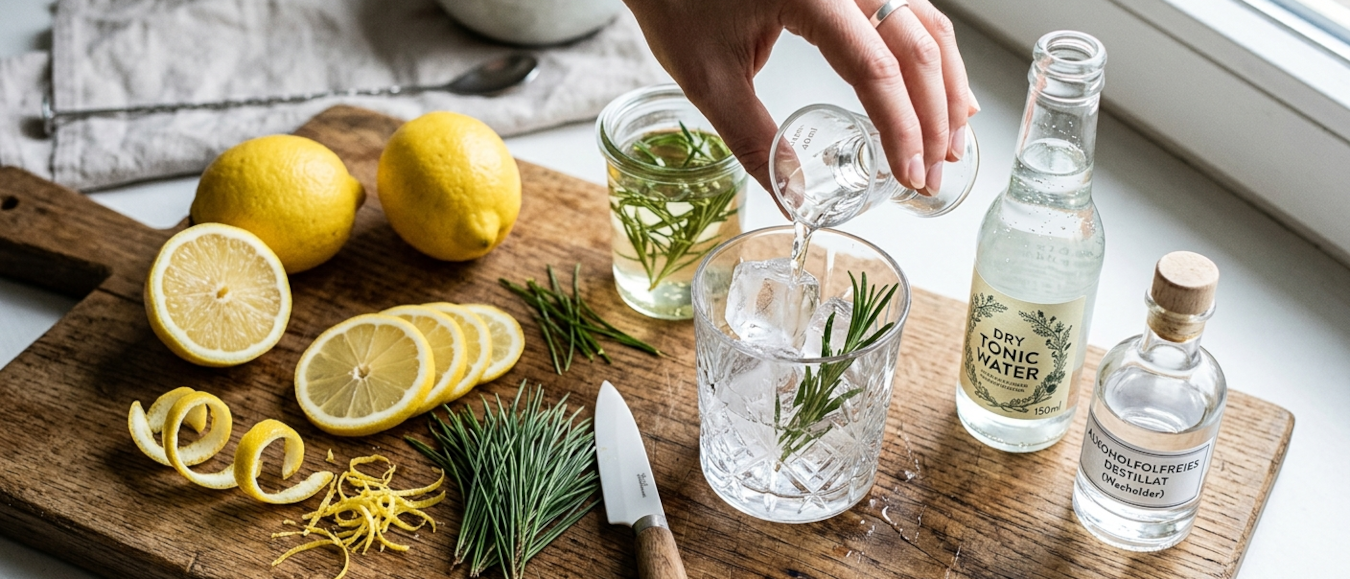
How Terpenes Structure Flavor – Without Dominating It
Taste is often misunderstood as an objective quantity. In reality, it is a highly subjective interplay of smell, taste, texture, temperature, expectation, and context. Terpenes act precisely at this interface. They rarely change the basic taste of a product, but they certainly alter its perception, length, and emotional classification.
From a sensory perspective, terpenes unfold their effect primarily through the sense of smell. A large part of what we call “flavor” occurs retronasally—meaning via the nose during eating or drinking. Terpenes are predestined for this because they are volatile and can be perceived even in very low concentrations.
What is crucial here: terpenes do not act in isolation, but always within the context of an existing flavor profile. Limonene can enhance freshness without adding acidity. Linalool can make sweetness appear rounder without introducing sugar. Caryophyllene can create depth without increasing bitterness. These effects are subtle but crucial for the overall perception.
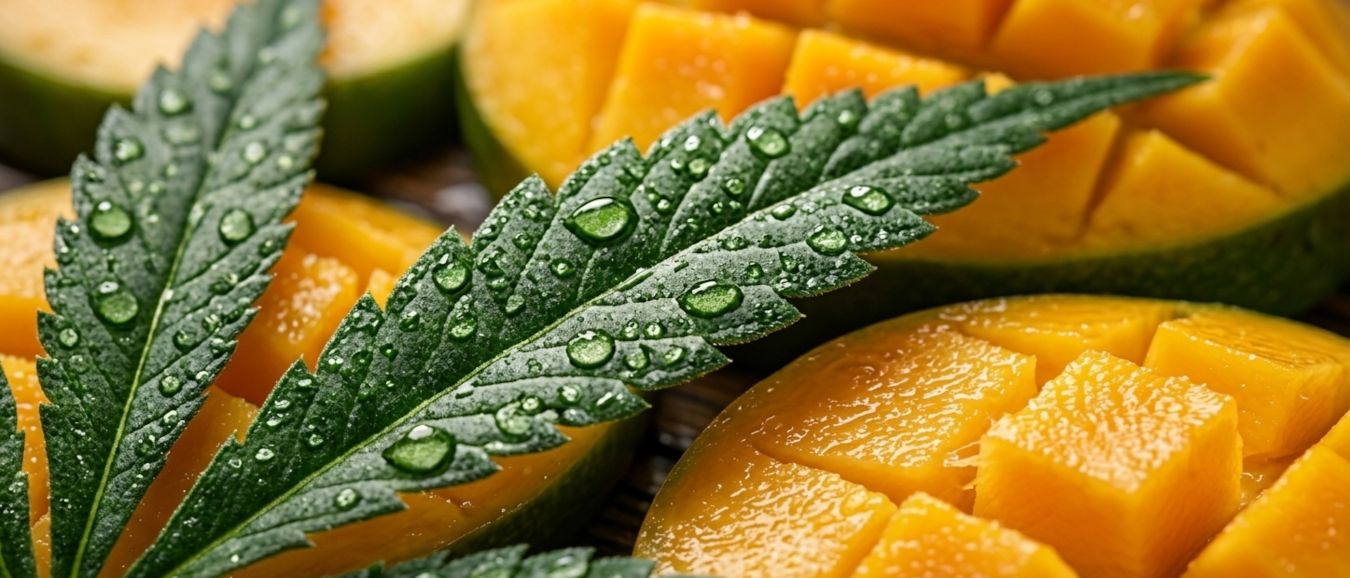
Another aspect is mood association. Terms like “invigorating,” “calming,” or “focusing” are not medical efficacy promises, but describe learned, culturally shaped perception patterns. Citric, green terpenes are often perceived as activating, while earthy or woody terpenes are rather considered calming. These associations are consistent enough to be taken into account in product development—but they should never be overinterpreted.
Particularly relevant for practice is the length of a product. Many modern food and beverage concepts fail not on the first impression, but on the finish. Terpenes can have a structuring effect here: they prolong perception, create transitions, or provide a clean finish. Especially in non-alcoholic beverages, which often lack depth and structure, this is a decisive advantage.
At the same time, terpenes carry risks. Overdosing quickly leads to dominance, sharpness, or a “perfumed” impression. Unlike sugar or salt, terpenes do not forgive inaccuracy. Sensory clarity does not arise from quantity, but from precision.
For decision-makers, this means: terpenes are no substitute for artisanal product development. They are a precision tool that only works when the base, matrix, and objective are clearly defined.
Application in Food & Beverage
From Theory to Practice
The actual relevance of terpenes only becomes apparent in their application. While they seem fascinating in theory, practice decides whether they create added value or fizzle out as a fashionable add-on. Successful applications rarely follow spectacular ideas, but rather clear sensory logics.
Beverages
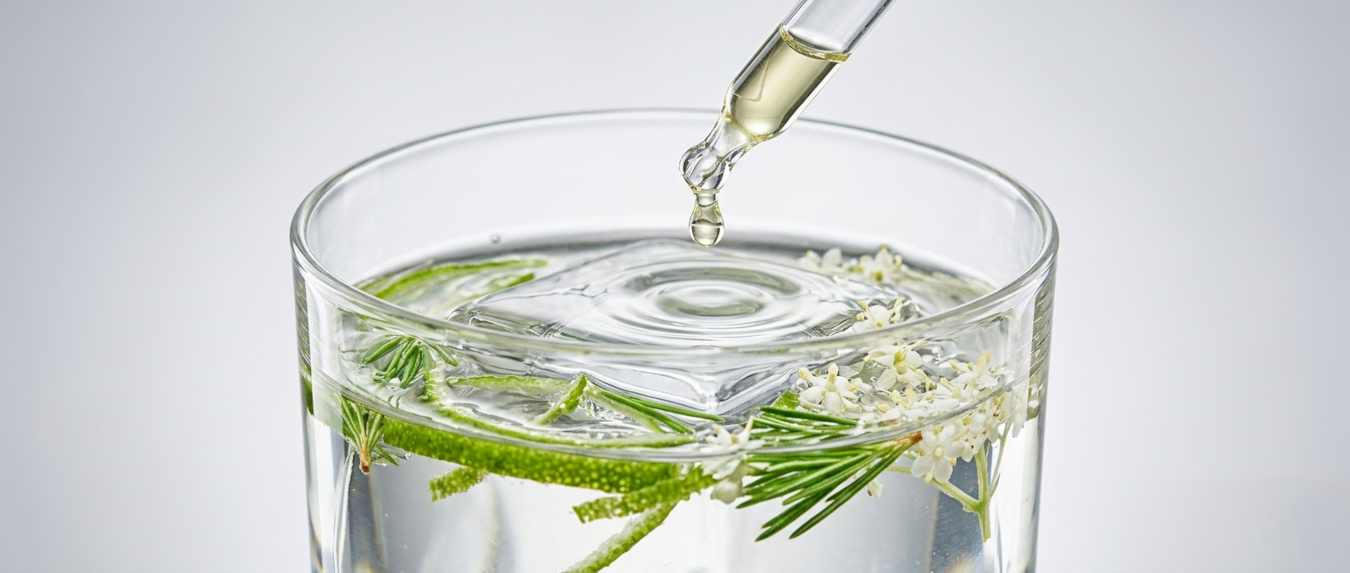
Beverages are currently the most important field of application for terpenes. Non-alcoholic products in particular benefit from their ability to create structure and length. Citric terpenes like limonene or citral impart freshness, while pinene or terpinolene contribute complexity and dryness. In combination with bitter substances or fermentation, profiles emerge that come across as mature and differentiated.
Solubility is important: alcohol, sugar, or emulsions act as carriers. Without an appropriate matrix, terpenes remain volatile and unstable.
Desserts & Confectionery

In sweet applications, terpenes primarily serve to balance. Floral terpenes like linalool can round out sweetness without enhancing it. Fruity terpenes like farnesene complement fruit flavors without appearing artificial. New accents can be set in this way, especially in ice cream, patisserie, or chocolate.
Savory & Hearty Applications

In savory products, terpenes show their structural strength. Spicy and earthy terpenes like caryophyllene or humulene harmonize with mushrooms, fermented products, or plant proteins. They create depth without increasing salt or fat—an advantage not to be underestimated in the context of modern nutrition.
Fermented Products
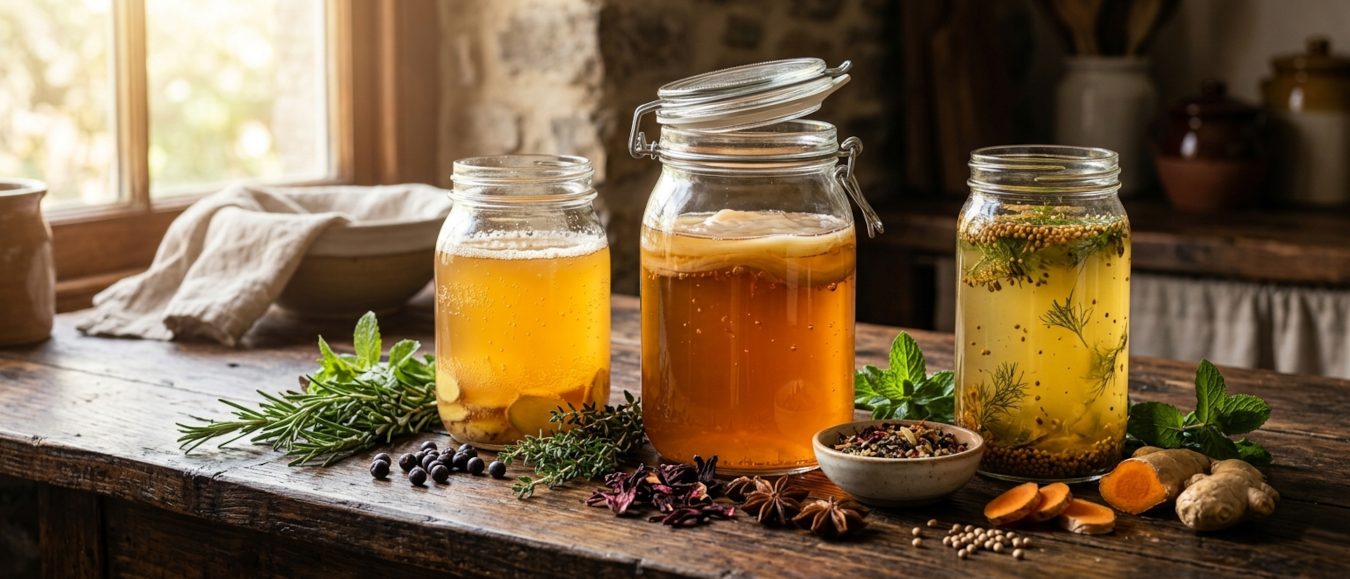
Fermentation and terpenes are natural partners. Many fermentation processes themselves generate terpenes or related compounds. Through targeted supplementation, profiles can be sharpened or stabilized. Kombucha, kefir, or fermented sauces are particularly suitable here.
Limits of Application
Not every product benefits from terpenes. Highly heated products, simple staple foods, or products with a clearly defined traditional profile often react sensitively or negatively. Terpenes are not a universal tool—they are an option, not a must.
Dosage & Responsibility
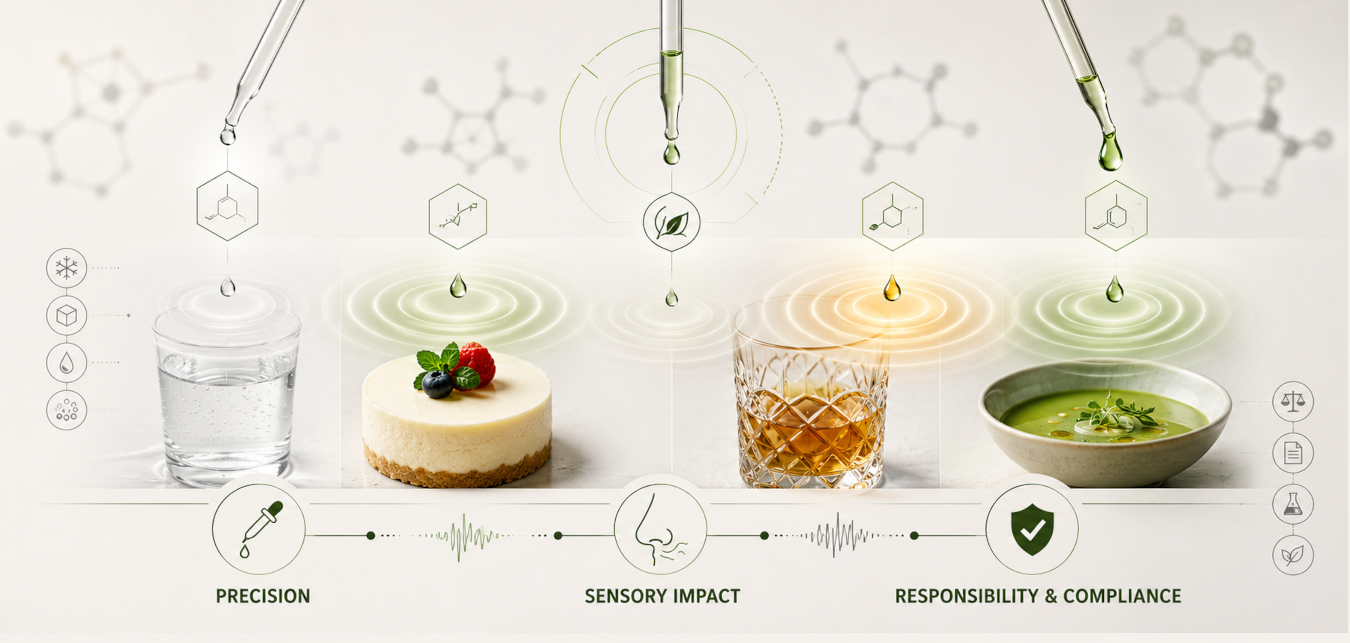
Why Precision Is More Important Than Potency
The successful use of terpenes is rarely decided by the choice of the right substance, but almost always by the dosage. Terpenes are among the most sensorially potent substances in food development. Even the smallest deviations can fundamentally change the character of a product—in a positive as well as a negative sense.
Unlike sugar, salt, or acid, terpenes do not possess a linear perception curve. Their effect does not increase proportionally with the amount. Instead, an narrow sensory window exists in which terpenes generate clarity, depth, or freshness. If this window is exceeded, the perception quickly tips into dominance, sharpness, or a “perfumed” impression.
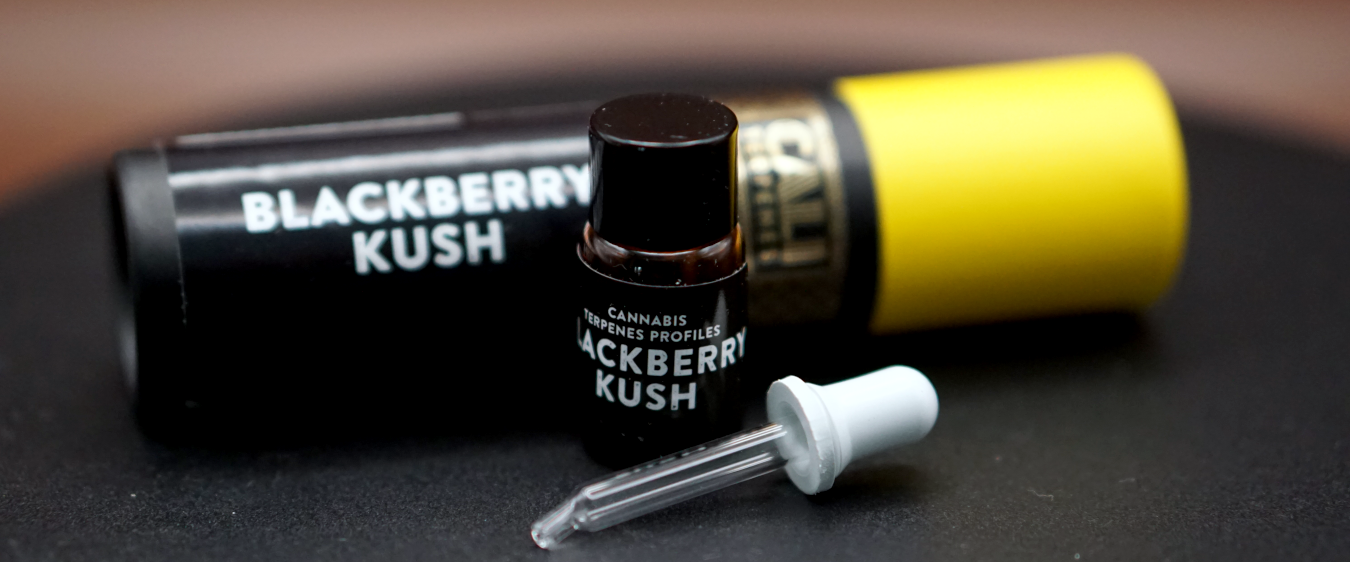
In practice, this means: terpenes do not forgive inaccuracy. While classic flavors are often used with safety margins, handling terpenes requires precise dosing, clean processes, and sensory training. Post-dosing is particularly problematic, as terpenes often distribute unevenly and are perceived as locally over-concentrated.
Another aspect is matrix dependency. Fat, alcohol, sugar, or emulsions affect not only solubility but also perception intensity. A terpene profile that appears balanced in a beverage can seem overloaded in a dessert—and vice versa. Dosage is therefore never absolute, but always context-dependent.
Alongside sensory responsibility comes regulatory responsibility. Although terpenes are widely approved as flavoring substances, they are nevertheless subject to clear legal frameworks. These concern not only maximum amounts but also declaration, purity, and origin. Especially in the context of cannabis terpenes, a clear separation between sensory use and efficacy promises is essential.
Responsibility in this context also means restraint. Not every product requires terpenes. Their use should always be justified: for structuring, for differentiation, or for sensory rounding. Where terpenes are used merely to generate attention, sustainable added value is rarely created.
In the long term, those applications will prevail that treat terpenes as what they are: high-precision sensory tools, not as gimmicks.
Market & Trends
foodadvisorblog’s Top 20 Terpenes for Food & Beverages in 2026
🎯 We used the following five criteria as the basis for our strategic selection.
- Sensory clarity & versatility
- Food compatibility with current food trends
- Technological stability
- Regulatory safety & feasibility
- Brandability
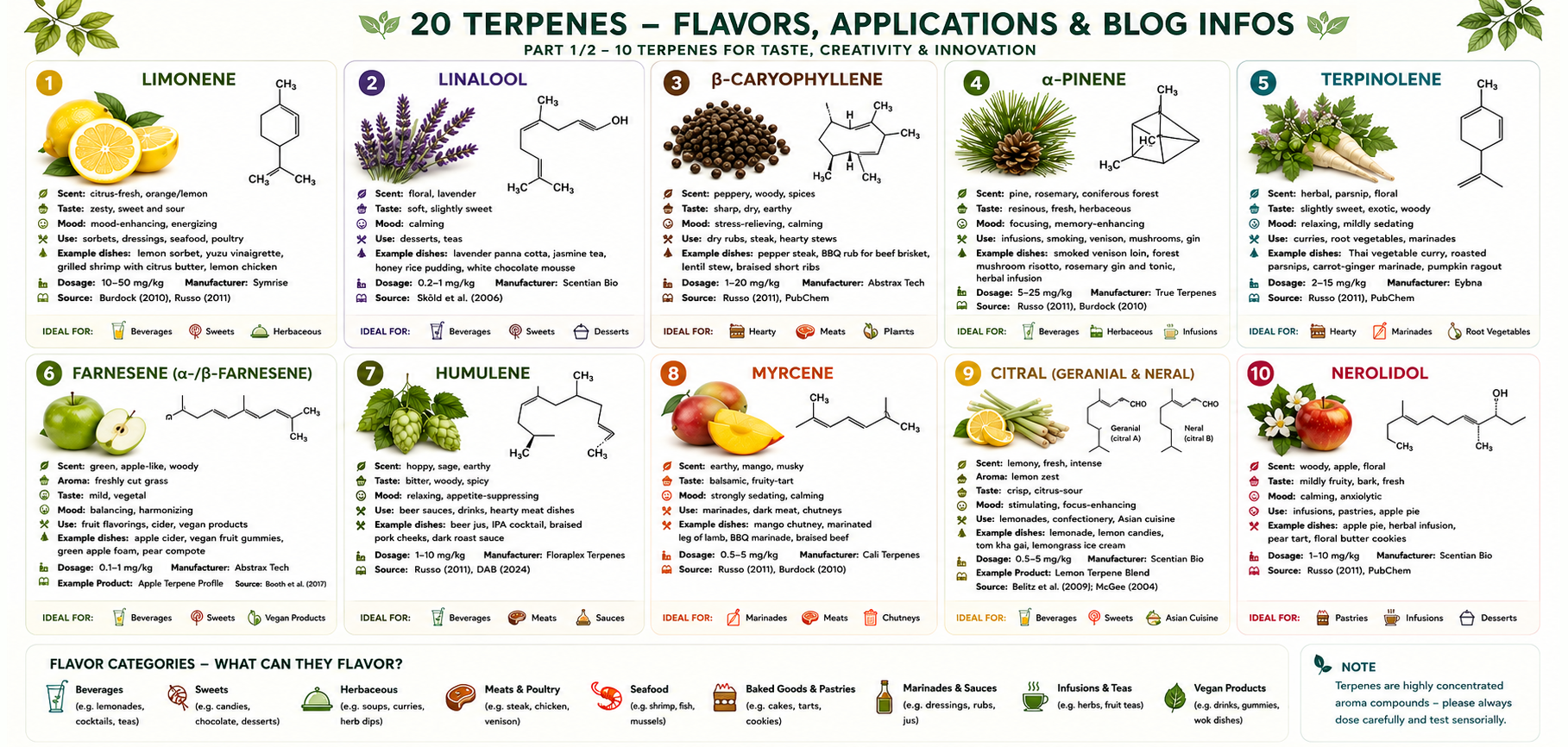
The terpene market is in a phase of quiet but sustainable movement. Unlike short-lived food trends, this is not about spectacular innovations, but about functional differentiation.
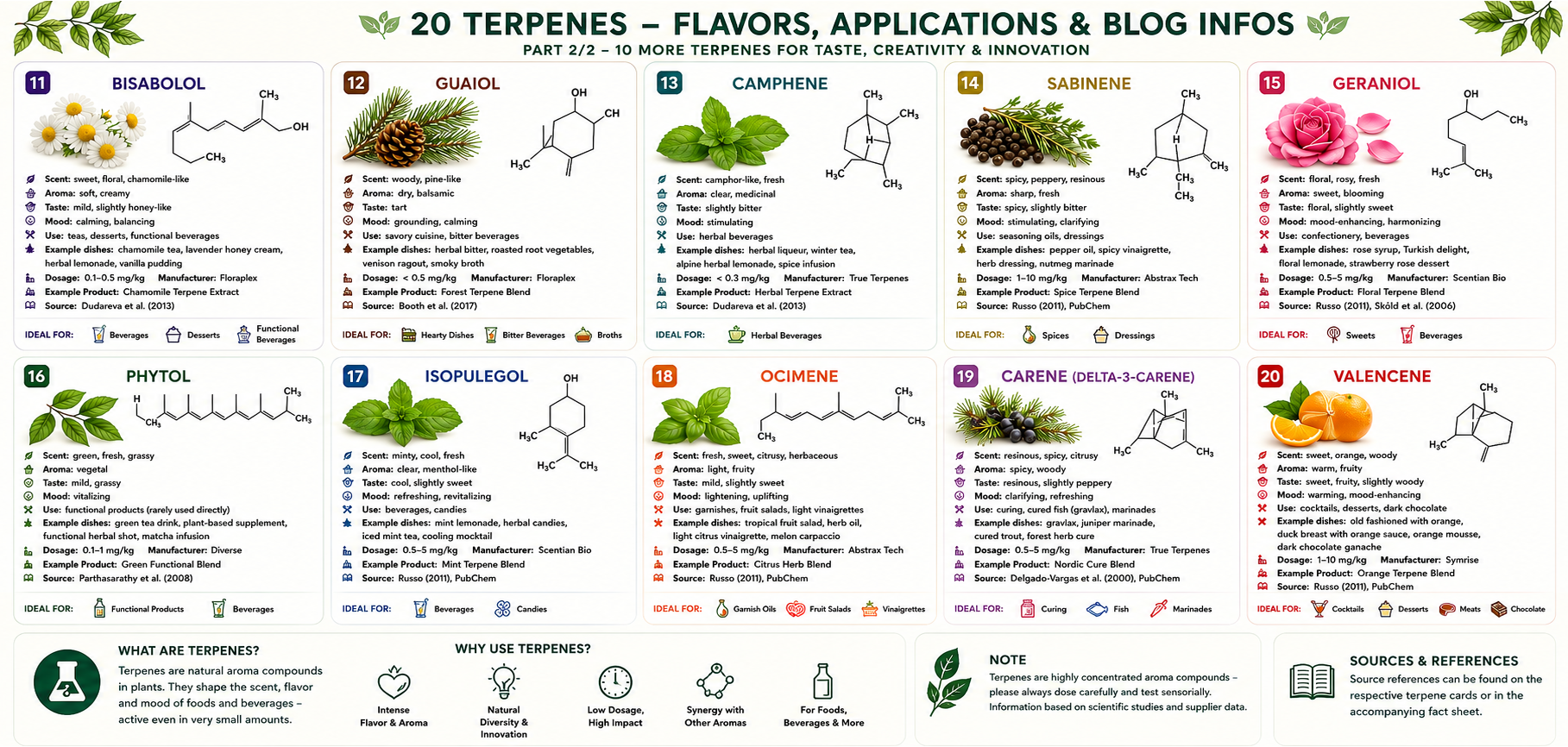
Terpenes become relevant where classic flavor concepts reach their limits—especially in non-alcoholic beverages, functional products, and high-quality foods.
Terpene Chart – An Overview, with References
| Terpene | Formula | Scent | Taste | Mood | Use | Example Dishes | Dosage | Manufacturer | Source |
|---|---|---|---|---|---|---|---|---|---|
| Limonene | C10H16 | citrus-fresh, orange, lemon | zesty, sweet and sour | mood-enhancing, energizing | sorbets, dressings, seafood, poultry | lemon sorbet, yuzu vinaigrette, grilled shrimp with citrus butter, lemon chicken | 10–50 mg/kg | Symrise | Burdock (2010), Russo (2011) |
| Linalool | C10H18O | floral, lavender | soft, slightly sweet | calming | desserts, teas | lavender panna cotta, jasmine tea, honey rice pudding, white chocolate mousse | 0.2–1 mg/kg | Scentian Bio | Sköld et al. (2006) |
| β-Caryophyllene | C15H24 | peppery, woody, spices | sharp, dry, earthy | stress-relieving, calming | dry rubs, steak, hearty stews | pepper steak, BBQ brisket rub, lentil stew, braised short ribs | 1–20 mg/kg | Abstrax Tech | Russo (2011), PubChem |
| α-Pinene | C10H16 | pine, rosemary, coniferous forest | resinous, fresh, herbaceous | focusing, memory-enhancing | infusions, smoking, venison, mushrooms, gin | smoked venison loin, forest mushroom risotto, rosemary gin & tonic, herbal infusion | 5–25 mg/kg | True Terpenes | Russo (2011), Burdock (2010) |
| Terpinolene | C10H16 | herbal, parsnip, floral | slightly sweet, exotic, woody | relaxing, mildly sedating | curries, root vegetables, marinades | Thai vegetable curry, roasted parsnips, carrot-ginger marinade, pumpkin ragout | 2–15 mg/kg | Eybna | Russo (2011), PubChem |
| Farnesene | C15H24 | green, apple-like, woody | mild, vegetal | balancing, harmonizing | fruit flavorings, cider, vegan products | apple cider, vegan fruit gummies, green apple foam, pear compote | 0.1–1 mg/kg | Abstrax Tech | Booth et al. (2017) |
| Humulene | C15H24 | hoppy, sage, earthy | bitter, woody, spicy | relaxing, appetite-suppressing | beer sauces, drinks, hearty meat dishes | beer jus, IPA cocktail, braised pork cheeks, dark roast sauce | 1–10 mg/kg | Floraplex Terpenes | Russo (2011), DAB (2024) |
| Myrcene | C10H16 | earthy, mango, musky | balsamic, fruity-tart | strongly sedating, calming | marinades, dark meat, chutneys | mango chutney, marinated lamb leg, BBQ marinade, braised beef | 0.5–5 mg/kg | Cali Terpenes | Russo (2011), Burdock (2010) |
| Citral | C10H16O | lemony, fresh, intense | crisp, citrus-sour | stimulating, focus-enhancing | lemonades, confectionery, Asian cuisine | lemonade, lemon candies, tom kha gai, lemongrass ice cream | 0.5–5 mg/kg | Scentian Bio | Belitz et al. (2009), McGee (2004) |
| Nerolidol | C15H26O | woody, apple, floral | mildly fruity, bark, fresh | calming, anxiolytic | infusions, pastries, apple pie | apple pie, herbal infusion, pear tart, floral butter cookies | 1–10 mg/kg | Scentian Bio | Russo (2011), PubChem |
| Bisabolol | C15H26O | sweet, floral, chamomile-like | mild, slightly honey-like | calming, balancing | teas, desserts, functional beverages | chamomile tea, lavender honey cream, herbal lemonade, vanilla pudding | 0.1–0.5 mg/kg | Floraplex | Dudareva et al. (2013) |
| Guaiol | C15H26O | woody, pine-like | tart, dry, balsamic | grounding, calming | savory cuisine, bitter beverages | herbal bitter, roasted root vegetables, venison ragout, smoky broth | < 0.5 mg/kg | Floraplex | Booth et al. (2017) |
| Camphene | C10H16 | camphoraceous, fresh | slightly bitter | stimulating | herbal beverages | herbal liqueur, winter tea, alpine herbal lemonade, spice infusion | < 0.3 mg/kg | True Terpenes | Dudareva et al. (2013) |
| Sabinene | C10H16 | spicy, peppery | warm, dry | invigorating | seasoning oils, dressings | pepper oil, spicy vinaigrette, herb dressing, nutmeg marinade | 0.1–0.5 mg/kg | Abstrax Tech | Belitz et al. (2009) |
| Geraniol | C10H18O | rosy, sweet | mildly sweet | mood-enhancing | confectionery, beverages | rose syrup, Turkish delight, floral lemonade, strawberry rose dessert | 0.2–1 mg/kg | Floraplex | McGee (2004) |
| Phytol | C20H40O | fatty, green | neutral | calming | functional products | green tea drink, plant-based supplement, functional herbal shot, matcha infusion | very low | Abstrax Tech | Russo (2011) |
| Isopulegol | C10H18O | fresh, minty | slightly sweet | refreshing | beverages, candies | mint lemonade, herbal candies, iced mint tea, cooling mocktail | < 0.5 mg/kg | True Terpenes | Belitz et al. (2009) |
| Ocimene | C10H16 | sweet, parsley, tropical, floral | fruity, slightly herbaceous, woody | uplifting, clarifying | garnish oils, fruit salads, light vinaigrettes | tropical fruit salad, herb oil, light citrus vinaigrette, melon carpaccio | 1–10 mg/kg | True Terpenes | Russo (2011), PubChem |
| Δ3-Caren (Delta-3-Caren) | C10H16 | cedar, pine, coniferous | woody-sweet, resinous, slightly sharp | focusing | curing, gravlax, marinades | gravlax, juniper marinade, cured trout, forest herb cure | 0.5–5 mg/kg | Floraplex | Burdock (2010), Russo (2011) |
| Valencene | C15H24 | orange, candied orange peel, woody | sweetish, ripe orange, slightly tart | mood-enhancing, vitalizing | cocktails, desserts, duck, chocolate | orange old fashioned, duck breast with orange sauce, orange mousse, dark chocolate ganache | 5–20 mg/kg | Eybna | Burdock (2010), PubChem |
Sources & References
- Belitz, H.-D., Grosch, W., & Schieberle, P. (2009):
Food Chemistry. 4th Edition, Springer.
(Standard reference for food chemistry fundamentals and flavorings.) - Booth, J. K. et al. (2017):
Terpenes in Cannabis sativa – From Plant Genome to Humans.
Plant Science, 258, 48–72.
(Fundamental work on genetics and specific terpene profiles in cannabis.) - Burdock, G. A. (2010):
Fenaroli’s Handbook of Flavor Ingredients.
6th Edition, CRC Press.
(Standard reference for food chemistry dosages and properties.) - DAB (2024):
Deutsches Arzneibuch (German Pharmacopoeia).
(Monographs on essential oils and their principal constituents, e.g., humulene.) - Dudareva, N. et al. (2013):
Biosynthesis, Function and Metabolic Engineering of Plant Volatile Organic Compounds.
New Phytologist, 198(1), 16–32.
(Important source covering the botanical role and biosynthesis of plant volatile compounds.) - McGee, H. (2004):
On Food and Cooking: The Science and Lore of the Kitchen.
Scribner.
(Classic reference for culinary applications and chemical reactions in cooking.) - PubChem:
Open Chemistry Database.
National Institutes of Health (NIH).
(Reference source for structural, physicochemical and aromatic baseline data.) - Russo, E. B. (2011):
Taming THC: Potential Cannabis Synergy and Phytocannabinoid-Terpenoid Entourage Effects.
British Journal of Pharmacology, 163(7), 1344–1364.
(The primary scientific basis for mood-related and entourage-effect discussions.) - Sköld, M. et al. (2006):
Contact Allergies to Fragrance Mix Ingredients.
Contact Dermatitis, 54(1), 48–52.
(Reference for dermatological tolerability, particularly regarding linalool.)
*Hint: In addition to classic monoterpenes and sesquiterpenes, the overviews and tables also include some terpene-related aromatic compounds. Phytol, for example, is not chemically a terpene in the strict sense, but rather a diterpenoid alcohol (a breakdown product of chlorophyll).
The market clearly shows: it is not the most exotic terpenes that prevail, but those that are reliable, understandable, and technologically manageable. Terpenes thus become less of a trend driver and more of a quality hallmark.
Digression: The Secret of Citral
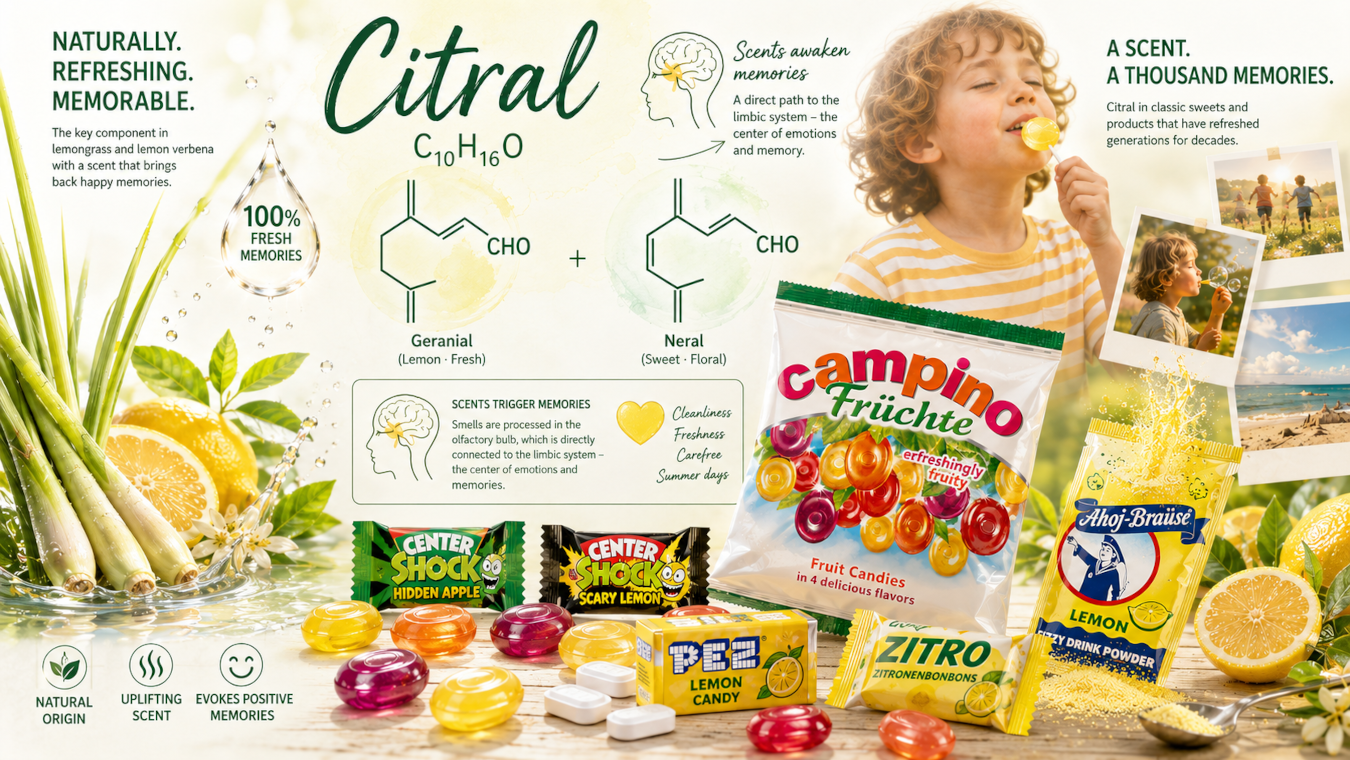
Citral (chemically: C₁₀H₁₆O) is not a single substance, but a mixture of two isomers: geranial (lemon aroma) and neral (sweeter, more floral citrus aroma). It belongs to the group of aldehydes.
The Secret of Childhood Memories
Citral triggers immediate, positive memories in almost everyone. This is due to the Proust phenomenon: scents are processed in the olfactory bulb, which is directly connected to the limbic system (emotions and memory).
Citral is the main component of lemongrass and lemon verbena, but is also frequently used in classic confectionery (lemon lollipops, ice cream) and refreshing wet wipes. It triggers feelings of cleanliness, freshness, and carefree summer days (Molecular Diversity Preservation International [MDPI], 2021).
This terpene plays a crucial role—it captures the fleeting, ethereal notes you smell when you cut open a fresh lemon or grate its zest. Without citral, these candies would taste sour due to the fruit acids, but they would lack depth and the characteristic “lemon” aroma.
The Matching Strain
The variety that comes closest to this pure citral blend is undisputed: Lemon Skunk (originally from DNA Genetics/Sensi Seeds family) or the legendary Super Lemon Haze. These strains contain such a high concentration of limonene combined with traces of geraniol that they smell almost identical to fresh lemongrass.
Sources
- Cali Terpenes (2024):Terpene Guide – Everything you need to know. caliterpenes.com / caliterpenes.com
- Abstrax Tech (2023):The Science of Exotic Terpenes. abstraxtech.com
- Dutch Passion (2021):What is Bisabolol?. dutch-passion.com / dutch-passion.com
- MDPI (2021):Citral: A Review of its Pharmacological Properties. mdpi.com (Englisch) / Deutsche Zusammenfassung via pharmazeutische-zeitung.de
Strategic Assessment
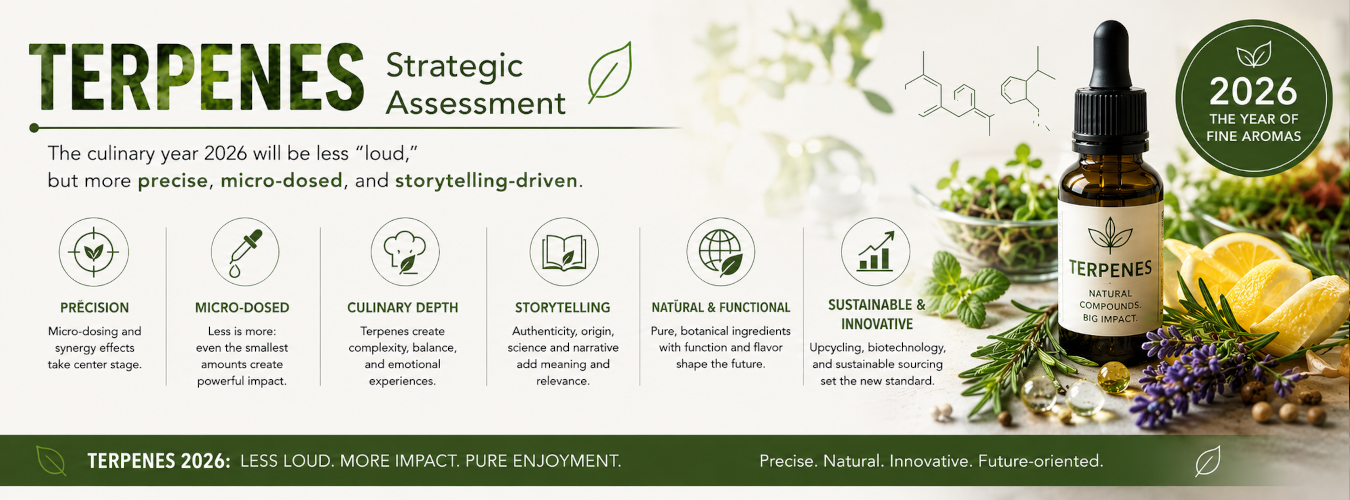 The culinary year 2026 will be less “loud,” but more precise, micro-dosed, and storytelling-driven.
Supply References -The Aroma of Innovation: CALI Terpenes

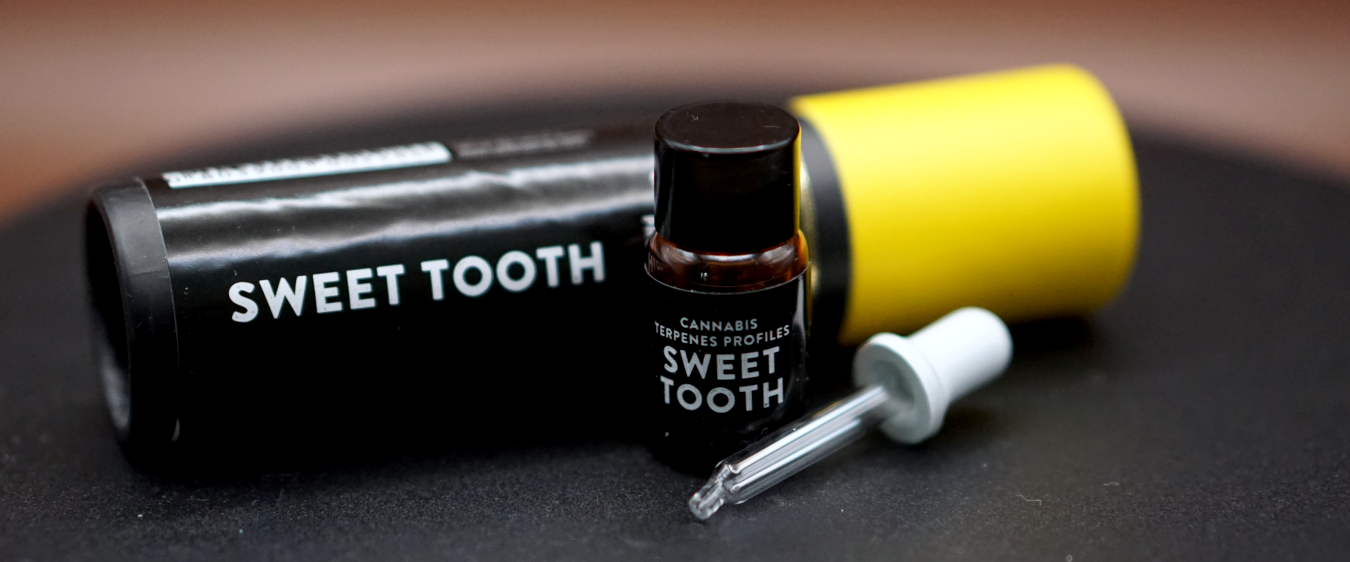
When people talk about the “Cali feel” in the cannabis sector today, they usually mean the unmistakable scent of elite genetics. The fact that this fragrance is now legally available worldwide in the form of small vials or sprays is largely thanks to Cali Terpenes S.L..
Paradoxically, the roots of the Barcelona-based company lie in sunny California in 2016. It was there that founders Toni and Ferran – who already enjoyed legendary status in the breeding scene through their work at Eva Seeds – recognized the enormous potential of isolated terpene profiles (Cali Terpenes, n.d.).
What began as a spontaneous idea during a trip quickly evolved into a pioneering technological project. Cali Terpenes specialized in molecularly replicating the complex aromas of famous strains like “Gorilla Glue” or “Amnesia” with exact precision, yet without any psychoactive compounds. This technological mastery made it possible to safely establish the typical cannabis aroma in industries such as food production, cosmetics, and the vaping market (Alchimia, 2017).
The team achieved a particular stroke of genius with the invention of Terps Spray, which revolutionized the aromatization of products and finally established the company as the global market leader in this segment. Today, Cali Terpenes no longer stands just for “scents,” but for a new era of functional flavors that make the so-called “entourage effect” scientifically accessible (Cali Terpenes Blog, 2026).
Combining botanical knowledge with state-of-the-art laboratory analysis, they have succeeded in translating the heritage of California’s cannabis culture into a legal, industrial format for the 21st century.
References
- Cali Terpenes (o.D.): Our story
- Alchimia (2017): Cali Terpenes – 100% natural cannabis terpenes
- Cali Terpenes Blog (2026): Terpene Guide & News
- Mr. Hanf: Cali Terpenes brand profile
Supply References – The Codebreakers of Scent – Abstrax Tech

While other companies grow cannabis, Abstrax Tech deconstructs it at the atomic level. Since its founding in 2017, the California-based company has shaken the industry with one key insight: terpenes alone do not explain the aroma of cannabis (Abstrax Tech, n.d.). By utilizing state-of-the-art 2D gas chromatography, the team of scientists at Abstrax has identified those “ghost molecules” that make the difference between an average flower and a legend (Abstrax Blog, 2023).
Today, Abstrax Tech functions as the technological brain behind many world-class products. By decoding the chemistry of cult genetics (such as those from the Humboldt Seed Company) and translating them into legal, botanical essences, they have bridged the gap between the laboratory and lifestyle (Abstrax Tech Catalogue, 2024). In a world where sensory experience is becoming the new currency of the cannabis industry, Abstrax Tech is the vault keeper guarding the secret formulas for the perfect olfactory experience.

Sources
- Abstrax Tech (n.d.): The Science of Scent – Our Mission
- Abstrax Tech (2020): Aroma Research & Product Catalog
- Abstrax Blog (2023): The Science of Exotic Cannabis Flavorants
Terpene Profiles & Fingerprints
Why Combinations Are More Important Than Single Substances
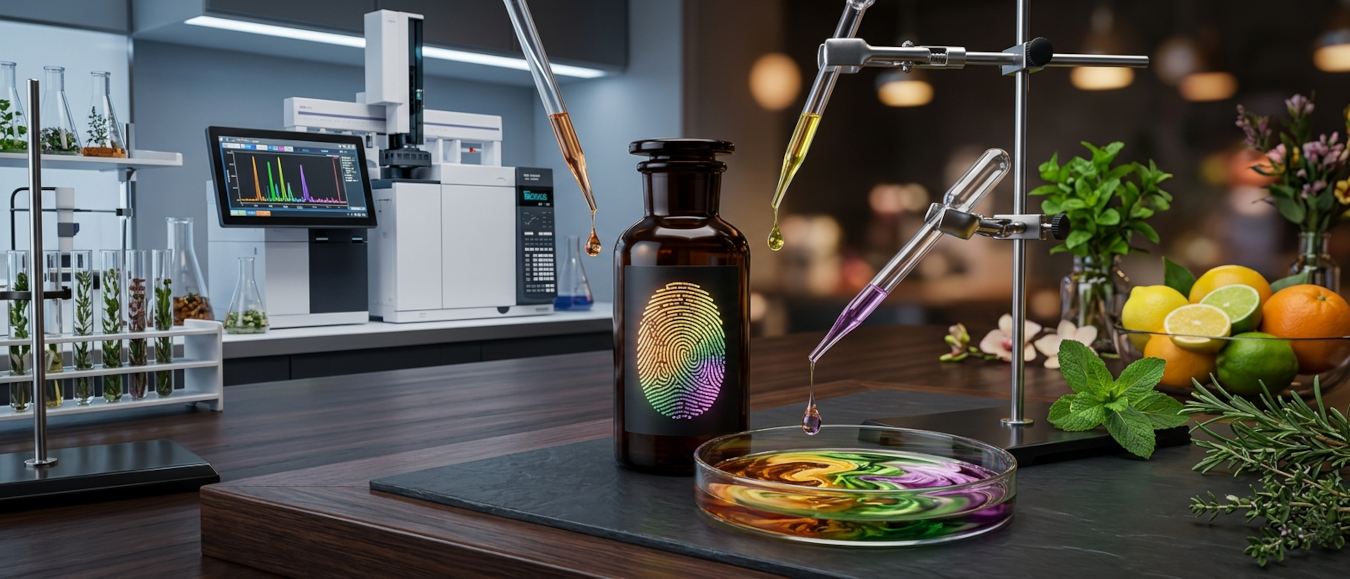
In practical application, it quickly becomes apparent: looking at individual terpenes in isolation rarely leads to convincing results. Although individual substances can be clearly described—citrusy, floral, spicy—sensory quality only arises in the interplay of several terpenes. This interplay is often referred to as a terpene profile or fingerprint.
A terpene fingerprint describes the relative ratio of different terpenes to one another. What matters here is not the absolute quantity, but the balance. Two products can contain identical terpenes and yet have a completely different effect if their ratios differ. This is precisely where the strength, but also the complexity, of working with terpenes lies.
This principle becomes particularly clear with cannabis genetics. Different strains can be reliably distinguished sensorially, even though they are often based on the same terpenes. The recognition value arises not from exoticism, but from stable relations. For the food industry, this is a central realization: reproducibility is created not by individual substances, but by profiles.
At the same time, terpene fingerprints are not static. Cultivation, harvest time, processing, and storage influence the profile. Indoor and outdoor cultivation, different light cycles, or nutrient availability lead to measurable, sensorially relevant deviations. Nevertheless, the genetic core often remains recognizable—comparable to handwriting that varies but does not disappear.
For product development, this means two things. First: terpene profiles must be defined and controlled if consistency is desired. Second: a certain variance is not necessarily negative, but can be understood as a sign of naturalness and artisanal quality—provided it is communicated.
The separation of individual terpenes is usually achieved through fractional distillation or chromatographic methods. For food applications, however, this is mostly just the first step. The decisive part is the recombined profile formation, meaning the deliberate bringing together of individual terpenes into a desired overall sensory picture.
This brings an aspect to the fore that goes beyond chemistry: working with terpenes is always also sensory design. It requires analytical understanding, but equally experience, tasting, and iterative adjustment. Anyone who views terpenes purely technically misses their true potential.
What Remains of Terpenes?
Context, Responsibility, and Outlook
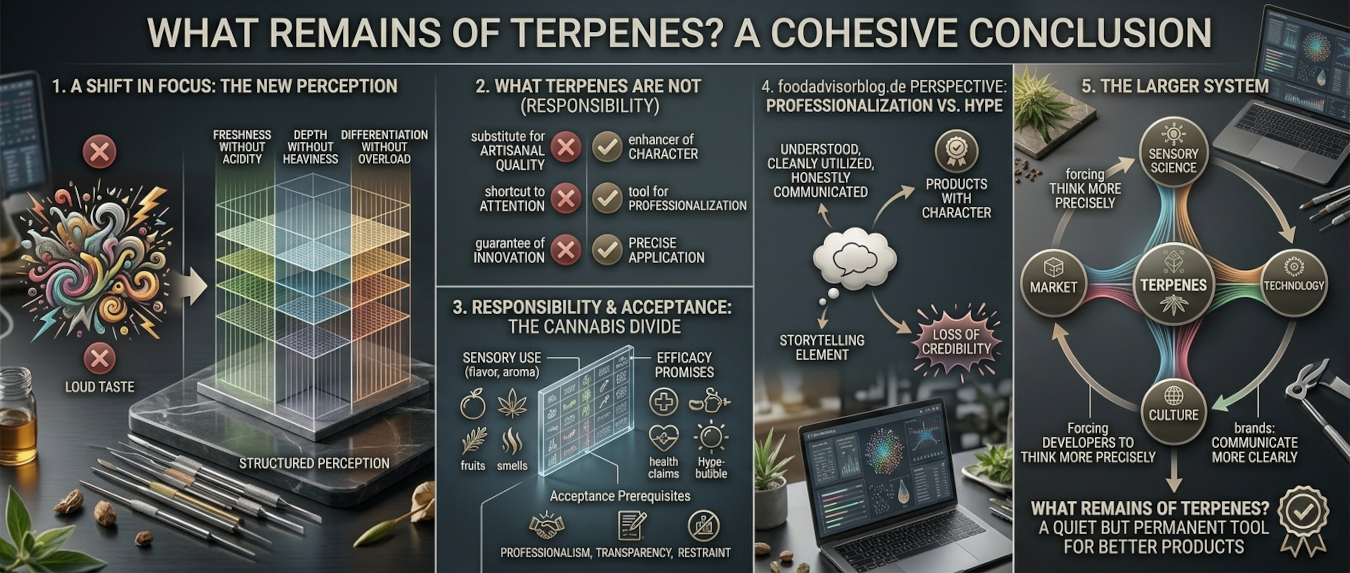
Terpenes will not revolutionize the food and beverage industry. And that is precisely their strength. They are no substitute for artisanal quality, no shortcut to attention, and no guarantee of innovation. Terpenes are tools—precise, effective, and demanding in their application.
What remains is a changed perspective on flavoring. Terpenes shift the focus away from loud taste toward structured perception. They enable freshness without acidity, depth without heaviness, and differentiation without overload. In a time when many products seem sensorially interchangeable, this is an advantage that should not be underestimated.
At the same time, terpenes require responsibility. Their proximity to the cannabis debate makes a clear separation between sensory use and efficacy promises absolutely mandatory. Anyone who blurs this line harms not only their own product but the entire category. Professionalism, transparency, and restraint are not restrictions, but prerequisites for acceptance.
From the perspective of foodadvisorblog.de, the greatest potential of terpenes lies not in the hype, but in professionalization. Where terpenes are understood, cleanly utilized, and honestly communicated, products with character are born. Where they serve merely as a storytelling element, they quickly lose credibility.
Looking ahead shows: terpenes are increasingly becoming part of a larger system. They connect sensory science, technology, culture, and the market. They force product developers to think more precisely and brands to communicate more clearly. Nothing more, nothing less.
What remains of terpenes? A quiet but permanent tool for better products.

Well, that wraps up the bulk of our “Terpene Marathon”—we still have two interviews left to go before Mary Jane’s 10th birthday (I’m hoping to get the approved texts soon), and a few terpene recipes still need some fine-tuning—so you can look forward to a few more posts. To help you navigate through all the posts without too much hassle, I’ve pinned illustrated & clickable links at the top of the blog-front—enjoy reading!
Sources & References
- Belitz et al.: Food Chemistry, Flavoring Substances Chapter
- Belitz, Grosch, Schieberle: Food Chemistry
- Belitz, H.-D.; Grosch, W.; Schieberle, P.: Food Chemistry, Springer
- Booth, J.K.; Bohlmann, J.: Terpene diversity and profiles in Cannabis
- Booth, J.K.; Bohlmann, J.: Terpenes in Cannabis, Plant Science Journal
- Breitmaier, E.: Terpenes – Flavors, Fragrances, Pharmaca, Wiley-VCH
- Clarke, R.C.; Merlin, M.D.: Cannabis – Evolution and Ethnobotany
- Croteau, R.; Kutchan, T.; Lewis, N.: Natural Products (Secondary Metabolites)
- EFSA Journal: Flavouring substances – safety and exposure
- EFSA Journal: Flavouring substances – Terpenoid compounds
- EFSA: Flavouring substances – Guidance for food use
- EFSA: Flavouring substances database
- EFSA: Flavourings – safety, perception and communication
- EFSA: Guidance on flavouring substances
- European Commission: Food Information to Consumers Regulation
- European Commission: Guidance on flavouring substances
- European Food Safety Authority (EFSA): Flavourings & Terpenes – Scientific Opinions
- Food Ingredients Europe: Flavor Trends & Terpenes
- Food Ingredients Europe: Terpenes in Beverage Applications
- ISO 11036: Sensory analysis — Texture profile
- ISO 13299: Sensory analysis — Methodology
- ISO 5492: Sensory analysis — Vocabulary
- ISO 9235: Aromatic natural raw materials – Vocabulary
- Lawless, H.; Heymann, H.: Sensory Evaluation of Food, Springer
- Leffingwell & Associates: Terpene Market Overview
- Leffingwell & Associates: Terpene Overview & Classification
- Leffingwell, J.C.: Cannabis Terpenes and Flavor Chemistry
- Leffingwell, J.C.: Flavor Chemistry of Terpenes
- Leffingwell, J.C.: Flavor Profiling and Terpene Fingerprints
- Leffingwell, J.C.: Terpene Stability and Oxidation
- Leffingwell, J.C.: Terpene Use Levels and Sensory Impact
- McGee, H.: On Food and Cooking, Scribner
- McPartland, J.M.: Cannabis terpenes and their biological relevance
- Mintel GNPD: Flavor & Ingredient Trends
- Reverchon, E.; De Marco, I.: Supercritical Fluid Extraction, Chemical Engineering
- Russo, E.B.: Taming THC – potential cannabis synergy, British Journal of Pharmacology
- Shepherd, G.M.: Neurogastronomy
- Stone, H.; Sidel, J.: Sensory Evaluation Practices
Copyright and Editorial Responsibility
In the creation of this article, AI-supported systems were used during the research phase, including OpenAI ChatGPT, Google Gemini, and Anthropic Claude. The use of AI was strictly supportive. Editorial selection, evaluation, structuring, content verification, and journalistic responsibility remained completely with the publisher.
All articles and interviews remain the property of the author. Use or reproduction only with express permission. Opinions reflect the view of the author. Errors excepted.
Disclaimer: The information in this article is for educational and entertainment purposes only. The culinary use of terpenes should always comply with local laws. All rights to content and images belong to the publisher.