

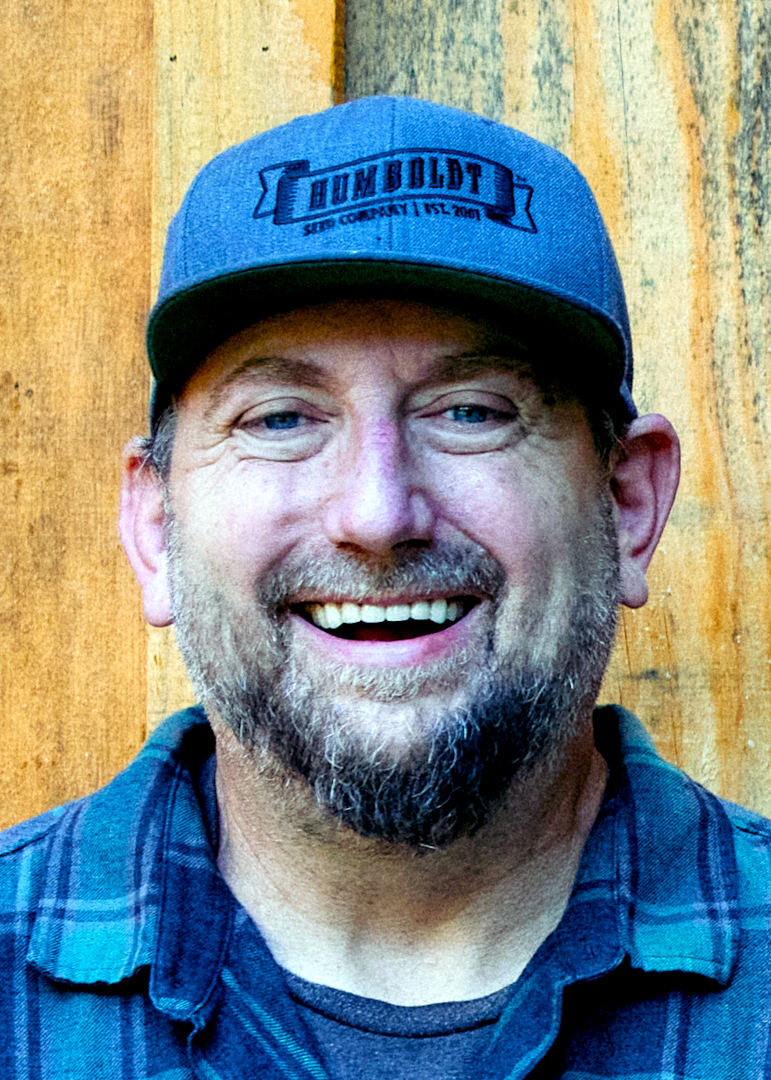

Nathaniel Pennington, founder and CEO of Humboldt Seed Company, has been breeding cannabis for over 20 years and is committed to the restoration of rivers and the reintroduction of salmon stocks in Humboldt County.
Before joining Humboldt Seed Company, Pennington worked in the field of salmon genomics, which led him to recognize the need for unbiased cannabis genome research.
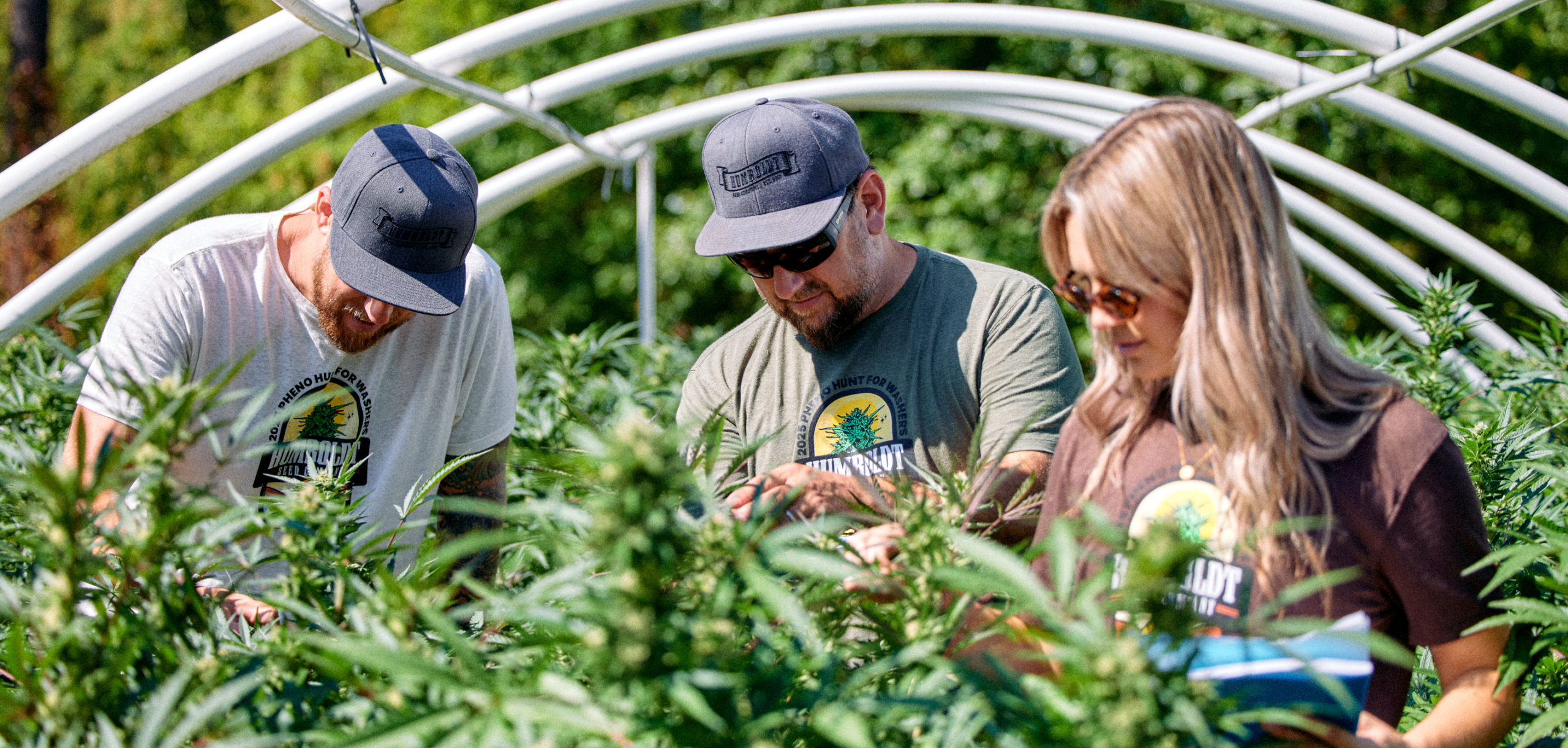
Pennington founded Humboldt Seed Company in 2001 to provide the community with strong cannabis genetics that do not require pesticides or fungicides. Deeply rooted in Humboldt County and strongly connected to the community, he has founded several non-profit organizations, most recently the Nature Rights Council, an environmental organization led by indigenous youth from Humboldt.
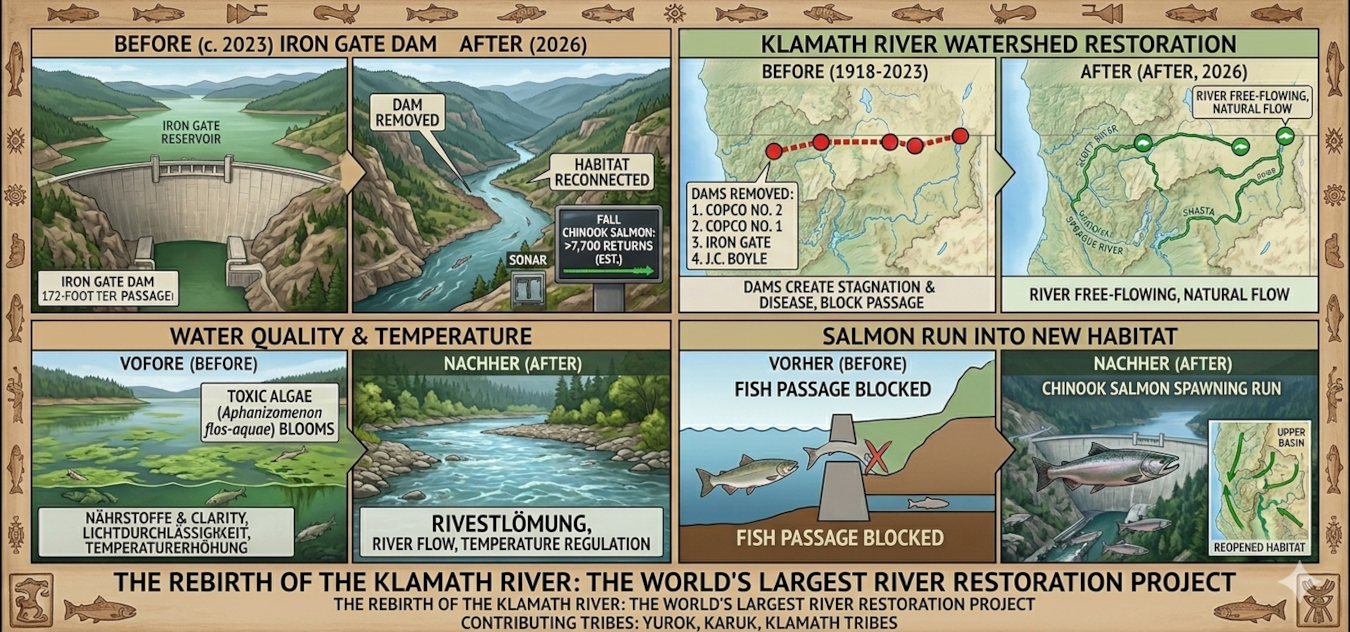
Pennington was instrumental in the negotiations that led to the agreement to remove four dams that blocked salmon migration in the Klamath River. This is considered the largest river restoration project in the world.
He is convinced that creative breeding is the way forward for artisan farmers and is passionately committed to ensuring that cannabis remains a plant for the people and does not become a commodity for corporations.
Pennington hopes that Humboldt Seed Company‘s Pheno Hunt program will produce the strains of the future, providing medically valuable, stable seed lines and specialty strains that will invigorate the market.
[Erik]: Hello Nathaniel, great to have the opportunity to have a chat with you at the Mary Jane. I watched some of your YouTube videos before the event — not least to prepare for this interview — and I must admit that your enthusiasm really rubbed off on me. Basically, the Emerald Triangle clips got me excited about the topic of terpenes in combination with food and drink.
[Nathaniel]: Oh, thank you for the “flowers” those Video productions are really a lot of fun, and we’re always learning new and interesting things and meeting new people.
[Erik]: Before you started making cannabis the focus of your professional life, you were looking after your rivers and salmon populations – how did you get into the breeder business?
[Nathaniel]: I was inspired by a mentor, Peter Brucker, a guitarist who not only taught me how to play, but also introduced me to the world of environmental conservation. Over the years my work on salmon conservation on the Klamath River in California and my cannabis career have just naturally overlapped. Brucker gave me my first seeds, inspiring me to farm and I’ve never stopped since that first day. I started small, just giving seeds away or trading them for beer back in the day. I wanted to provide good genetics to the community so the local growers could be successful. It just grew from there. Humboldt Seed Co. was established in 2001 under California’s Compassionate Care Program – Prop 215.
[Erik]: When did terpenes lately come into your life to flavour food and drinks and which base – terps, crumble, rosin, fresh buds – seems to you the best here?
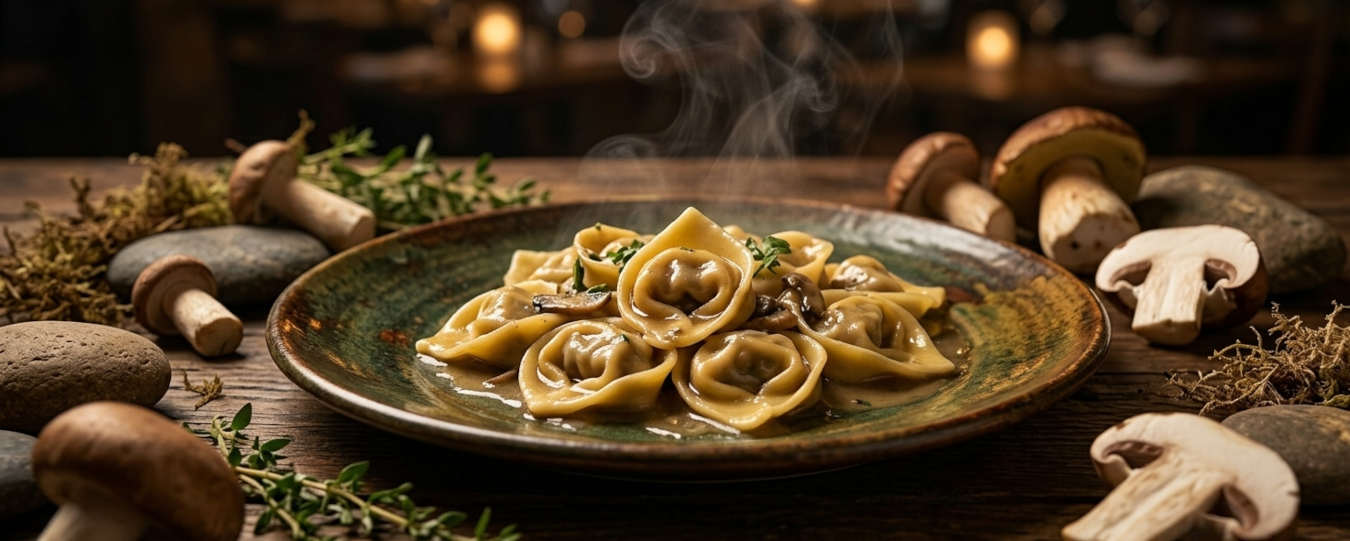
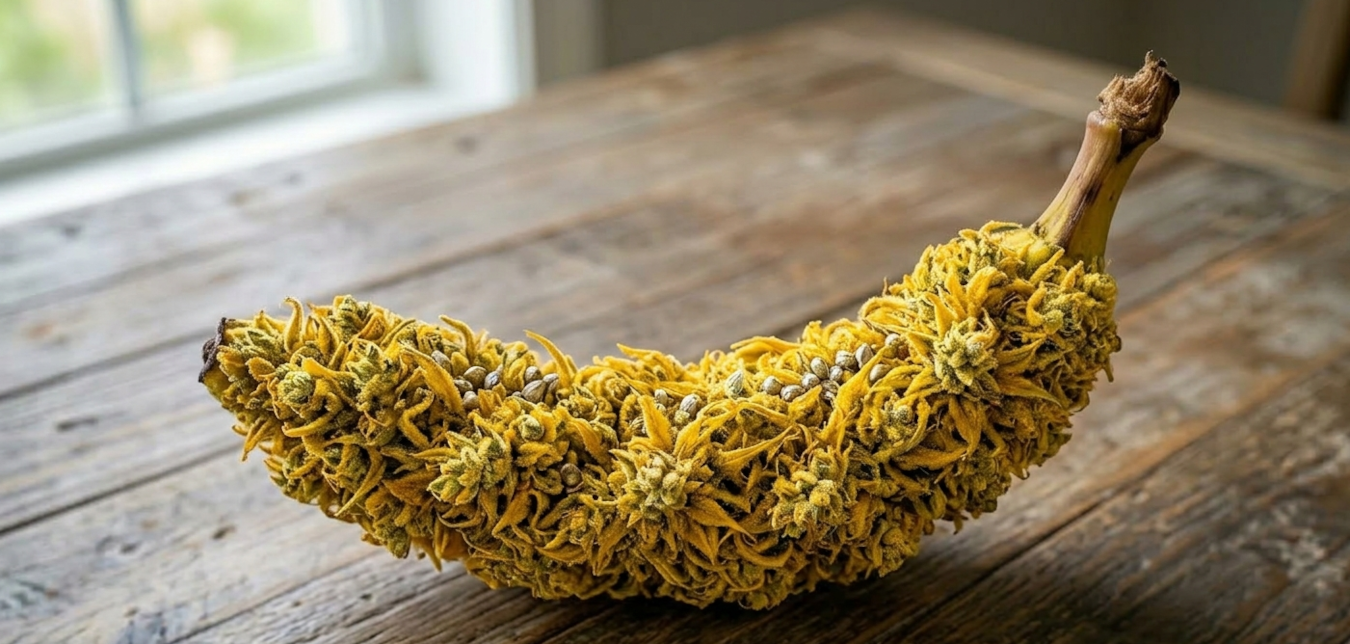
[Nathaniel]: It was kind of an inevitable part of our process. We started experimenting with terpenes for our scratch N Sniff packaging that we released in 2022. We also worked on a chocolate collaboration some years back. Terpenes really open the door to being able to experience new flavour combinations without the high. All of the above have their place. Our steam distilled versions of our Blueberry Cupcake goes well in whipped cream on desserts and our new release, Honey Bear adds a nice topping to a Banana Split.
[Erik]: Yes, you are right. One thing I would like to mention is that I find your company`s philosophy very appealing and it showed me that you are very interested in the rights and concerns of others – f.e. your commitment to your ingenious friends. Does that describe it well?
[Nathaniel]: Yeah. I’ve always been a little bit of a liberal, I guess maybe, or something. I don’t know, I guess that’s a bad word now, but yeah, it’s been good to I feel like the most blessed. Life is a life that can have time to make other people have a better life.
[Erik]: Yes, sharing in particular means caring.
[Nathaniel]: Yeah, that is the thing. But the question is, is it something where we both went into getting older. Because sometimes I wonder, because people are so in the hustle – life’s too short to argue.
[Erik]: Yes, and sometimes it can end by sudden, e.g., quite classically in a car accident – so, carpe diem!
[Nathaniel]: Oh, I know. Sometimes I drive too fast and then I always think: Oh God, what if I cause an accident or something? That’s why I always say: When you point your finger at someone, four fingers are pointing back at you.
[Erik]: That’s right. In Thailand – my wife comes from Korat – it is f.e. “not allowed” to point at someone with your finger. Instead, you use your whole hand and simply point in the direction – otherwise you are considered as disrespectful and unfriendly.
[Nathaniel]: Yes Erik, It’s unfriendly – not only in Thailand. Yeah.
[Erik]: So, when I met my wife, she was already 13 years in Germany, but she still got habits from Thailand – but she had had some funny German habits too. So, I adopt some of those Asian “rules of engagement”.
[Nathaniel]: Is that why you particularly enjoy cooking Thai food?
[Erik]: That’s just one of the reasons—I grew up with a Thai stepmother—so I learned to cook all kinds of Asian dishes at a young age. I remember how we persuaded a Chinese ship’s cook to reveal an old family recipe to us—it was about how to professionally prepare a chicken without bones, but without “destroying” it—it was a bit like in the Japanese film Tampopo…
In the end, I won my wife’s heart with the Thai classics “Larb Nua & Larb Muh.”
[Nathaniel]: Then you obviously know what you’re doing—and it must have been delicious.
[Erik]: Really? That makes me think you’re also open-minded when it comes to food, Nathaniel. I’ve been cooking Thai food for over 40 years, and when I thought about flavouring dishes with terpenes, I immediately thought of trying it with some hearty Thai dishes.
[Nathaniel]: OK, I understand the approach—there are already quite a few desserts, cocktail, and mocktail recipes with terpenes—so savoury dishes would certainly be interesting. I love Som Tam a lot, especially the fish sauce – It’s my favourite.
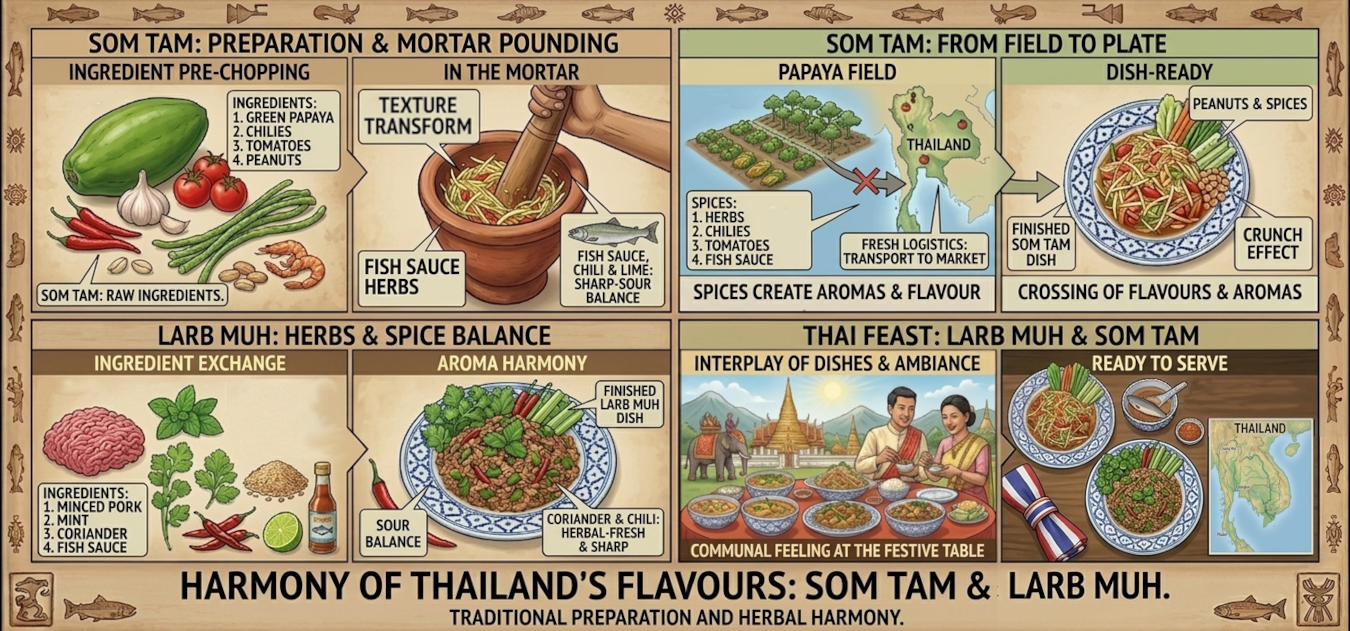
[Erik]: Yes, Som Tam is fantastic, but there’s one thing you absolutely have to try. Prepare a delicious Som Tam Thai – Thai papaya salad – as usual and chill it.
Then look for a recipe for Thai larb – this is minced meat (basically any type of meat can be used, even tofu), ideally with a good fat content (so that the dish is nice and juicy) with all kinds of herbs, garlic, small red onions, and a few other ingredients.
Then take a fresh lettuce leaf, add a little larb and some Som Tam, fold it, and enjoy the moment.
Yes – this is how you get a delicious crossover dish, sufficiently sour – a little sweet and nicely spicy.
[Nathaniel]: That sounds interesting as mouthwatering too.
[Erik]: It’s one of my favourite dishes and has already impressed several renowned Thai chefs. Even during preparation, some commented, “You can’t mix that,” but afterwards they understood and enjoyed it.
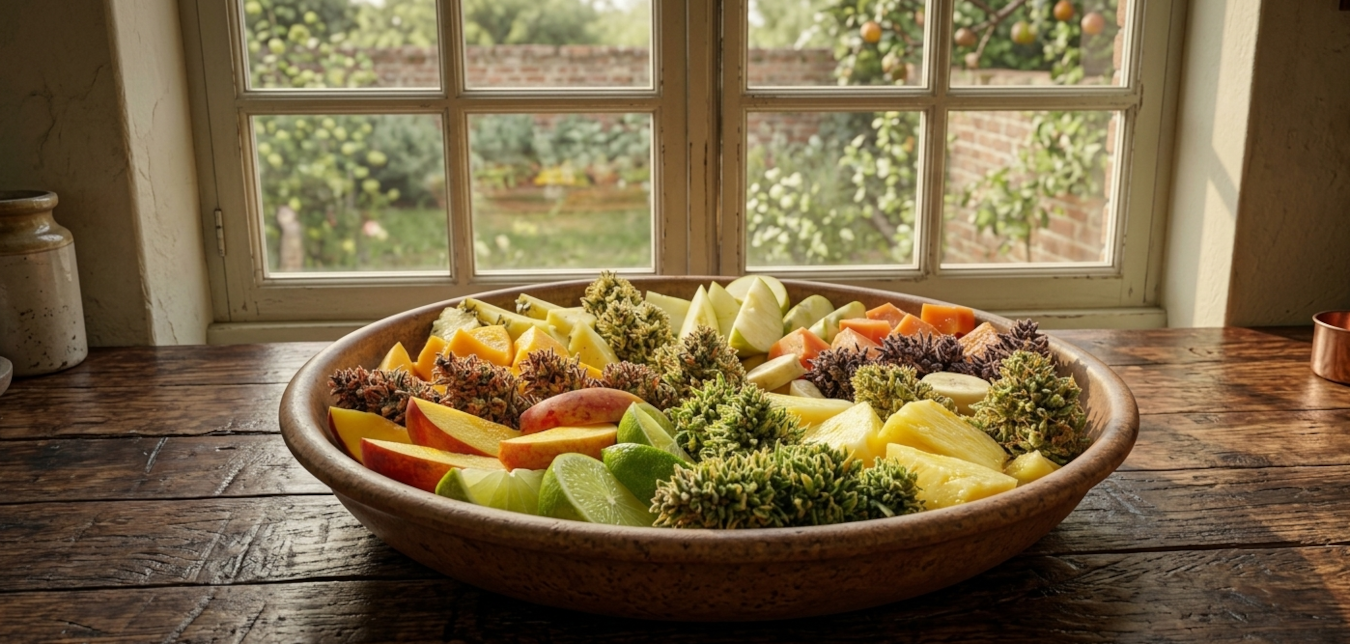
I personally call it the “Ratatouille moment.” You surely remember the moment in the movie Ratatouille when Rémy the rat’s brother eats cheese and strawberries at the same time—a culinary explosion of the senses.
[Nathaniel]: Yes, I think I remember the scene from the film—a well-made film with culinary persuasiveness.
[Erik]: It is wonderful and fulfilling to be able to inspire people, to make them happy with something you have created yourself. Even if it is something to smoke or eat. It comes back and makes everyone involved happy – the ying and yang, so to speak.
[Nathaniel]: It is wonderful and fulfilling to be able to convey positive energy to people. But in this day and age, when people are constantly busy with their cell phones and believe they cannot concentrate, they simply cannot relax.
That’s why it’s more important than ever to have a place where you can find peace and quiet—perhaps a kind of culinary “quiet corner”—to rest and reflect on things. I think the current situation in America isn’t really easy for some people.
[Erik]: What happened? What are you getting at?
[Nathaniel]: America is going through a turbulent time right now, that much is clear. And yes, I mean, I’m increasingly enjoying spending time in nature and with my family—just living and “being human.”
You know, people always talk a lot about freedom in America—but freedom is still a matter of deciding how you want to live. You can live in a so-called “free country” and still not be a truly free person.
That’s why I have to keep reminding myself to live a freer life, because it’s more independent and sustainable.
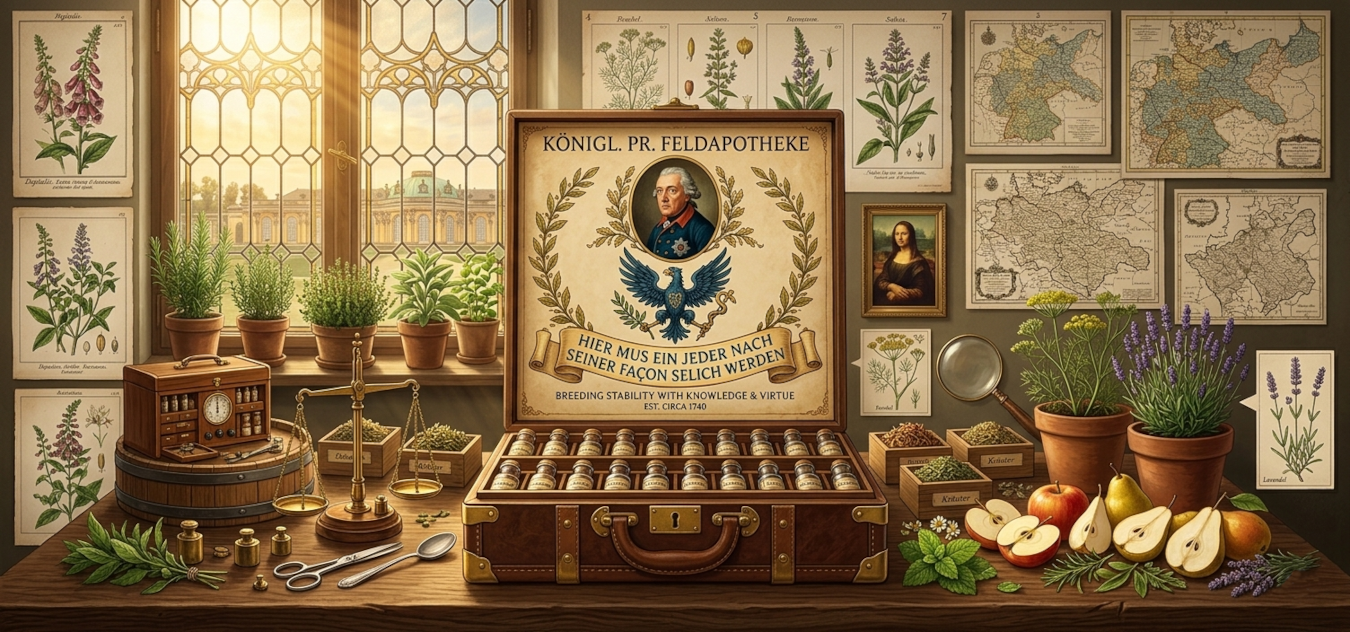
[Erik]: There was once a king—Frederick II, known as “Old Fritz” or “the Great”—in Prussia (now Germany) who said, “Everyone should find happiness in their own way.” His view was that everyone should do and act as they wished, as long as they did not interfere with the free development of other people. I think that sums it up quite well, and I try to live by it—as far as possible.
[Nathaniel]: Yeah, right. And if you live this way – I think life is smoother. Take a look (Shows his mobile) that are some impressions of our home garden, and here some Pictures of the results [some pictures from the garden would be nice].
[Erik]: So, you like to grow some more than weed, Belgian tomatoes you also had – Okay. It is ever good to have some time left for a Hobby.
[Nathaniel]: Yeah. I love to grow generally; I grew a lot of different varieties of peppers.
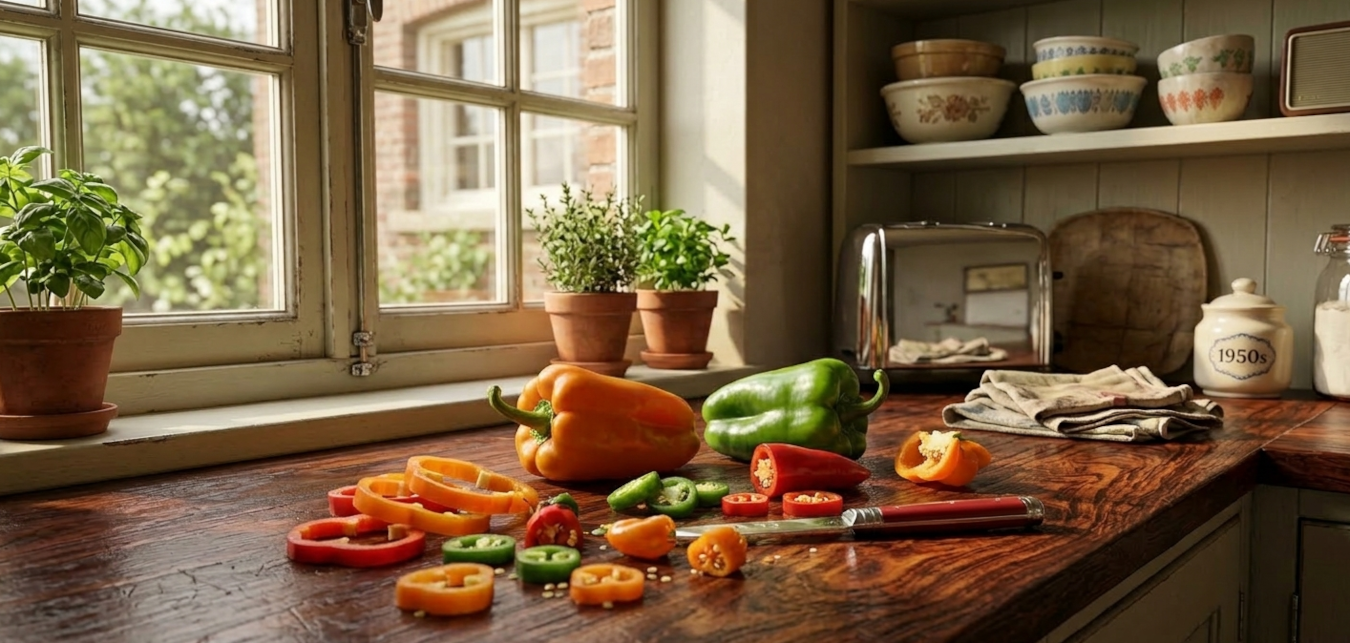
[Erik]: Have you ever tried growing bitter cucumbers (momordica charantia)? From the outside, they look quite “bumpy”—a bit like pickled cucumbers—but they are larger and definitely “even” healthier.
[Nathaniel]: So, I think we have just made a lot of pickles. We have eggplant here…
[Erik]: Are those tomatoes for sauce or salad? Wow nice green peppers – that seems to be a massive harvest.
[Nathaniel]: There’s my youngest daughter helping with the peppers.
[Erik]: Such Moments remind me that time is even more worth than money.
[Nathaniel]: Yes, exactly. Yeah, yeah, I miss I’m already missing them. But we make so much food and. Oh, here’s some of, like, our seeds. I mentioned that, you know, keeping our own seeds and not just the cannabis, just, you know, and this is all hobby, but it’s a worthwhile hobby. I really enjoy it.

[Erik]: You can also see the joy in the great photos you took. You obviously have “a good eye,” as they say, and great lighting conditions to boot — respect.
[Nathaniel]: In addition to the garden shots, it’s always the same kitchen table—I like to keep it simple—after all, it’s all about the food.
[Erik]: That`s the point Nathaniel!
[Nathaniel]: You should try to grow PawPaws (asimina triloba). The PawPaw is a really cool plant. If you like rare fruit, you can grow this here in Germany – It’s like a mango banana flavour.
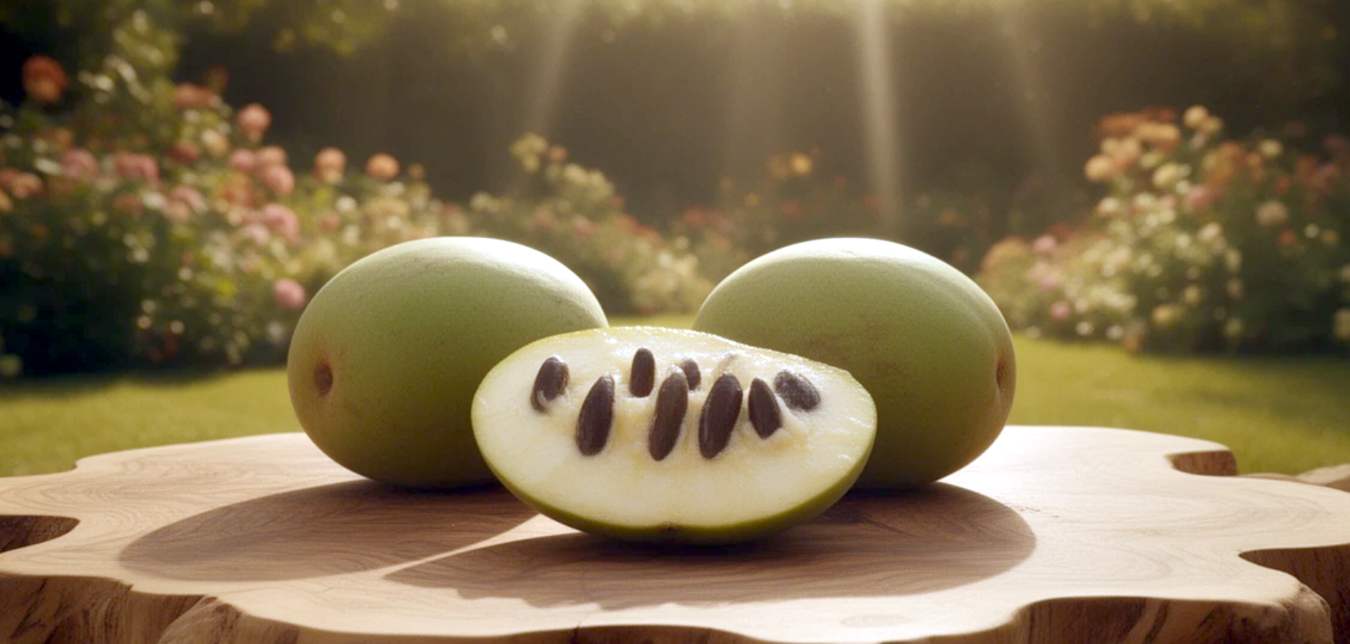
[Erik]: Is it soft inside?
[Nathaniel]: Yeah, it’s like a custard.
[Erik]: If it is about flavours – what reason do you personally see as decisive for using cannabis-derived terpenes for flavouring – what advantage do they have over those derived from oranges, tomatoes or pines, for example?
[Nathaniel]: Botanically derived terpenes aren’t necessarily better, but cannabis plants have the unique ability to showcase a much more vast array of different terpenes than many other plant species. It really opens up the possibilities for exploration and creativity in cooking and for coming up with interesting flavour profiles for beverages. Everyone’s endocannabinoid system reacts differently so it’s also worth noting that the experience for everyone will be very personal.
[Erik]: Ok, I got it Nathaniel. Your PawPaw “custard” reminds me to the black sapote (Diospyros nigra), which looks like an apple—originally from Mexico and/or Guatemala, I believe—and is brown on the inside. When you eat it with a spoon, it tastes and “feels” almost like chocolate pudding.
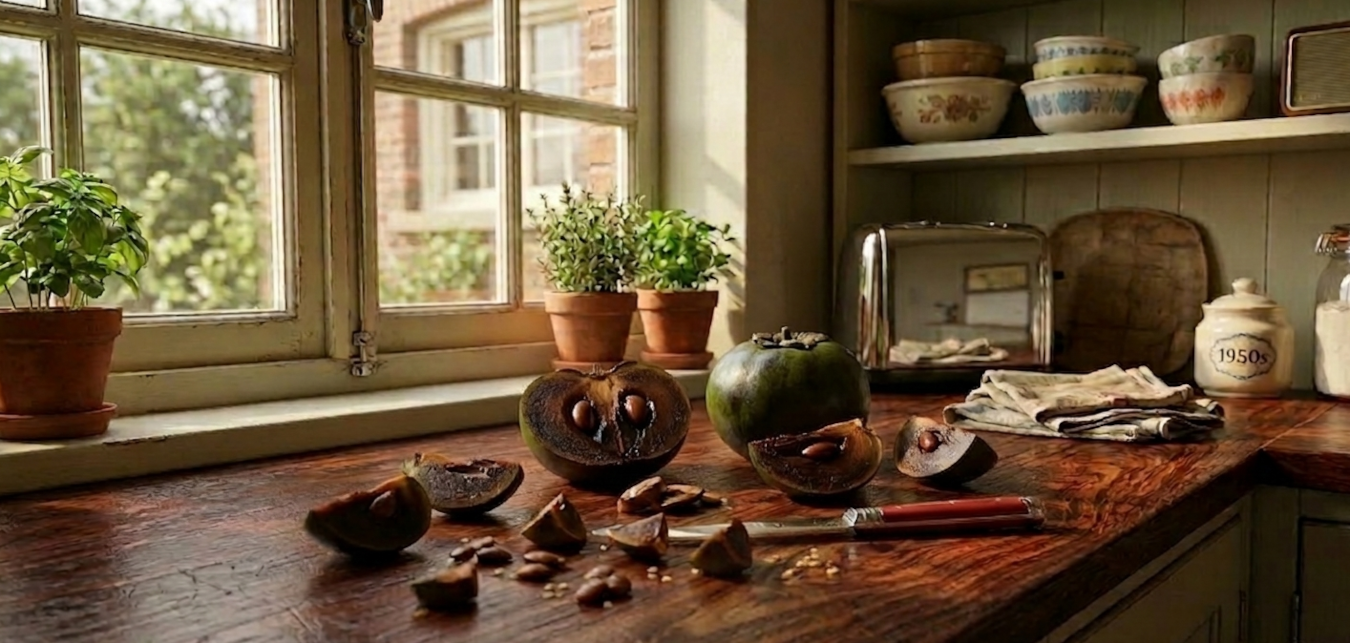
[Nathaniel]: Oh yeah, Sapote – Black Sapote. Yes. I like Black Sapote a lot.
[Erik]: What is your current personal favourite in your garden?
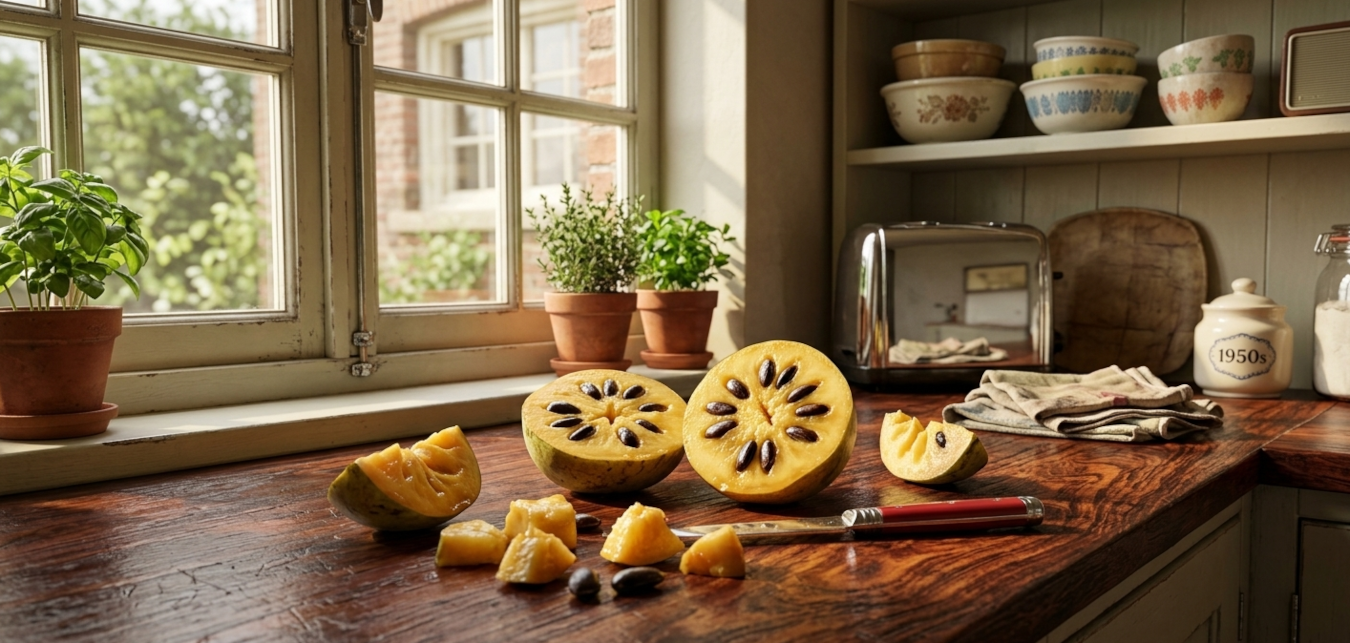
[Nathaniel]: I am currently growing a whole field of these PawPaws (Asimina triloba). They are just so good.
[Erik]: Okay, I understand—and you’re sure that cultivation will also be possible in Germany?
[Nathaniel]: I think you can order them here and the climate will fit. They also called “indigenous banana”.
[Erik]: Indigenous banana, ok.
[Nathaniel]: Yeah. Indigenous banana. It’s not related to banana – but it’s also soft inside, containing several huge seeds. I think you could definitely grow it here.
[Erik]: That were some very inspiring hint – thank you for those.
Nathaniel, what a pity – we reached the end of our very interesting & inspiring chat. It was a pleasure for me to meet you in Person, thank you for your time and all the best for the next days of the Mary Jane!
See you soon, Erik
Credits
My special thanks go to Jaana Prall, who is responsible for press relations at Humboldt Seed Company and without whose input these lines would certainly not have been “put together.”
The Legacy of the Redwoods – Humboldt Seed Company
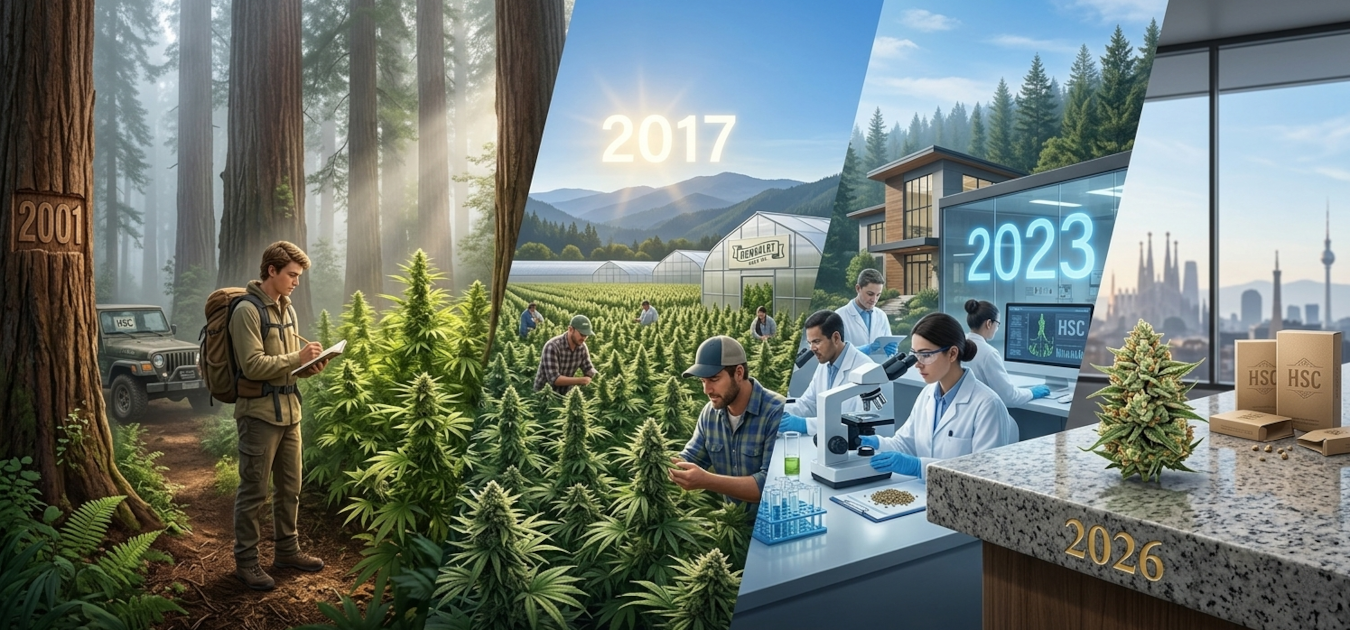
Humboldt County is to cannabis what Bordeaux is to wine – and at its heart stands the Humboldt Seed Company (HSC) as both a guardian and an innovator. Founded in 2001 by Nathaniel Pennington, the company has evolved from a local breeders’ collective into arguably the most influential genetic powerhouse in the world (Humboldt Seed Co., n.d.).
HSC’s success is built on an almost obsessive focus on selection. Through their annual “Phenotype Hunts,” where tens of thousands of plants are evaluated on local farms across the Emerald Triangle, the team succeeds in elevating genetics like the legendary “Blueberry Muffin” or “Humboldt OG” to a level of stability and terpene richness that is unparalleled in the industry (HSC, 2022). Throughout this, the company never loses sight of its ecological roots: to this day, the founders remain deeply involved in the conservation of their Californian homeland.
Yet, HSC does not rest on its laurels. With the recent introduction of triploid seeds – a technology that increases yields and makes plants more resilient – the company has proven its ability to bridge the gap between decades of cultivation tradition and cutting-edge agricultural science (Humboldt Seed Co. Blog, 2024). Anyone speaking of authentic Californian cannabis genetics today cannot overlook the Humboldt Seed Company and its tireless pursuit of botanical perfection.
References
- HSC (n.d.): Our Story & Philosophy
- HSC (2022): Phenohunting and Breeding with Nat Pennington
- HSC Blog (2024): The Future of Cannabis – Triploids Explained
The image rights (credits) for the images relating to Humboldt Seed Company that do not originate from Foodadvisorblog belong to Chris Romaine @KandidKush, thank you for that.