Terpenes in the Food Industry: The End of Sensory Boredom
In my introductory post for Mary Jane 2025, I already got you tuned into terpenes and their use in flavoring food and beverages. Now, I want to dive deeper into my motivation behind this topic.
Stagnation when it comes to the “Wow Effect”?
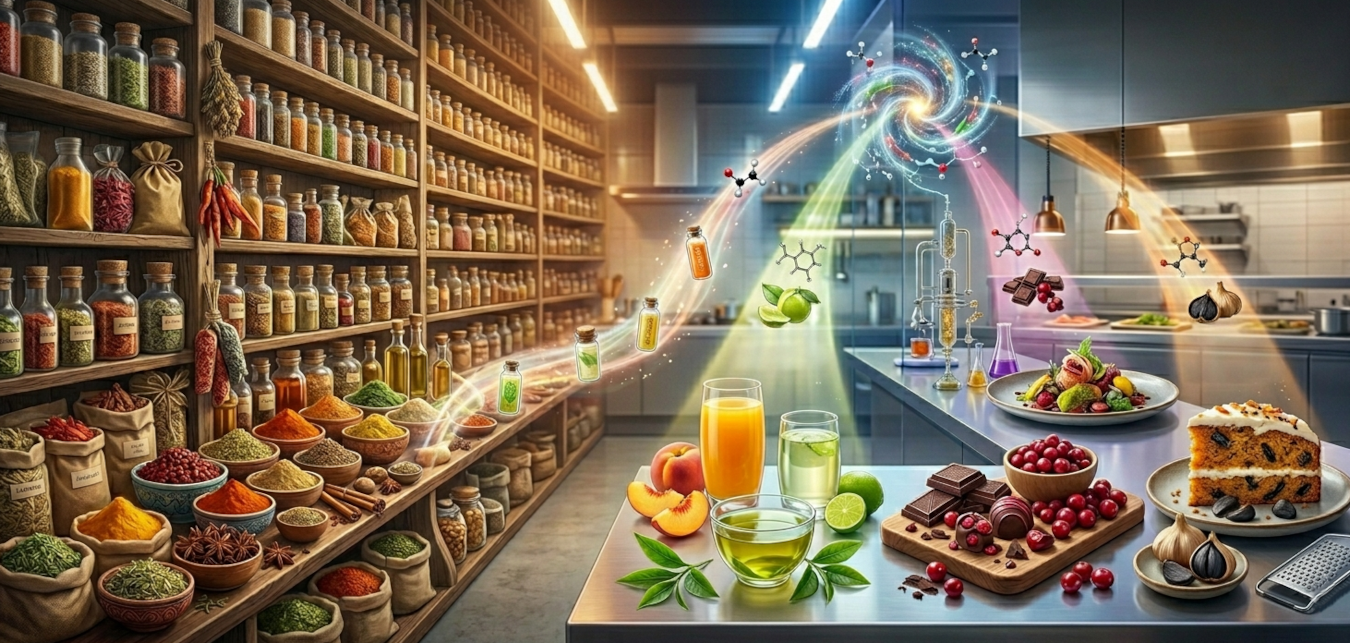
The variety of wonderful spices, oils, and herbs is so gigantic that one lifetime is hardly enough to taste them all. Nevertheless, we currently mostly encounter “old acquaintances” in the kitchens of the world. Either as a single-variety aroma revival – such as peach, lime, or green tea – or in new combinations like cranberry with chocolate or black garlic in carrot cake.
Many aromas that have brought us culinary joy over decades have lost their charm due to their permanent omnipresence. A prime example: Bourbon vanilla. It feels like it is stirred into almost every dessert and is practically “burned out” from a sensory-culinary perspective.
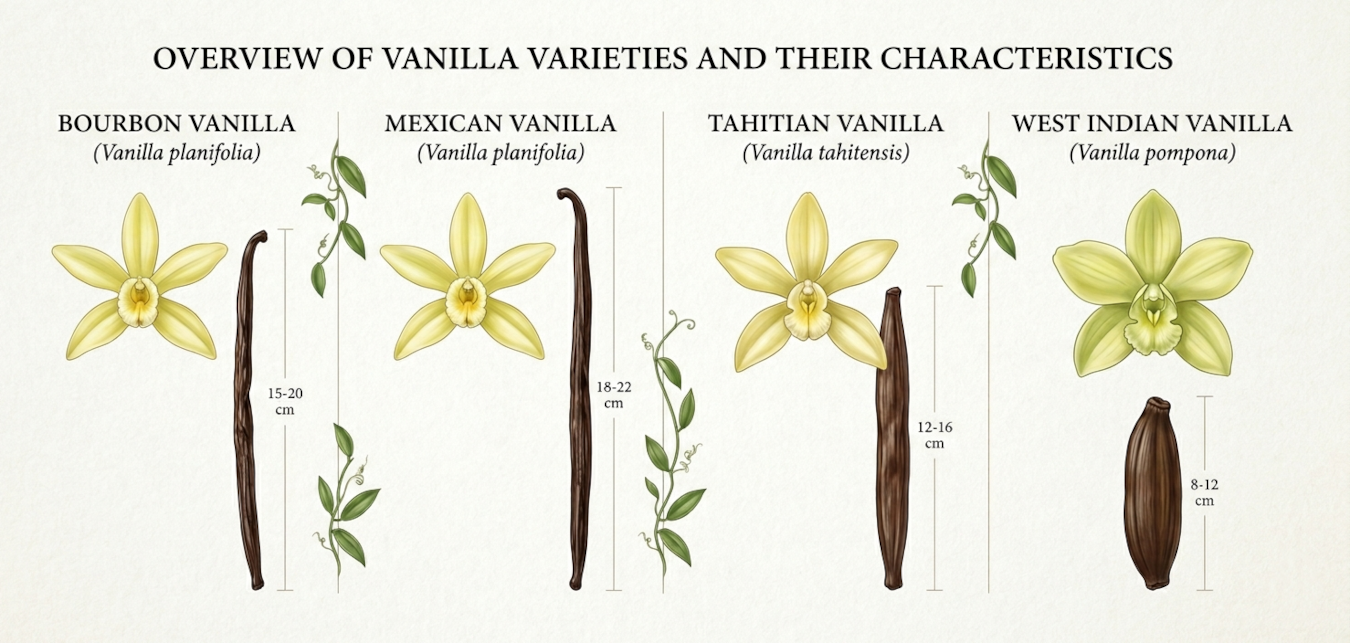
For this reason, I have been using Tahiti vanilla (Vanilla tahitensis) for quite some time. It brings a significantly more complex body as well as floral nuances and additionally saves sugar due to its natural sweetness – a classic win-win situation. As a reaction to the global vanilla shortage and the dominance of Bourbon vanilla (Vanilla planifolia), the tonka bean (Dipteryx odorata) established itself as an alternative years ago.
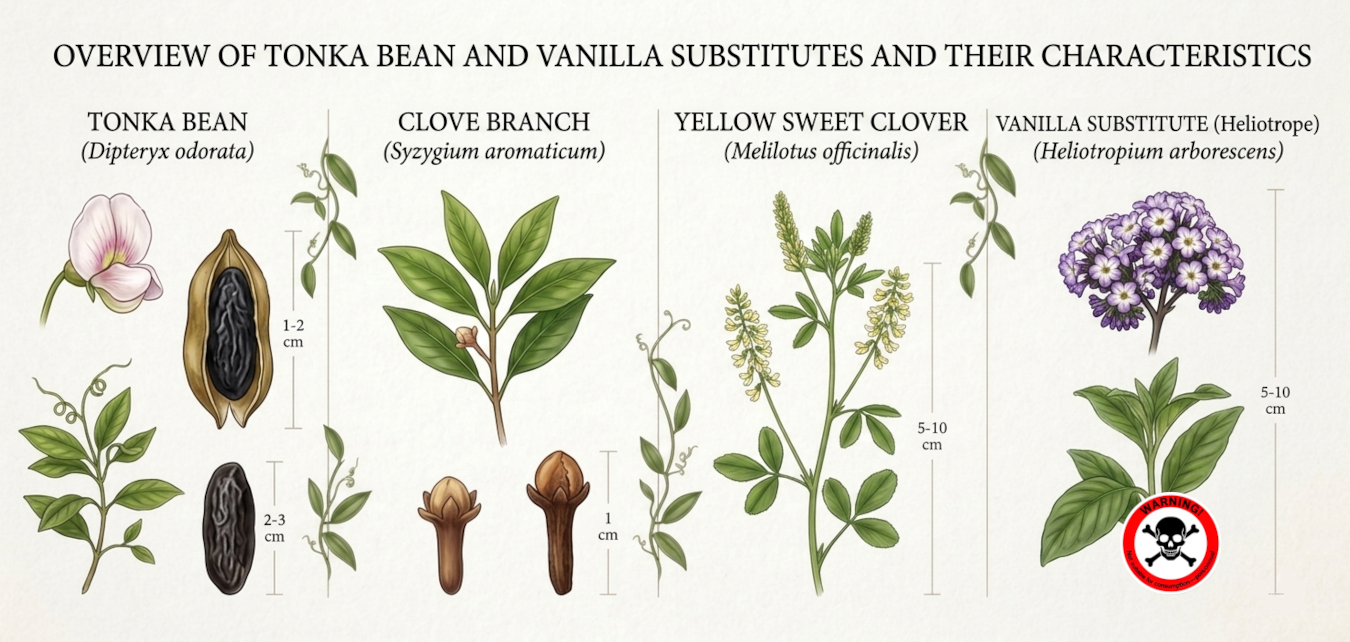
The Tonka Bean: The Mystical Wonder of Flavours
• Origin & Botany: The tonka bean tree belongs to the legume family (Fabaceae) and is native to northern South America, particularly the Amazon basin (Venezuela, Guyana, Brazil).
• The Journey to Europe (c. 1780): Toward the end of the 18th century, the bean was brought to Europe by French botanists.
• A Flavour Chemistry Milestone (1868): British chemist William Henry Perkin successfully isolated and synthesized coumarin from the bean for the first time. This marked the world’s very first artificial synthesis of an organic flavour compound, laying the structural foundation for the modern perfume and fragrance industry.
• Primary Modern Cultivation: Alongside traditional South American producers (Brazil, Venezuela), West Africa—particularly Nigeria—has evolved into one of the world’s largest exporters of the bean.
• Dominant Notes: Intensive vanilla, creamy marzipan, and sweet almond aroma.
• Subtle Undertones: Freshly mown hay (highly characteristic of coumarin), spicy clove, caramel, and distinct nuances of woody tobacco.
• Proper Culinary Use: Tonka beans are exceptionally hard. In the kitchen, they are grated directly into dishes using a fine grater (such as a Microplane), much like nutmeg. Alternatively, the whole bean can be simmered in milk or cream for desserts; it can then be washed, dried, and reused up to four times.
• The Coumarin Dilemma (Legal Status): Due to its incredibly high natural coumarin content (typically 1 to 3%, and up to 10% in premium specimens), the sale of the bean as a foodstuff was entirely banned in Germany in 1981. Since 2006, its use has been fully legalized under strict European Flavour Regulations, provided the maximum limits in the ready-to-consume end product (e.g., 5 mg/kg for desserts) are maintained.
• Visual Quality Check: High-quality tonka beans are deep black and heavily wrinkled. A fine, white crystalline coating on the surface is not mold; it is actually crystallized coumarin—a definitive hallmark of excellent quality!
Though it caused quite a stir historically and legally, the tonka bean remains one of the most elegant botanical treasures for multi-layered aroma layering in modern dessert design.
• W. H. Perkin (Chemical Society Journal) – The Synthesis of Coumarin, the Odoriferous Principle of the Tonka Bean (1868). Historical proof marking the birth of synthetic flavor chemistry.
• Federal Institute for Risk Assessment (BfR) – Toxicological evaluation of coumarin in foodstuffs (Opinion No. 043/2006 and updates). Regulates safe culinary dosing and defines the TDI (Tolerable Daily Intake) at 0.1 mg/kg of body weight.
• European Union / Flavor Regulation – Regulation (EC) No 1334/2008 (Annex III). Establishes legally binding maximum limits for coumarin in commercial foodstuffs and gastronomy.
• H. Panda (National Institute of Industrial Research) – The Complete Technology Book on Herbal Perfumes & Cosmetics. Documents the botanical distribution, harvesting practices, and chemical composition of Dipteryx odorata.
The Clove: The Molecular Double of Vanilla
• The Botanical Fact: Flat-leaved vanilla (Vanilla planifolia) is a highly sensitive orchid species. The clove (Syzygium aromaticum), on the other hand, is the dried flower bud of a tree belonging to the myrtle family (Myrtaceae).
• The Molecular Link: Clove oil consists of 80 to 95% of the phenol eugenol. Through targeted isomerization and oxidation, this molecule can be converted into identical vanillin—the primary flavor component of vanilla.
• Industrial Revolution: Following initial syntheses from pine bark (coniferin), German chemists Ferdinand Tiemann and Karl Reimer succeeded in the late 19th century in bringing the industrial extraction process of vanillin from clove-oil eugenol to market readiness.
• The Raw Material Pioneer: Before the more cost-effective production from lignin (wood waste) in the 1930s and later petrochemical guaiacol took over, the clove remained the world’s most vital source of artificial vanilla flavor for decades.
• For Desserts: A tiny hint of clove in a classic vanilla dessert breaks the sensory monotony and lends the dish an unexpected, profound dimension.
• For Savory Dishes: A subtle nuance of vanilla in clove-spiced braised dishes balances out harsh bitter notes and harmoniously rounds off the overall aroma profile.
The chemical bridge between cloves and vanilla proves that high-end gastronomy can elevate taste profiles to a three-dimensional level by utilizing smart, science-based aroma layering.
• Wikipedia – Vanillin: Synthetic History and Technical Syntheses (Standard Documentation on Flavor Chemistry).
• University of Bayreuth (Department of Chemistry Education) – Flavoring substances and vanillin: Biosynthetic reaction processes and biotechnology of eugenol.
• Symrise History – The renewable roots of synthetic vanillin (Tiemann, Reimer & Haarmann, Holzminden).
Yellow sweet clover: A “woodruff-vanilla” from the wild herb cuisine
The biochemical phenomenon: The fresh, undamaged plant is virtually odorless. Only when the cellular structures are broken down by wilting, freezing, or drying do the plant’s own enzymes (glycosidases) cleave the bound coumarin from the sugar molecules, releasing the characteristic aroma in its full intensity.
• Pastry & Desserts: Excellently suited for infusing milk, cream, or plant-based alternatives. It lends a floral, profound dimension to ice cream, panna cotta, parfaits, or crème brûlée.
• Liquid Culinary Arts: Perfect for extraction in aromatic syrups, summer lemonades, liqueurs, or as a botanical additive in modern craft beers.
• Scientific Food Pairing: Due to its molecular structure, sweet clover harmonizes excellently with stone fruits (peach, cherry), companionably tart rhubarb, as well as white and dark chocolate. Culinary boundary-pushers will find an exciting taste profile in combination with mature goat cheese.
• Dosage: In small quantities, coumarin is an outstanding flavour carrier. However, overdoses can trigger acute headaches and dizziness. The European Food Safety Authority (EFSA) defines a tolerable daily intake (TDI) of 0.1 mg coumarin per kg of body weight.
• Harvesting & Air-Drying: It is mandatory that sweet clover is dried absolutely flawlessly in the shade or frozen directly while fresh. In the event of damp spoilage or mold formation during the drying process, microorganisms (Aspergillus species) ferment the harmless coumarin into the highly toxic, anticoagulant dicoumarol.
Processed in a culinarily clean and mindful manner, yellow sweet clover is a highly elegant, regional flavour provider that effortlessly replaces synthetic aromas.
• European Pharmacopoeia (Ph. Eur.) – Monograph: Meliloti herba (Sweet clover herba). Defines the purity criteria and the coumarin-bound mechanism of action of the plant.
• National Center for Biotechnology Information (NCBI / PubChem) – Documentation on the enzymatic cleavage of coumarin glycosides upon plant injury/drying.
• Federal Institute for Risk Assessment (BfR) – “New findings on coumarin in cinnamon, woodruff, and sweet clover” (Opinion No. 043/2006 incl. toxicological updates).
• Stahmann, M. A. et al. (Journal of Biological Chemistry) – “Studies on the haemorrhagic sweet clover disease.” Primary scientific source on the formation of dicoumarol during the spoilage of Melilotus.
Heliotrope (Cherry Pie Plant): The Forbidden Fragrance Inspiration
Just one year after coumarin was isolated from the tonka bean, chemists discovered the aroma compound piperonal (also known as heliotropin) within the blossoms of the heliotrope in 1869. This molecule took the perfume industry by storm and formed the chemical backbone for world-famous, sweet-powdery fragrance classics such as L’Heure Bleue by Guerlain.
Heliotrope contains high concentrations of pyrrolizidine alkaloids (PAs). These secondary plant metabolites are highly liver-toxic (hepatotoxic) and can cause chronic liver damage (such as veno-occlusive disease) if ingested. Furthermore, they have been shown to be mutagenic and carcinogenic in animal studies.
• In Industry (Synthetic): The isolated or synthetically manufactured heliotropin molecule is strictly regulated and utilized in perfumery as well as for scenting cosmetics, soaps, and fine baked goods.
• In the Garden and on the Terrace: Here, the plant remains irreplaceable as a natural, mesmerizing fragrance provider and a magnet for butterflies and bees.
• As Culinary Inspiration: Heliotrope serves chefs and pastry artists purely as an “olfactory compass.” If we want to replicate the scent of heliotrope in a dessert (e.g., a cream or an ice cream) in a natural, completely safe way, we utilize a clever combination of genuine vanilla, tonka bean, and a dash of bitter almond oil.
Heliotrope impressively demonstrates that nature can create fantastic aromas meant to be deeply inhaled through the nose, but never picked up with a fork!
• Fittig, R. & Mielck, W. (1869). Untersuchungen über die Constitution des Piperonals und seiner Derivate. Annalen der Chemie.
• Federal Institute for Risk Assessment (BfR) – Analysis and toxicity of pyrrolizidine alkaloids in food and feed.
• European Food Safety Authority (EFSA) – Risk assessment of pyrrolizidine alkaloids in food.
My goal as a host is to see professionals and connoisseurs completely at a loss because they cannot immediately decipher the aromas. There is hardly anything more beautiful than surprising the senses with craftsmanship and emotionally touching people through their own olfactory childhood memories. Citral is an excellent candidate for this – especially for the generations born between 1975 and 2000.
Of course, there are fantastic and unique aromas. However, because they are now used in an inflationary manner, a sensory overload occurs, which turns into boredom. Often, dishes are so overloaded that the individual components can no longer unfold or hold their own. Here, less is more.
What’s the Deal with Terpenes?
The principle can be easily explained: Anyone who walks through a forest or roams through a field of flowers quickly notices that the body reacts – completely aside from classic hay fever.
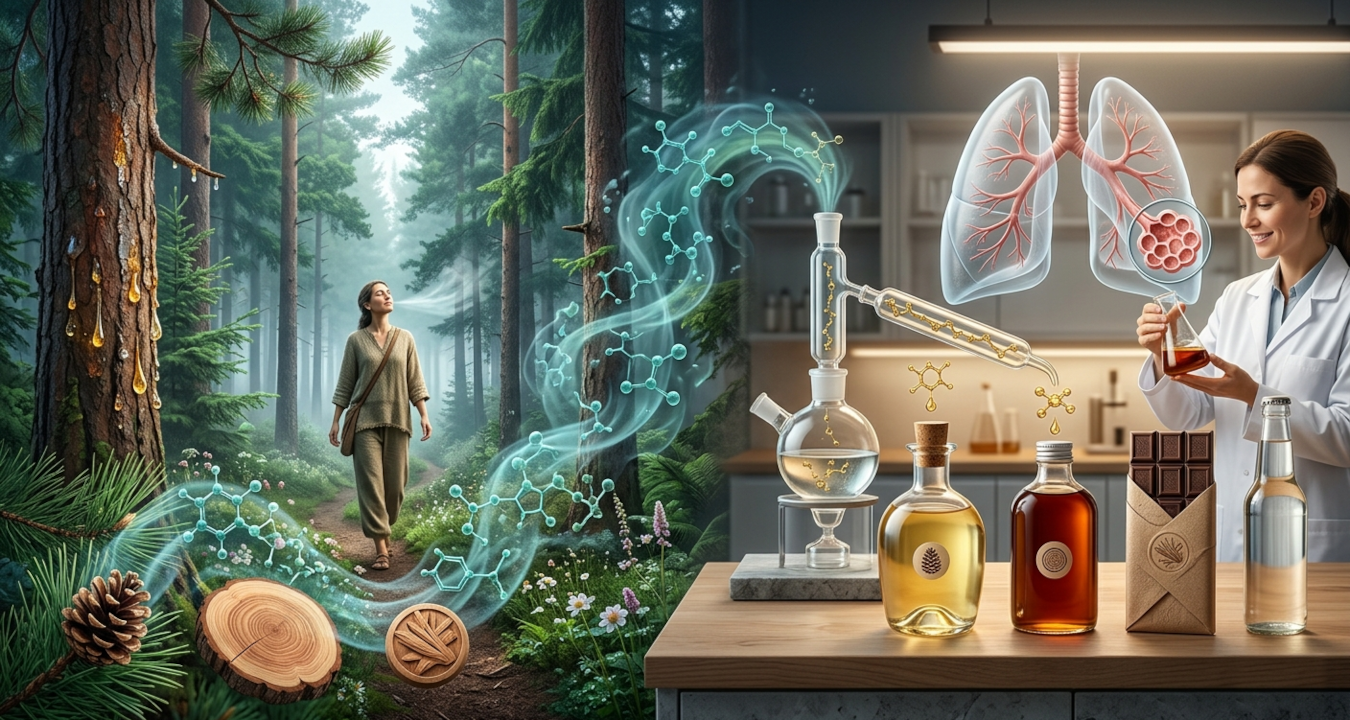
In the forest, we automatically breathe in deeper. We immediately feel fresher and more energetic. Especially in summer after a short shower or in the early morning – at temperatures between 18 °C and 25 °C – the resinous scents of pine, cedar, and in some places also nuances of sandalwood are intensely perceptible.
This forest air demonstrably provides relief for respiratory diseases such as bronchitis or asthma. The effect of forest bathing (Shinrin Yoku) is scientifically proven and by no means esoteric. For a few years now, terpenes have been rapidly gaining importance again in the modern food and beverage industry. They are evolving from classic flavoring substances to strategic differentiation features for functional luxury products – not least because they are completely natural compounds.
Cannabis functions here not as an intoxicant, but as a useful plant with an exceptionally complex and well-researched phytochemistry. Terpenes mark a paradigm shift: away from the active ingredient, towards a pure sensory experience.
Leading producers in the food industry have long recognized the potential of this diversity. The link between enjoyment, emotion, and brand encounters us daily – sometimes obtrusively, sometimes in a highly likeable way.
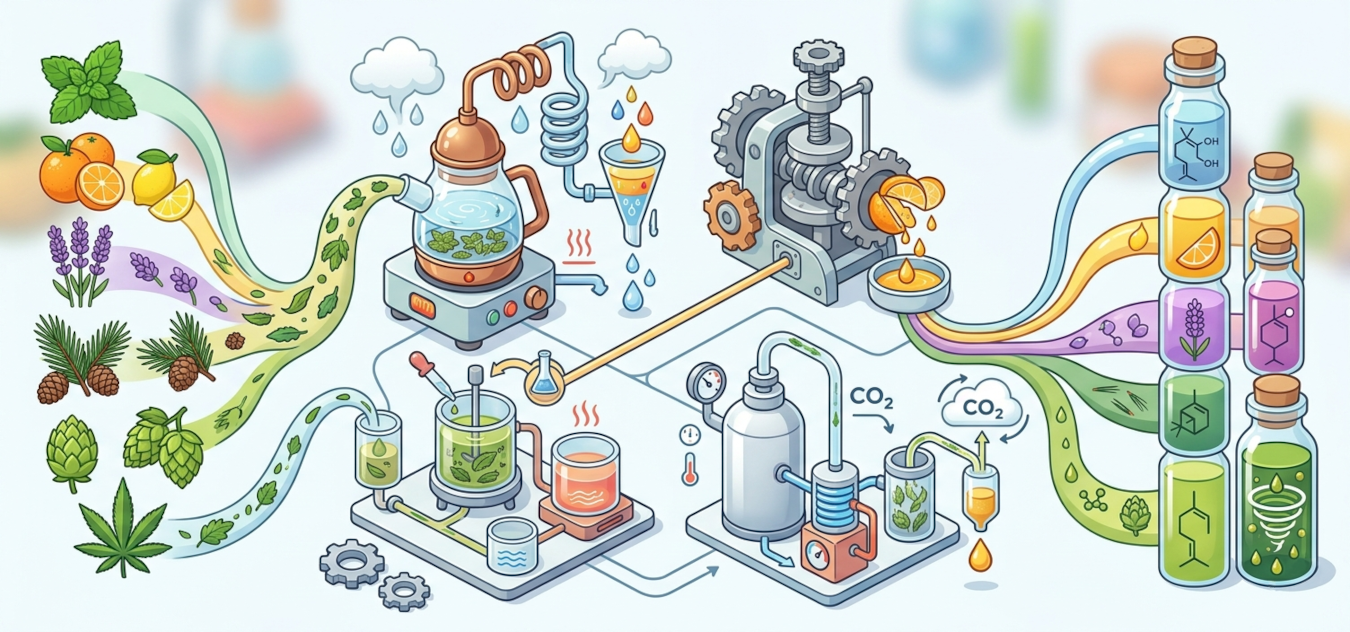
Moderne extraction and fractionation techniques today allow the production of single-variety, food-grade terpene profiles. These are reproducible, scalable, and in the case of cannabis terpenes, completely intoxicating-free (cf. Russo; Dudareva; Belitz).
Whether it is the scent of lime in the hotel elevator or pine aromas at Christmas time: Terpenes influence our well-being often unconsciously, sometimes through the choice of a perfume, but also in a very targeted manner. In neuromarketing, they are used for sales promotion.
Thinking of modern franchise bakeries, for example: The tempting scent in the air rarely comes directly from the oven, but it subconsciously controls our purchasing decision.
Since excellent specialist literature on terpenes already exists, I do not want to create redundancies here, but instead recommend the paperback “Terpenes: The Magic in Cannabis” (ISBN: 978-1579512729) by Dr. Beverly A. Potter as a well-founded source.
Gimmicks on the Market
At trade fairs like Mary Jane, you see various applications: from intoxicating edibles to CBD-heavy, anti-inflammatory products. However, the focus of the foodadvisorblog in this reporting is consistently on the purely culinary, intoxicating-free use of terpenes.
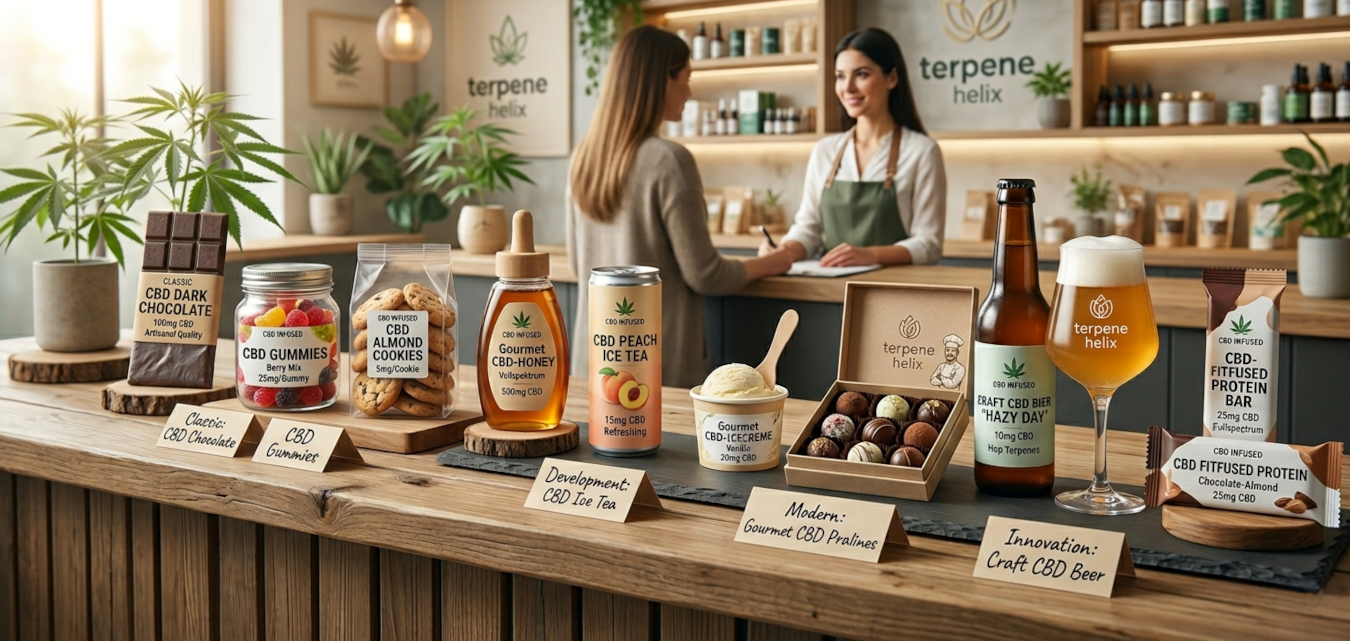
Pure terpene extracts – even those from cannabis – do not possess any intoxicating effect on their own. They contain neither THC, CBD, nor other cannabinoids. Of course, the user is free to enrich products with intoxicating extracts afterwards, which is a proven procedure particularly in medical applications.
Terpenes in Culinary Arts – An Overview
The following overview lists the 23 most important terpenes at present, along with information on their sources and pairing suggestions for both home and professional kitchens.
| Terpene | Formula | Aroma & Sources (Botanical / Cannabis) | Culinary Use & Pairing |
|---|---|---|---|
| Myrcene | C10H16 | Earthy, Mango; Indica-dominant | Marinades, sauces; dark meat, chutneys |
| Limonene | C10H16 | Zesty citrus; Sativa-dominant | Sorbets, dressings; seafood, poultry |
| Pinene | C10H16 | Pine, Rosemary; Sativa/Hybrid | Infusions, smoking; game, mushrooms, gin |
| Linalool | C10H18O | Lavender, floral; Calming | Desserts, teas; chocolate, berries |
| Caryophyllene | C15H24 | Peppery, woody; Spices | Dry rubs; steak, hearty stews |
| Humulene | C15H24 | Hoppy, sage; Bitter profile | Beer sauces, drinks; savory meat dishes |
| Terpinolene | C10H16 | Herbal, parsnip; Exotic | Curries; root vegetables, marinades |
| Ocimene | C10H16 | Sweet, parsley; Tropical | Garnish oils; fruit salads, light vinaigrettes |
| Geraniol | C10H18O | Rose, Geranium; Floral | Syrups, patisserie; white peach, tea |
| Bisabolol | C15H26O | Chamomile, mild; Soothing | Honey pairings; gentle pastry notes |
| Valencene | C15H24 | Orange, citrus; Sweet | Cocktails, desserts; duck, chocolate |
| Camphene | C10H16 | Fir, cooling; Musky | Winter spices; game meat, heavy sauces |
| Borneol | C10H18O | Balsamic, minty; Herbal | Asian broths; ginger, lemongrass |
| Eucalyptol | C10H18O | Eucalyptus, sage; Fresh | Mint sauces, sorbets; lamb dishes |
| Citral | C10H16O | Lemongrass; Very zesty | Thai cuisine; shellfish |
| Nerolidol | C15H26O | Woody, apple; Floral | Infusions; pastries, apple pie |
| Guaiol | C15H26O | Cypress, rose; Piny | BBQ smoking; robust meats |
| Terpineol | C10H18O | Lilac, marjoram; Balsamic | Roasting fats; pork, stews |
| Fenchol | C10H18O | Fennel, lemon; Spicy | Shellfish sauces; fish dishes |
| Pulegone | C10H16O | Catnip, camphor; Minty | Digestifs, desserts; mint chocolate |
| Sabinene | C10H16 | Nutmeg, marjoram; Peppery | Spice blends; potato dishes |
| Carene | C10H16 | Cedar, pine; Woody-sweet | Curing; cured fish (Gravlax) |
| Cedrol | C15H26O | Cedarwood; Smoky | Cocktail finishing; whiskey drinks |
Sources: Burdock (2010), Russo (2011), DAB (2024), PubChem.
Many well-known cannabis strains exist as variants that have a virtually identical terpene profile to their intoxicating siblings but are free of THC. These are mostly CBD breeds with pain-relieving, anti-inflammatory, or appetite-stimulating properties.
In my interviews with Dutch Passion, Humboldt Seeds, HANF.com, and CALI Terpenes, we dive deeper into these details – so a look at the interviews is well worthwhile.
I would like to particularly highlight the professional support provided by Dutch Passion at this point. During the research phase, the company convinced not only through well-founded specialist articles but also through excellent visual material.
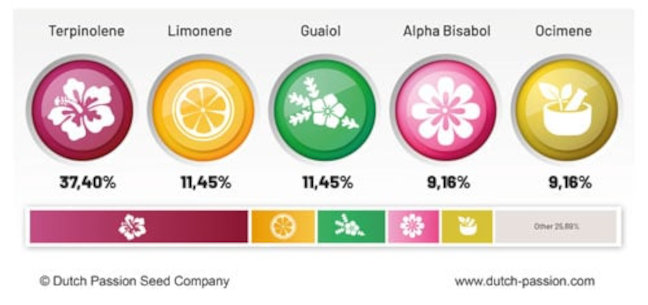
Dutch Passion has developed its own visual language that makes the properties and ingredients of the individual strains tangible – a compliment for this understandable universe of expertise.
With the help of a sophisticated symbolism, the user captures the respective terpene profile and the character of the strain at a glance in the shop. With the guide “Everything you need to know about terpenes”, the team from Dutch Passion has created a comprehensive online compendium.
My thanks go to Francesco and Malik here – the reading is highly recommended. From a culinary perspective, an additional indication regarding the sensory profiles of the strains would be a great future expansion.
Pioneering Spirit & Global Expansion: The Evolution of Dutch Passion

The history of modern cannabis breeding is inseparably linked to one name: Dutch Passion. What began in the 1970s as a passionate hobby of biology student Henk van Dalen at the University of Amsterdam evolved into one of the most influential global players in the industry. Van Dalen collected genetics worldwide — from Thailand to Nigeria — thereby laying the foundation for a new era of cannabis breeding (Dutch Passion, n.d.).
After early in-house varieties such as “Passion #1” attracted attention in the early 1980s with remarkably high THC levels, the Dutch Passion Seed Company was officially founded in 1987 (Dutch Passion Catalogue, 2023). A decisive turning point followed in 1990: as the world’s first seed bank, the company developed commercially viable feminised cannabis seeds. This “Feminisation Revolution” permanently changed the market by making cultivation more efficient and accessible (Dutch Passion, n.d.).

Today, the company operates on a broad commercial basis and acts as an international wholesale supplier for thousands of retailers worldwide (Dutch Passion Catalogue, 2023). With an estimated web revenue of up to €25 million generated through its primary domains alone, Dutch Passion demonstrates significant economic relevance (Similarweb, 2026). Alongside its headquarters in Amsterdam, the company significantly expanded into Thailand in 2023 to actively participate in the country’s emerging legal market development (Dutch Passion, n.d.).
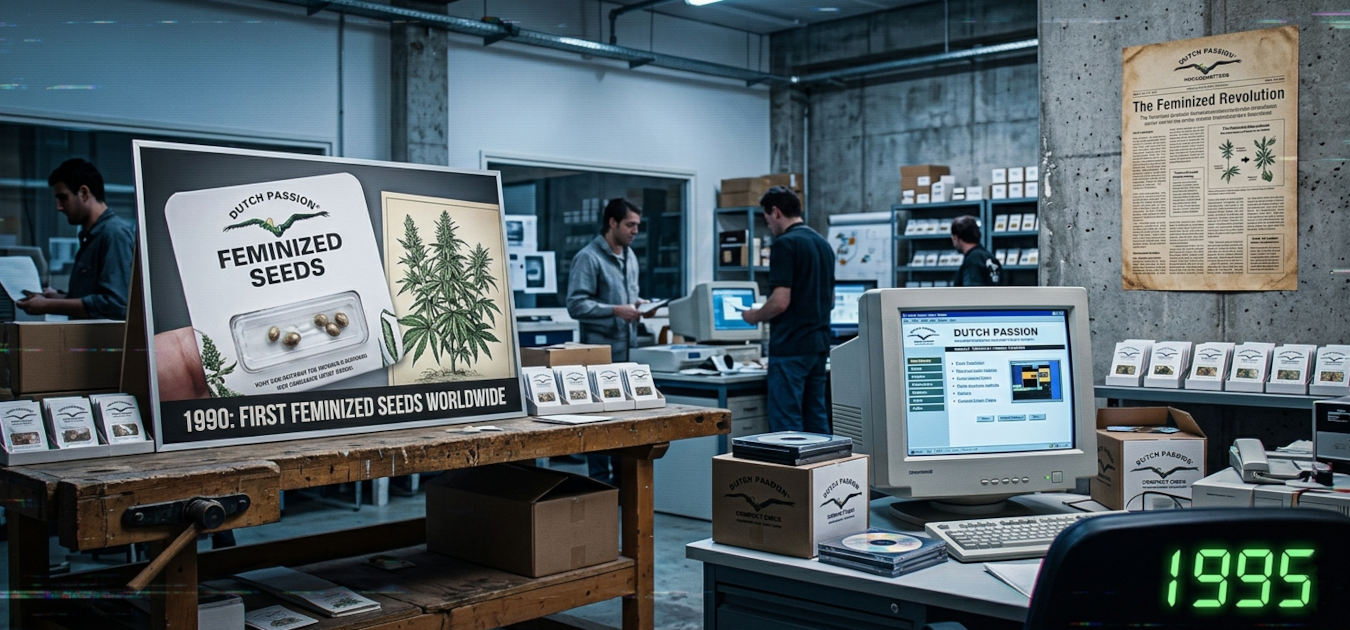
However, the company’s expertise now extends far beyond cultivation alone. Dutch Passion has increasingly embraced the culinary dimension of cannabis as a lifestyle topic. The company regularly publishes guides on “High Cuisine,” ranging from multi-course cannabis menus to specialised baking recipes (Dutch Passion Blog, 2021).

Terpenes play a central role here — aromatic compounds that make strains such as “Auto Skywalker Haze” not only potent but also sensorially complex. Earthy notes, fruity citrus aromas, and spicy pine nuances demonstrate how genetics today are selected not only for potency but also for their gastronomic potential in edibles and infusions (Dutch Passion Catalogue, 2023).

With more than 100 awards and a continued focus on emerging cannabinoids, the traditional company remains both an economic and cultural pioneer within the industry.
References
- Dutch Passion (n.d.): About Us – The History of Dutch Passion
- Dutch Passion (2023): Cannabis Seeds Catalogue 2023
- Dutch Passion Blog (2021): 420 Multi-Course Cannabis Recipes
- Similarweb (2026): Dutch Passion Analysis and Market Share Overview
Why Terpenes from Cannabis?
The global open-source culture around cannabis has contributed to the fact that countless varieties (strains) are analyzed and precisely documented. Platforms like seedfinder.eu, leafly.com, cannabib.de or cannaconnection.de offer reliable data on this. Increasingly, the specific terpene fingerprints are also being recorded. They provide information about the exact weighting of the terpenes and define directions such as lemon, pineapple, mango, cheese, or even garlic.
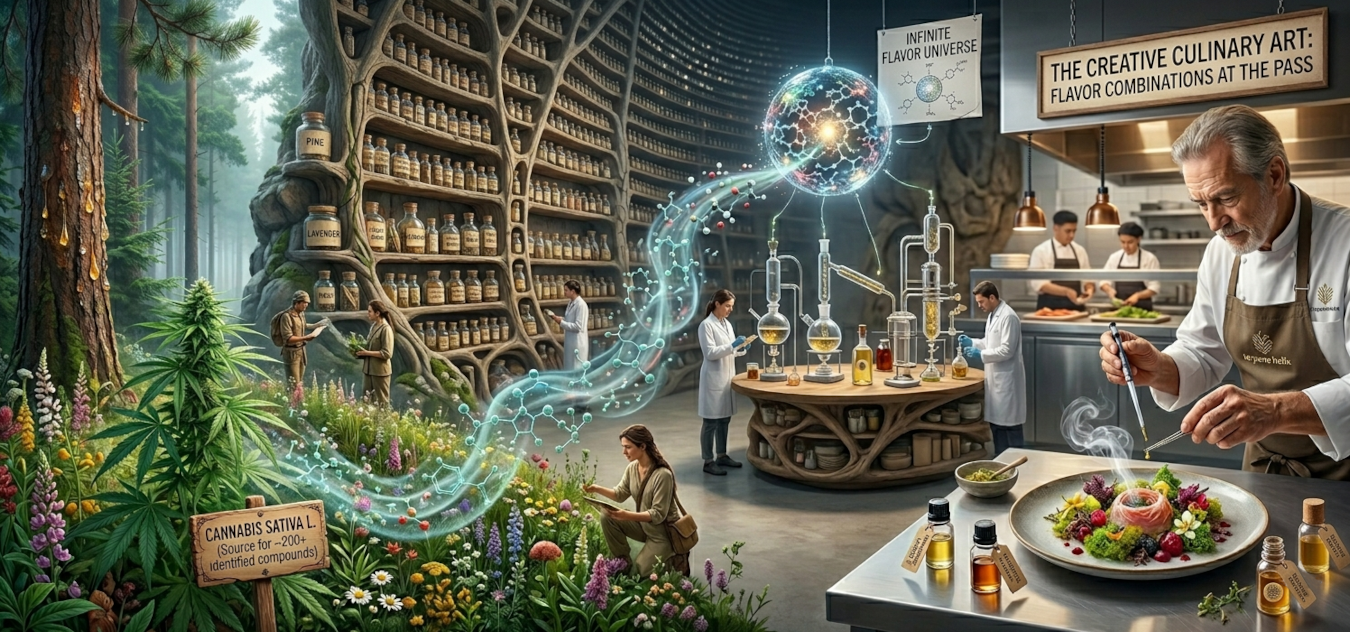
According to Wikipedia, over 30,000 terpenoids and 8,000 terpenes exist – nature will surely reveal thousands of more compounds to science in the future. In the cannabis plant alone, around 200 “new” terpenes have already been identified. An infinite universe of aromas waiting to find its way onto the plates of top gastronomy through creative combinations.
3 quick terp-recipes
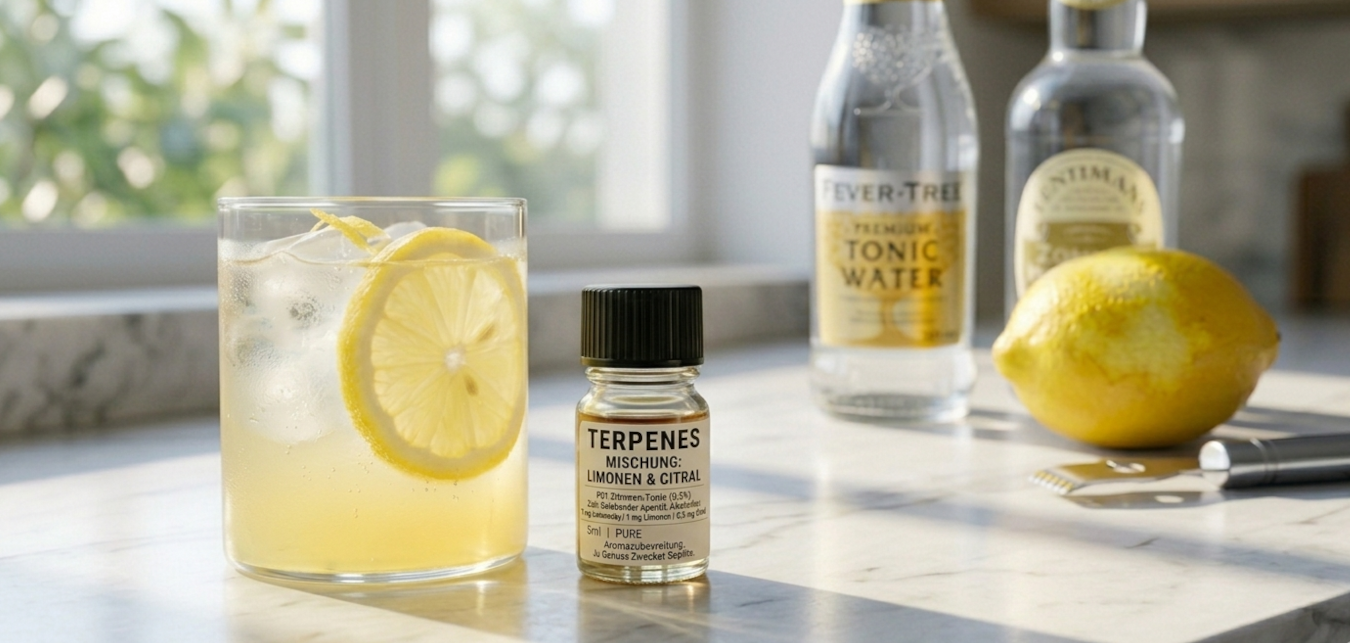

Goal: Invigorating non-alcoholic aperitif.
Ingredients (1 liter): 900 ml tonic water, zest of one organic lemon, 1 mg Limonene, 0.5 mg Citral.
Preparation: Dissolve natural flavor components in a small amount of food-grade carrier liquid, stir into the tonic, and serve cold.
Sensory profile: Fresh, clear, long-lasting.


Goal: Herbal freshness for salads & bowls.
Ingredients: 100 ml cucumber juice, 50 ml rapeseed oil, 10 ml apple cider vinegar, 0.3 mg Pinene, 0.2 mg Caryophyllene.
Preparation: Incorporate natural aroma compounds into the oil, then emulsify.
Sensory profile: Green, spicy, focusing.
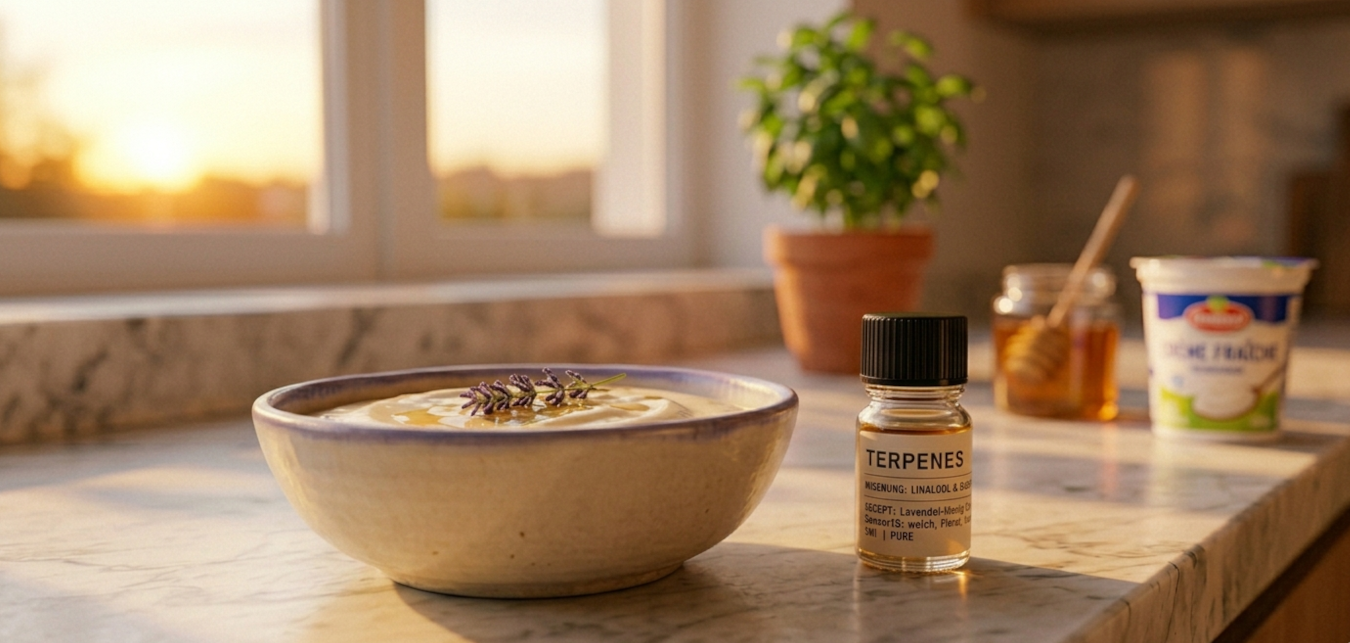

Goal: Dessert with soothing aromatics.
Ingredients: 500 g crème fraîche, 50 g honey, 0.2 mg Linalool, 0.1 mg Bisabolol.
Preparation: Blend aroma compounds directly into the honey, fold in, and refrigerate.
Sensory profile: Soft, floral, balancing.
The primary argument for cannabis terpenes is the excellent data situation. The profiles are chemically precisely determined and are supplemented by sensory user reports. For culinary practice, however, it makes a difference in the end whether terpenes are extracted directly from organically grown cannabis or reconstructed as an identical profile from other plant sources (organical).
A Michelin-starred chef often places value on exclusive, extremely gently obtained full-spectrum extracts from limited strains, possibly even just for a very special menu. An industrial lemonade manufacturer, on the other hand, requires absolute standardization. They demand a reproducible profile that guarantees exactly the same taste experience over decades, independent of crop failures.
What Terpene Sources are Available?
The advantage of botanical terpenes from non-hemp plants lies in the simpler regulations. If a Spanish producer like CALI Terpenes wants to import and process a ton of the finest Blueberry Muffin Weed from the USA, the administrative hurdles and costs are massive.
This effort makes the end product more expensive. For high-end gastronomy, this is often manageable due to the small quantities involved – but for industrial manufacturing, it is a disqualifier. The strategic question always arises here: Real cannabis extract or plant-based replica?
I had already touched upon the parameters for successful terpene extraction – whether in the laboratory or in the manufactory: A precisely controlled climate and exact temperatures from germination through growth, flowering, harvest, curing, and extraction up to final storage are essential.
A big thank you goes to Ben from Humboldt Seeds. For our test series, he gently and organically extracted the BBM (Blueberry Muffin) strain from his private garden. This small bottle was an absolute game changer with my interview partners at the fair. I used the BBM aroma as a sensory intro – the enthusiasm after vaporizing it was universal.
My blog Foodadvisor.de and the connected social media channels have always stood for deep research. At the fair, I took the opportunity to conduct exclusive interviews with the “Who’s Who” of the industry. These will be published successively on the blog until the beginning of June 2026.
The core topic remains the precise flavoring of food and beverages. We look at the application as intoxicating-free, but in the course of the series, we will also look at the potential of functional components like THC-A or CBG for body and mind.
Why do we Need Terpenes and New Aromas?
Why should we flavor with terpenes when there are already countless aromas?
Terpenes accompany us daily anyway. They improve well-being and demonstrably support health. Since culinary experiences worldwide are essential for the quality of life, it makes sense to bring specific moods to the plate or into the glass through sophisticated terpenes.
In times of soul food and the popularity of Asian cuisine (with lemongrass, kaffir lime, coriander, or mint), we eat significantly more consciously today than we did just a few decades ago. Anyone who has ever cooked with high-quality, freshly crushed pepper knows the difference: The intensity of the aroma is many times more powerful than with stored standard pepper.
Exactly this difference is what terpenes make. However, caution is advised with the dosage. The recommended terpene content for food and beverages is significantly lower than, for example, for e-cigarette liquids.
The manufacturer specifications vary greatly here, which is why the approaches for the culinary application of their products also differ significantly.
16 questions & answers regrading terpenes
-
- 1
How should the current terpene market be classified – movement or stagnation? The terpene market is currently clearly in a dynamic growth phase, albeit with varying maturity depending on the segment. While terpenes have been established in the perfume, flavor, and cosmetics industries for decades, their use in the food, beverage, and cannabis sectors is currently growing disproportionately. This is driven by three factors: increasing legalization, demand for “natural flavoring compounds”, and growing interest in functional flavors without psychoactive effects. Cannabis terpenes in particular are considered sensorially differentiated and brand-building. Source: Baser & Buchbauer (2010): Handbook of Essential Oils – Science, Technology, and Applications, CRC Press
- 1
-
- 2
What requirements are needed for terpenes to unfold their effect – is fat necessary? Terpenes are lipophilic, which means: they dissolve better in fats than in water. For optimal sensory perception (aroma, mouthfeel, persistence), a minimal fat content or a carrier system (oil, emulsion, alcohol, glycerin) is useful. The effect is mediated both sensorially-psychologically (via the limbic system) and partially directly pharmacologically (e.g., interaction of beta-caryophyllene with the CB2 receptor). Source: Gertsch et al. (2008): Beta-caryophyllene is a dietary cannabinoid, Proceedings of the National Academy of Sciences (PNAS)
- 2
-
- 3
Do cannabis terpenes differ from terpenes of other plants? Chemically: no. A limonene molecule from cannabis is identical to one from lemon peel. Sensorially: yes. Cannabis is characterized by complex, finely tuned terpene blends that rarely occur in this combination in other plants. The difference therefore lies not in the molecule, but in the ratio, interplay, and context. Source: Russo (2011): Taming THC: potential cannabis synergy and phytocannabinoid-terpenoid entourage effects, British Journal of Pharmacology
- 3
-
- 4
How about the shelf life of terpenes? Terpenes are volatile organic compounds and generally sensitive to light, oxygen, and heat. Under proper storage conditions (airtight, dark, cool), isolated terpenes can remain stable for 12–24 months, although unprotected monoterpenes oxidize noticeably after just a few months. In complex food products, the sensory shelf life is significantly reduced. Source: Turek & Stintzing (2013): Stability of Essential Oils: A Review, Journal of Agricultural and Food Chemistry
- 4
-
- 5
Is oxidation problematic for terpenes? Yes. Oxidation is one of the primary reasons for loss of aroma, off-notes, and irritants. Oxidized terpenes can have a sharp, pungent, or even skin-irritating effect. Antioxidants, inert gas flushing, and dark glass containers are industry standards. Source: Sköld et al. (2006): Oxidation of terpenes and allergenic potential, Contact Dermatitis
- 5
-
- 6
Why use terpenes from cannabis for food & drinks? Cannabis terpenes offer an exceptionally broad aroma spectrum, ranging from fruity and spicy to gas-like and resinous. For food innovation, they are interesting because they enable novel sensory profiles without having an intoxicating effect – provided they are THC-free. Source: Booth et al. (2017): Terpene diversity in Cannabis, Plant Science
- 6
-
- 7
Are there terpenes outside of essential oils? Yes. Terpenes also occur as free volatile compounds, in resins, wax layers, and fruit peels. Essential oils are merely an extractive collective form, not an exclusive space of existence. Source: Langenheim (1994): Higher plant terpenoids, Annual Review of Ecology and Systematics
- 7
-
- 8
Is there a standard for classifying terpenes? Yes. Terpenes are structurally classified into mono-, sesqui-, di-, triterpenes etc., based on their number of isoprene units. This system is chemically established and internationally recognized. Source: IUPAC: Nomenclature of Organic Chemistry, 2013
- 8
-
- 9
Is the use of terpenes in food historically documented? Yes. Terpene-containing plants such as herbs, spices, citrus fruits, or resins have been used for flavoring since antiquity. Modern verification is achieved through food chemistry and archaeobotany. Source: McGee (2004): On Food and Cooking – The Science and Lore of the Kitchen
- 9
-
- 10
How did cooking with cannabis & terpenes begin? Historically, utilization occurred primarily via seeds, leaves, and resins in ritual or traditional cuisines (e.g., India, China). The focus was on aroma and effect, not on the isolation of individual substances. Source: Clarke & Merlin (2016): Cannabis: Evolution and Ethnobotany, University of California Press
- 10
-
- 11
What techniques are used to extract terpenes from cannabis? Industry standards include:- Steam distillation
- CO₂ extraction (fractionated)
- Cold trap techniques
- Vacuum distillation
For food applications, solvent-free procedures are crucial. Source: Fathordoobady et al. (2019): Extraction of terpenes, Trends in Food Science & Technology
- 11
-
- 12
How stable are terpene fingerprints depending on cultivation? Terpene profiles are highly dependent on environmental conditions. Light, stress, temperature, nutrients, and harvest time significantly alter quantitative ratios – however, the basic character remains recognizable. Source: Bernstein et al. (2019): The effect of environmental conditions on cannabis secondary metabolites, Frontiers in Plant Science
- 12
-
- 13
Does the genetic terpene fingerprint remain intact despite cultivation variations? Yes – within certain limits. The genetics define the potential spectrum, while the environment modulates its expression. Extreme deviations can, however, significantly distort the profile. Source: Sawler et al. (2015): Genetic structure of Cannabis, PLOS ONE
- 13
-
- 14
How are individual terpenes separated by variety? Through fractional distillation, chromatographic methods (GC, HPLC), or molecular distillation. Strict purity requirements apply to food-grade products. Source: Sarker et al. (2012): Natural product isolation, Humana Press
- 14
-
- 15
Are there problematic terpene combinations? Yes. High concentrations of highly volatile monoterpenes (e.g., limonene + pinene) can have a sensorially aggressive effect. Balance and dosage are crucial – less is often more. Source: Belitz et al. (2009): Food Chemistry, Springer
- 15
- 16
Can ambitious growers extract terpenes themselves? Yes, with limitations. Methods such as cold traps, simple steam distillation, or dry-ice techniques are possible, but do not deliver food-grade purity without laboratory know-how. Source: Clarke (1998): Marijuana Botany, Ronin Publishing
CALI Terpenes emphasizes that the optimal dosage depends heavily on the respective food matrix, the chosen beverage base type, and the processing methods.
The Aroma of Innovation: CALI Terpenes
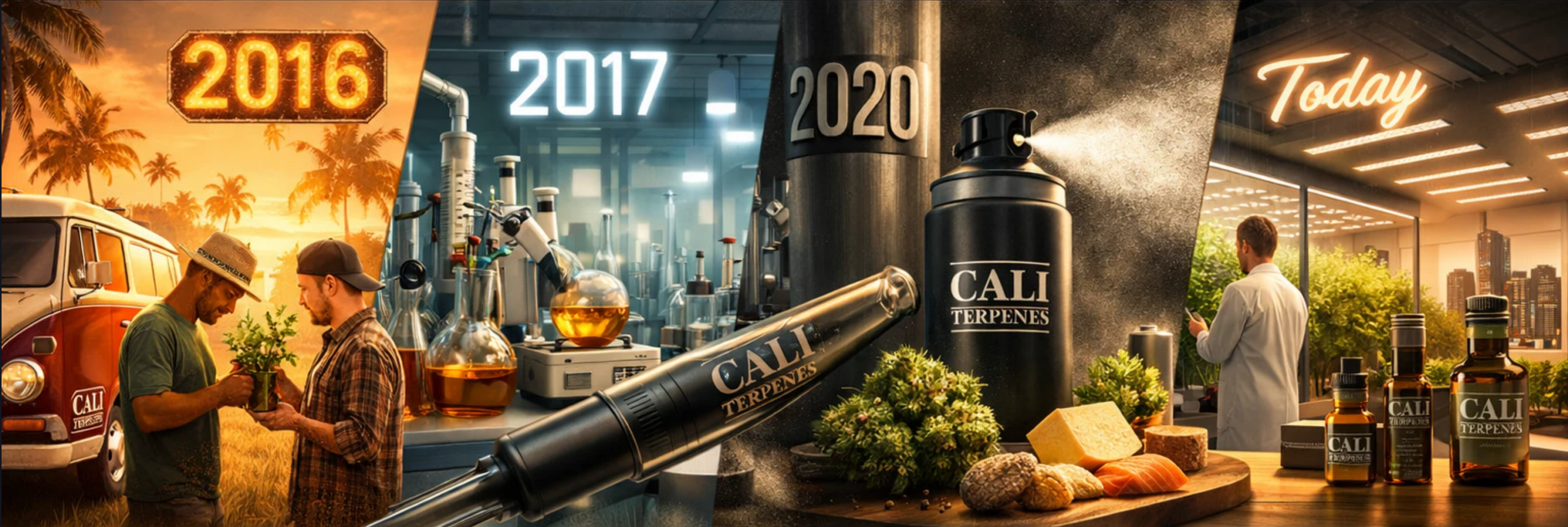
When people talk about the “Cali feel” in the cannabis sector today, they usually mean the unmistakable scent of elite genetics. The fact that this fragrance is now legally available worldwide in the form of small vials or sprays is largely thanks to Cali Terpenes S.L..
Paradoxically, the roots of the Barcelona-based company lie in sunny California in 2016. It was there that founders Toni and Ferran – who already enjoyed legendary status in the breeding scene through their work at Eva Seeds – recognized the enormous potential of isolated terpene profiles (Cali Terpenes, n.d.).
What began as a spontaneous idea during a trip quickly evolved into a pioneering technological project. Cali Terpenes specialized in molecularly replicating the complex aromas of famous strains like “Gorilla Glue” or “Amnesia” with exact precision, yet without any psychoactive compounds. This technological mastery made it possible to safely establish the typical cannabis aroma in industries such as food production, cosmetics, and the vaping market (Alchimia, 2017).
The team achieved a particular stroke of genius with the invention of Terps Spray, which revolutionized the aromatization of products and finally established the company as the global market leader in this segment. Today, Cali Terpenes no longer stands just for “scents,” but for a new era of functional flavors that make the so-called “entourage effect” scientifically accessible (Cali Terpenes Blog, 2026).
Combining botanical knowledge with state-of-the-art laboratory analysis, they have succeeded in translating the heritage of California’s cannabis culture into a legal, industrial format for the 21st century.
References
- Cali Terpenes (o.D.): Our story
- Alchimia (2017): Cali Terpenes – 100% natural cannabis terpenes
- Cali Terpenes Blog (2026): Terpene Guide & News
- Mr. Hanf: Cali Terpenes brand profile
To prevent premature evaporation and volatilization of the volatile aromas, the manufacturer primarily recommends cold applications as well as the use of techniques such as vacuum processes.
Generally, the rule is: The smaller the pressure and temperature differences during processing, the lower the loss through evaporation and the more stably the terpenes bind to the respective product.
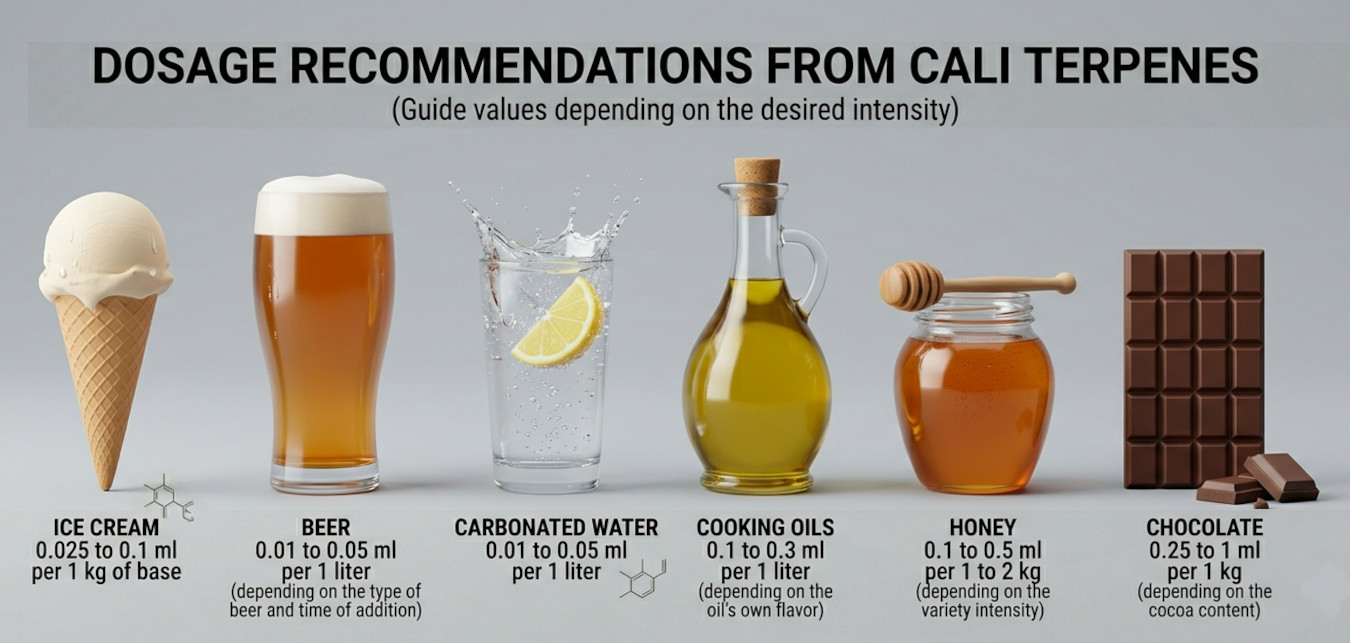
Dosage Recommendations from CALI Terpenes (Guide values depending on the desired intensity)
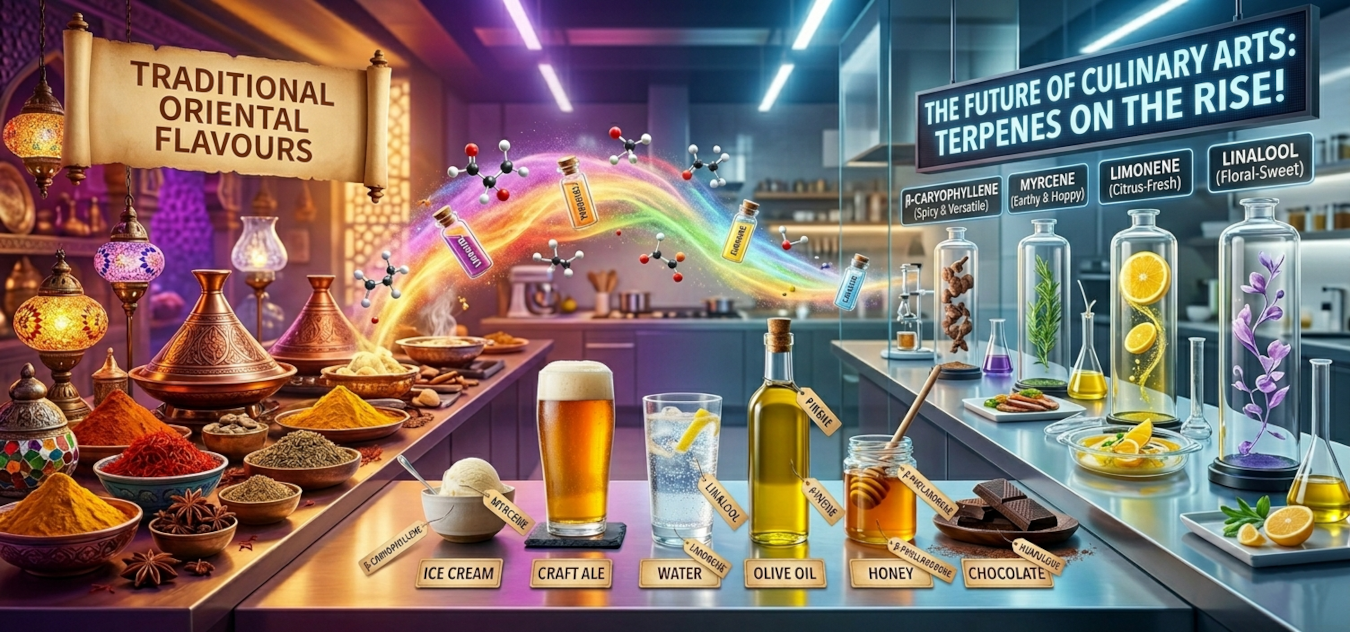
- Ice cream: 0.025 to 0.1 ml per 1 kg of base.
- Beer: 0.01 to 0.05 ml per 1 liter (depending on the type of beer and the exact time of addition during the brewing process).
- Carbonated water: 0.01 to 0.05 ml per 1 liter.
- Cooking oils: 0.1 to 0.3 ml per 1 liter (depending on the oil’s own flavour).
- Honey: 0.1 to 0.5 ml per 1 to 2 kg (depending on the variety intensity of the honey).
- Chocolate: 0.25 to 1 ml per 1 kg (depending on the cocoa content).
After mixing it in, CALI Terpenes advises a resting phase so that the aromas can distribute homogeneously and bind optimally. In practical tests, this was shown, for example, with flavored honey: It was only 24 hours after mixing it in that it unfolded a significantly more complex and intense flavor profile than directly after processing.
With my contribution to Mary Jane 2025 – which is basically completely timeless in terms of content – I have already given you three simple entry-level recipes. I will now successively continue this series with new, innovative terpene recipes.
📚 Sources & References
- Manufacturer data: Dutch Passion Website & specialist blogs, Humboldt Seeds Website & specialist blogs
- Specialist literature: Beverly A. Potter Ph.D. – „Terpenes: The Magic in Cannabis“
- Scientific studies:
- Russo, E. B. (2011): Taming THC: potential cannabis synergy and phytocannabinoid-terpenoid entourage effects.
- Dudareva, N. et al. (2013): Biosynthesis, function and evolution of plant volatiles.
- Belitz, H.-D. et al. (2009): Food Chemistry / Lehrbuch der Lebensmittelchemie.
Copyright and Editorial Responsibility
AI-supported systems were used during the research for this article, including OpenAI ChatGPT, Google Gemini, and Anthropic Claude. AI was used exclusively as an aid. The selection, evaluation, editorial classification, structuring, and formulation, as well as the review of content and compliance with journalistic due diligence and copyright requirements, were and remain the responsibility of the publisher.
All articles and interviews remain the property of the author. Use or reproduction is permitted only with express permission. Opinions expressed are those of the author. Errors excepted.
Disclaimer: The information presented in this article is intended solely for educational and entertainment purposes. Culinary use of terpenes should always comply with applicable local laws.